IJIN Lab - World's Greatest Minds
Wisdom from history's greatest minds, delivered to your present moment.
Find the insight you need for work, life, and the challenges ahead.
732 great figures across 15 genres
Figures Who Overcame Adversity(124)
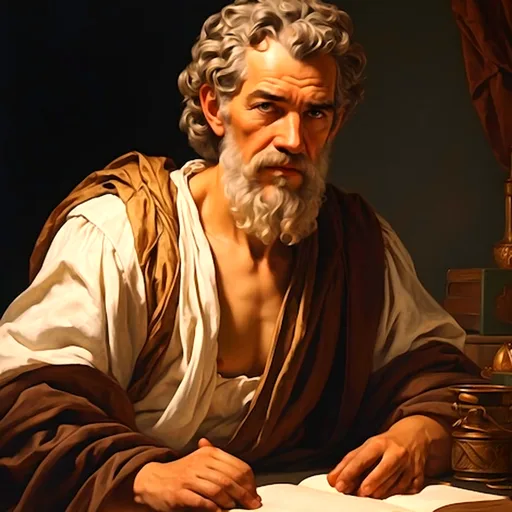
Epictetus
Italy (0050)
「We suffer not from events but from our judgments about them.」
Stoic philosopher and former slave, 1st-century Roman Empire
Taught the distinction between controllable and uncontrollable in 'Discourses' and 'Enchiridion'
The dichotomy of control is the origin of stress management and CBT
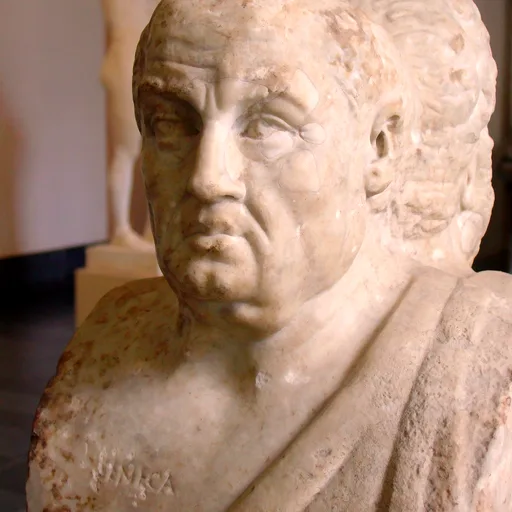
Seneca
Italy (0 BC)
「It is not that we have a short time to live, but that we waste much of it.」
Stoic philosopher and statesman, 1st-century Roman Empire
Warned against wasting time in 'On the Shortness of Life'
Here lies the prescription for the disposable time stolen by mindless scrolling
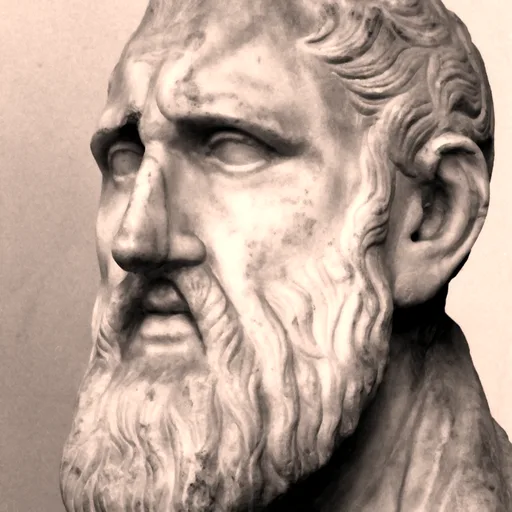
Zeno of Citium
CY (33 BC)
「Wellbeing is attained by little and little, and nevertheless is no little thing itself.」
Founder of Stoicism, 4th century BC, from Cyprus
After losing everything, taught that 'virtue is the only good'
The method of distinguishing controllable from uncontrollable is the source of modern resilience
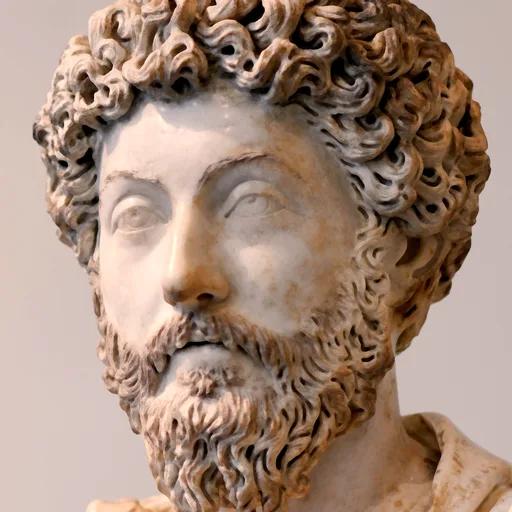
Marcus Aurelius
Italy (0121)
「People seek retreats in the country, by the sea, in the mountains — but you can retire into yourself whenever you choose.」
Philosopher-emperor of the Roman Empire, 2nd century
Authored 'Meditations' and left a practical manual of Stoic philosophy
The insight that 'judgment causes suffering' is the very foundation of CBT
Gaius Musonius Rufus
Italy (0025)
「Exile is not an evil.」
Roman Stoic philosopher (c. 30-101 AD), teacher of Epictetus, the man three emperors banished and could not silence. He wrote nothing, taught in the street, and insisted on equal philosophical education for women.

Epicurus
Greece (34 BC)
「Live unknown.」
4th-century BCE ancient Greek philosopher
Defined the essence of pleasure as ataraxia — tranquility of mind through the removal of pain
His three-part classification of desires is a ready-made tool for reassessing consumption and career choices
.webp)
Xunzi
China (31 BC)
「Blue dye is extracted from the indigo plant, yet it is bluer than indigo itself.」
3rd-century BCE Confucian scholar of the Warring States era
Proclaimed the doctrine of evil nature and championed acquired self-cultivation through ritual and study
The idea of channeling behavior through institutional design converges with modern nudge theory
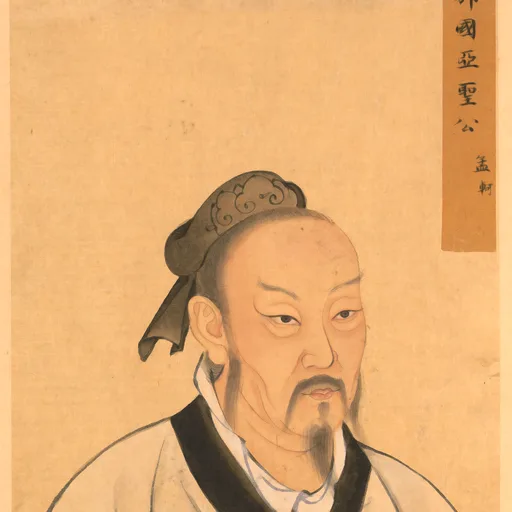
Mencius
China (37 BC)
「Those who fully develop their mind know their nature. Knowing their nature, they know Heaven.」
Confucian sage and 'Second Sage', 4th century BC Warring States
Systematized the theory of innate goodness and advocated benevolent governance
The belief in innate seeds of goodness is the Eastern origin of Theory Y management

Friedrich Nietzsche
Germany (1844)
「Whoever fights monsters should see to it that in the process he does not become a monster. And when you gaze long into an abyss, the abyss gazes also into you.」
19th-century German philosopher
Shook modern philosophy to its foundations with 'God is dead,' 'Ubermensch,' and 'eternal return'
After the collapse of absolute values, we are challenged to create our own

Henry Ford
United States (1863)
「Failure is simply the opportunity to begin again, this time more intelligently.」
Revolutionary of the American automobile industry, 19th-20th century
Established the mass production and mass consumption model with the Model T and moving assembly line
The idea of creating the market itself through disruptive pricing is the prototype of the freemium model
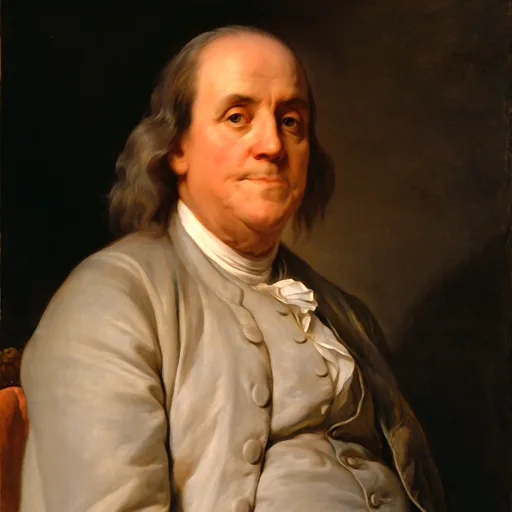
Benjamin Franklin
United States (1706)
「Well done is better than well said.」
18th-century American statesman, scientist, and entrepreneur
Made his fortune in printing, invented the lightning rod, and helped build the United States
He designed the prototype of subscription media 250 years ahead of its time
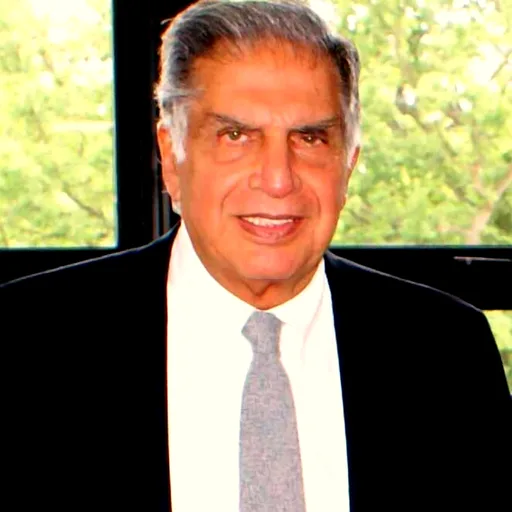
Ratan Tata
India (1937)
「If you want to walk fast, walk alone. But if you want to walk far, walk together.」
20th-century Indian conglomerate leader and philanthropist
Transformed the Tata Group into a global enterprise through international M&A
The brand-and-technology acquisition strategy is a reference model for Asian companies expanding overseas
Convention Breakers(48)

Karl Marx
Germany (1818)
「Capital is dead labour, that, vampire-like, only lives by sucking living labour, and lives the more, the more labour it sucks.」
19th-century German philosopher and economist
Constructed historical materialism and dissected capitalism's structural contradictions in Das Kapital
The lens of asking where value is created and to whom it flows remains relevant today

René Descartes
France (1596)
「Divide each difficulty into as many parts as possible for a better solution.」
17th-century French philosopher and mathematician
Established the starting point of modern philosophy with 'I think, therefore I am'
Methodical doubt is the best defense against fake news and cognitive bias

Karl Popper
Austria (1902)
「All life is problem solving.」
Austrian-British philosopher (1902-1994), a leading philosopher of science. He proposed falsifiability as the criterion of scientific status; The Open Society (1945) defended liberal democracy. Soros named him mentor.
Henry Ford
United States (1863)
「Failure is simply the opportunity to begin again, this time more intelligently.」
Revolutionary of the American automobile industry, 19th-20th century
Established the mass production and mass consumption model with the Model T and moving assembly line
The idea of creating the market itself through disruptive pricing is the prototype of the freemium model
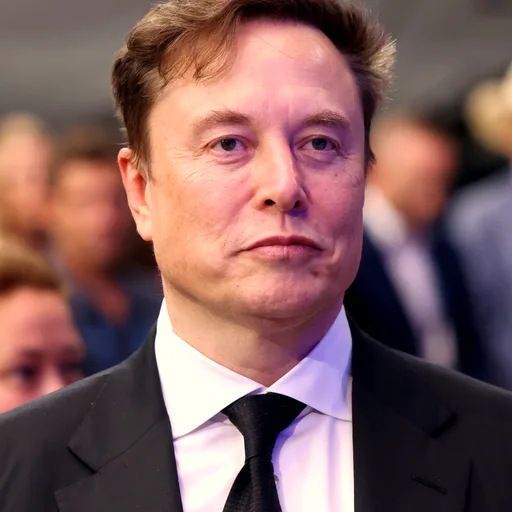
Elon Musk
CA (1971)
「I'd rather be optimistic and wrong than pessimistic and right.」
21st-century serial entrepreneur and technology disruptor
Commercialized electric vehicles with Tesla and private space transport with SpaceX
First-principles thinking rebuilds industry assumptions from the raw-material level up
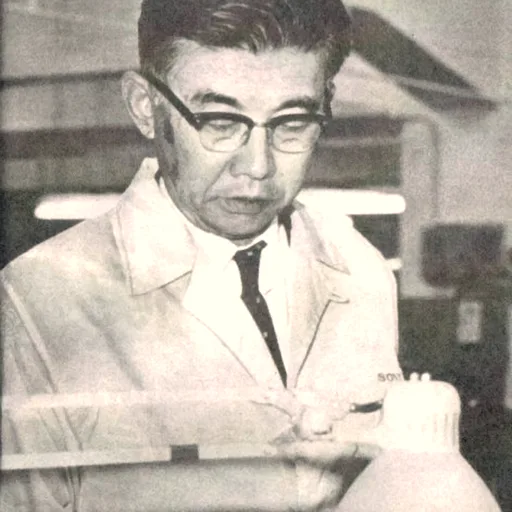
Masaru Ibuka
Japan (1908)
「The establishment of an ideal factory — free, dynamic, and joyful — where earnest engineers can exercise their skills to the fullest.」
20th-century Japanese engineer and Sony co-founder
Created world-changing products including the transistor radio and Trinitron
The 'free, dynamic, and joyful ideal factory' is a pioneering vision of psychological safety
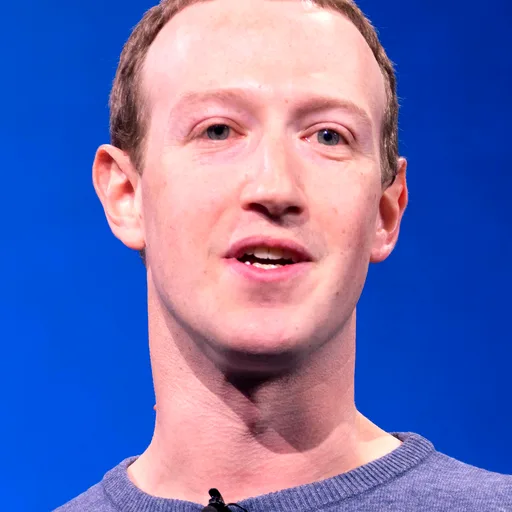
Mark Zuckerberg
United States (1984)
「People don't care about what you say, they care about what you build.」
21st-century American social-media entrepreneur
Founded Facebook and built a platform with over three billion monthly users
An embodiment of the MVP method: ship fast, iterate relentlessly

Sergey Brin
United States (1973)
「Obviously everyone wants to be successful, but I want to be looked back on as being very innovative, very trusted and ethical.」
21st-century American technology entrepreneur
Co-founded Google and evolved internet search into an advertising platform
Judging the right moment to commercialize academic research is the key to success

Larry Page
United States (1973)
「Especially in technology, we need revolutionary change, not incremental change.」
21st-century American technology entrepreneur
Developed PageRank and co-founded Google, building the search engine into an infrastructure of the information age
Applying academic knowledge to a new context is all it takes to create disruptive innovation
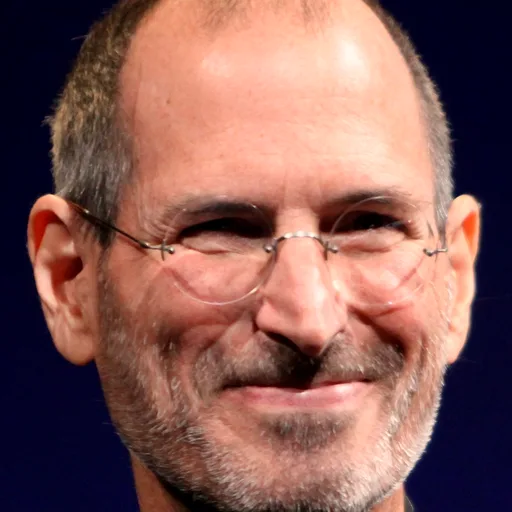
Steve Jobs
United States (1955)
「Design is not just what it looks like and feels like. Design is how it works.」
20th-century American technology entrepreneur
Redefined personal computing with the iPhone and Mac
The focus to decide 'what not to do' becomes the ultimate competitive advantage
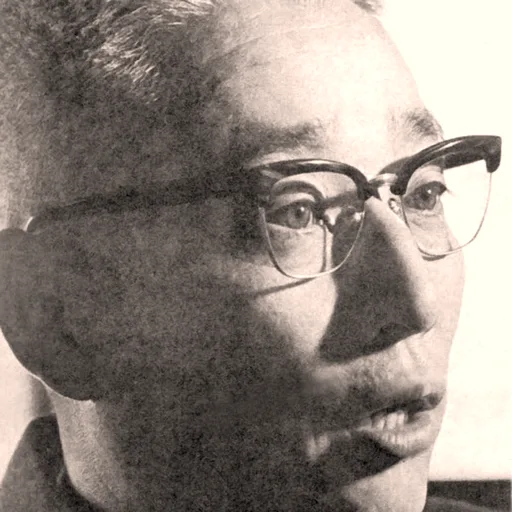
Akio Morita
Japan (1921)
「I have always believed that the company should be a sort of family.」
20th-century Japanese industrialist and Sony co-founder
Conquered the world with the Walkman and redefined 'Made in Japan'
The power to create demand that does not yet exist cannot be measured by market research
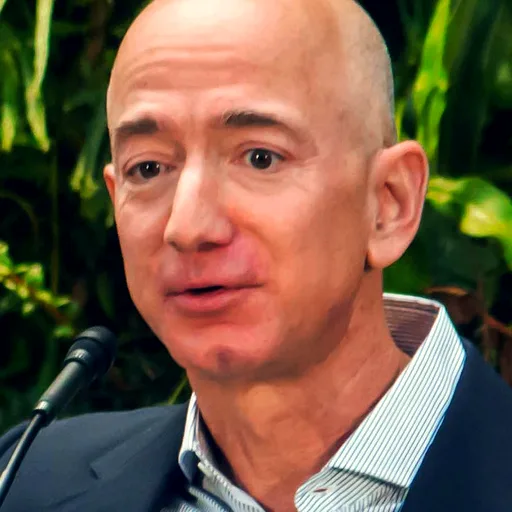
Jeff Bezos
United States (1964)
「If you double the number of experiments you do per year you're going to double your inventiveness.」
20th-century American technology entrepreneur
Founded Amazon and reshaped industry structures through e-commerce and cloud computing
The Regret Minimization Framework is a compass for irreversible decisions
Courageous Figures(138)
Marcus Aurelius
Italy (0121)
「People seek retreats in the country, by the sea, in the mountains — but you can retire into yourself whenever you choose.」
Philosopher-emperor of the Roman Empire, 2nd century
Authored 'Meditations' and left a practical manual of Stoic philosophy
The insight that 'judgment causes suffering' is the very foundation of CBT
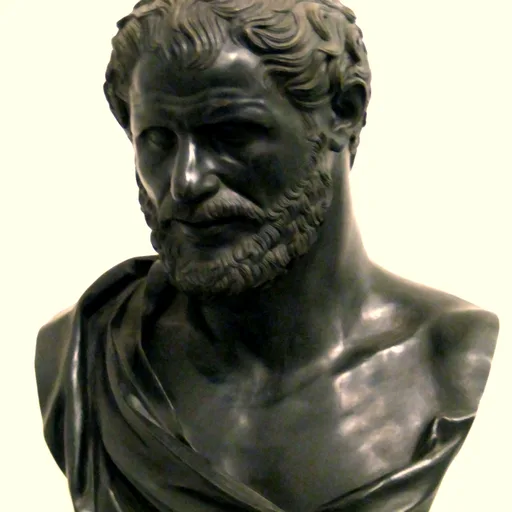
Democritus
Greece (46 BC)
「Courage begins the difficult deed, but fortune governs its outcome.」
5th-century BCE ancient Greek natural philosopher
Proposed that the ultimate constituents of reality are atoms and void
Looking past surfaces to underlying structure is the starting point of fundamental analysis

Aristotle
Greece (38 BC)
「All human beings by nature desire to know.」
Polymath of 4th-century BC ancient Greece
Systematized disciplines from logic to biology and defined the framework of Western knowledge
'The golden mean' and 'practical wisdom' remain uniquely human judgment that even AI cannot automate

Laozi
China (57 BC)
「The highest goodness is like water. Water benefits all things and does not compete; it dwells in places others disdain, and so is close to the Tao.」
Founder of Taoist thought, circa 6th century BC
Condensed the philosophy of 'the Way' and 'wu wei' into the 5,000-character 'Tao Te Ching'
The admonition against over-intervention, 'be like water,' resonates with the spirit of agile management
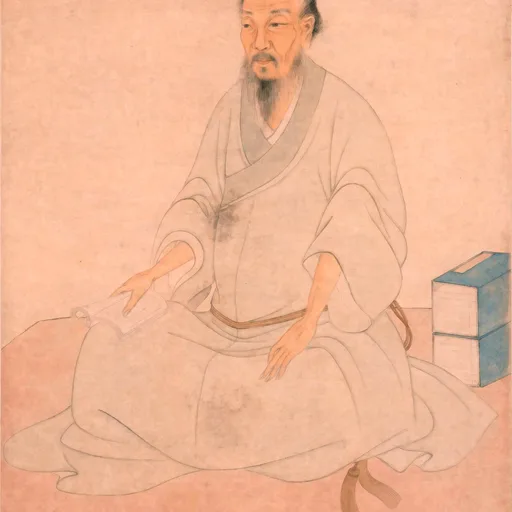
Wang Yangming
China (1472)
「To know and not to act is not yet to know.」
15th-16th century Ming dynasty Confucian scholar and military strategist
Proposed the 'unity of knowing and acting' — knowledge and action are inseparable
A radical prescription for the modern trap of learning endlessly without acting

Simone de Beauvoir
France (1908)
「The present is not a potential past; it is the moment of choice and action.」
20th-century French existentialist philosopher and feminist
Presented the social construction of gender in 'The Second Sex' and pioneered feminist theory
The constructivist perspective of questioning 'what we take for granted' is the starting point of innovation
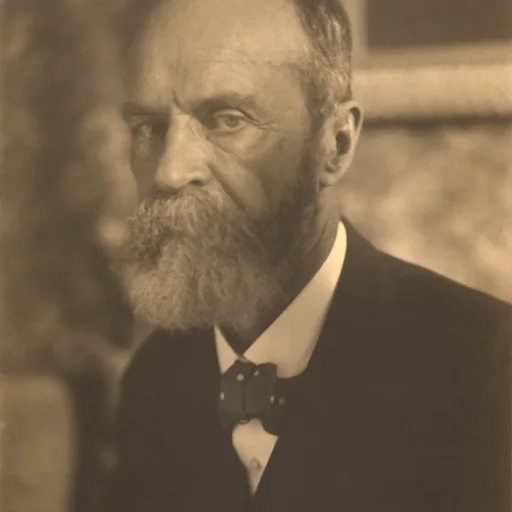
William James
United States (1842)
「The true is the name of whatever proves itself to be good in the way of belief, and good, too, for definite, assignable reasons.」
19th-century American psychologist and pragmatist philosopher
Opened America's first psychology course and coined the 'stream of consciousness'
Pragmatism's test — 'does it actually work?' — is the operating principle for the AI age

G. E. Moore
United Kingdom (1873)
「It is raining, but I don't believe that it is raining.」
Cambridge philosopher (1873-1958), with Russell and Wittgenstein a founder of analytic philosophy. Principia Ethica launched metaethics with the naturalistic fallacy; "Here is one hand" is his iconic reply to scepticism.
Benjamin Franklin
United States (1706)
「Well done is better than well said.」
18th-century American statesman, scientist, and entrepreneur
Made his fortune in printing, invented the lightning rod, and helped build the United States
He designed the prototype of subscription media 250 years ahead of its time

Andrew Carnegie
United States (1835)
「No man becomes rich unless he enriches others.」
19th-century Scottish-born steel magnate and philanthropist
Dominated the U.S. steel industry and practiced systematic philanthropy through 'The Gospel of Wealth'
Per-ton cost visibility is the prototype of unit economics management
Elon Musk
CA (1971)
「I'd rather be optimistic and wrong than pessimistic and right.」
21st-century serial entrepreneur and technology disruptor
Commercialized electric vehicles with Tesla and private space transport with SpaceX
First-principles thinking rebuilds industry assumptions from the raw-material level up
Steve Jobs
United States (1955)
「Design is not just what it looks like and feels like. Design is how it works.」
20th-century American technology entrepreneur
Redefined personal computing with the iPhone and Mac
The focus to decide 'what not to do' becomes the ultimate competitive advantage
Great Leaders(90)
Mencius
China (37 BC)
「Those who fully develop their mind know their nature. Knowing their nature, they know Heaven.」
Confucian sage and 'Second Sage', 4th century BC Warring States
Systematized the theory of innate goodness and advocated benevolent governance
The belief in innate seeds of goodness is the Eastern origin of Theory Y management

Dhirubhai Ambani
India (1932)
「Think big, think fast, think ahead. Ideas are no one's monopoly.」
20th-century Indian entrepreneur and founder of Reliance Industries
Integrated vertically from polyester trading to oil refining, building one of India's three largest conglomerates
Step-by-step backward integration from downstream demand is an approach applicable to any capital-constrained startup
Henry Ford
United States (1863)
「Failure is simply the opportunity to begin again, this time more intelligently.」
Revolutionary of the American automobile industry, 19th-20th century
Established the mass production and mass consumption model with the Model T and moving assembly line
The idea of creating the market itself through disruptive pricing is the prototype of the freemium model
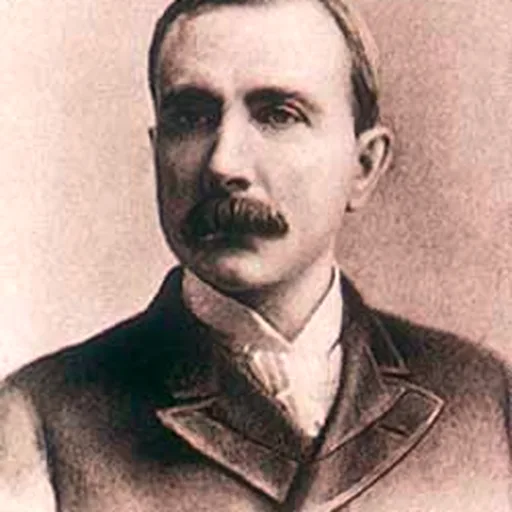
John D. Rockefeller
United States (1839)
「Competition is a sin.」
19th-century American oil magnate and philanthropist
Controlled 90% of U.S. oil supply through Standard Oil
The vision to oversee the entire value chain is the prototype of platform management

Shibusawa Eiichi
Japan (1840)
「What is the root of wealth? Benevolence and moral principle. Unless grounded in right reason, wealth cannot endure.」
Bakumatsu-Taisho era industrialist, 'Father of Japanese Capitalism'
Involved in founding 500+ companies and advocated the unity of morality and economy in 'The Analects and the Abacus'
The unity of profit and ethics is the origin of purpose-driven management in the ESG era
Benjamin Franklin
United States (1706)
「Well done is better than well said.」
18th-century American statesman, scientist, and entrepreneur
Made his fortune in printing, invented the lightning rod, and helped build the United States
He designed the prototype of subscription media 250 years ahead of its time
Ratan Tata
India (1937)
「If you want to walk fast, walk alone. But if you want to walk far, walk together.」
20th-century Indian conglomerate leader and philanthropist
Transformed the Tata Group into a global enterprise through international M&A
The brand-and-technology acquisition strategy is a reference model for Asian companies expanding overseas
Masaru Ibuka
Japan (1908)
「The establishment of an ideal factory — free, dynamic, and joyful — where earnest engineers can exercise their skills to the fullest.」
20th-century Japanese engineer and Sony co-founder
Created world-changing products including the transistor radio and Trinitron
The 'free, dynamic, and joyful ideal factory' is a pioneering vision of psychological safety
Mark Zuckerberg
United States (1984)
「People don't care about what you say, they care about what you build.」
21st-century American social-media entrepreneur
Founded Facebook and built a platform with over three billion monthly users
An embodiment of the MVP method: ship fast, iterate relentlessly

Bill Gates
United States (1955)
「Success is a lousy teacher. It seduces smart people into thinking they can't lose.」
20th-century American technology entrepreneur and philanthropist
Co-founded Microsoft and drove the PC revolution by dominating the OS market
Ecosystem design is the key to competitive advantage in platform strategy
Larry Page
United States (1973)
「Especially in technology, we need revolutionary change, not incremental change.」
21st-century American technology entrepreneur
Developed PageRank and co-founded Google, building the search engine into an infrastructure of the information age
Applying academic knowledge to a new context is all it takes to create disruptive innovation
Steve Jobs
United States (1955)
「Design is not just what it looks like and feels like. Design is how it works.」
20th-century American technology entrepreneur
Redefined personal computing with the iPhone and Mac
The focus to decide 'what not to do' becomes the ultimate competitive advantage
Fearless Challengers(87)

Confucius
China (55 BC)
「Knowing it is less than loving it; loving it is less than delighting in it.」
Founder of Confucianism, 6th century BC Spring and Autumn period
Built a practical moral system centered on benevolence, ritual, and filial piety, recorded in the Analerta
'Do not do unto others what you would not have done unto you' is the origin of business ethics
Karl Marx
Germany (1818)
「Capital is dead labour, that, vampire-like, only lives by sucking living labour, and lives the more, the more labour it sucks.」
19th-century German philosopher and economist
Constructed historical materialism and dissected capitalism's structural contradictions in Das Kapital
The lens of asking where value is created and to whom it flows remains relevant today
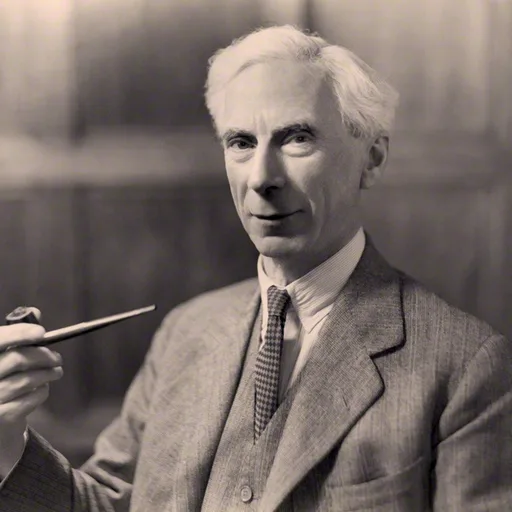
Bertrand Russell
United Kingdom (1872)
「Three passions, simple but overwhelmingly strong, have governed my life: the longing for love, the search for knowledge, and unbearable pity for the suffering of mankind.」
19th-20th century British philosopher and logician
Attempted to ground mathematics in logic with Principia Mathematica
Decomposing complex problems into their smallest units is the essence of data-driven management
Dhirubhai Ambani
India (1932)
「Think big, think fast, think ahead. Ideas are no one's monopoly.」
20th-century Indian entrepreneur and founder of Reliance Industries
Integrated vertically from polyester trading to oil refining, building one of India's three largest conglomerates
Step-by-step backward integration from downstream demand is an approach applicable to any capital-constrained startup
Henry Ford
United States (1863)
「Failure is simply the opportunity to begin again, this time more intelligently.」
Revolutionary of the American automobile industry, 19th-20th century
Established the mass production and mass consumption model with the Model T and moving assembly line
The idea of creating the market itself through disruptive pricing is the prototype of the freemium model
Benjamin Franklin
United States (1706)
「Well done is better than well said.」
18th-century American statesman, scientist, and entrepreneur
Made his fortune in printing, invented the lightning rod, and helped build the United States
He designed the prototype of subscription media 250 years ahead of its time
Elon Musk
CA (1971)
「I'd rather be optimistic and wrong than pessimistic and right.」
21st-century serial entrepreneur and technology disruptor
Commercialized electric vehicles with Tesla and private space transport with SpaceX
First-principles thinking rebuilds industry assumptions from the raw-material level up
Masaru Ibuka
Japan (1908)
「The establishment of an ideal factory — free, dynamic, and joyful — where earnest engineers can exercise their skills to the fullest.」
20th-century Japanese engineer and Sony co-founder
Created world-changing products including the transistor radio and Trinitron
The 'free, dynamic, and joyful ideal factory' is a pioneering vision of psychological safety
Mark Zuckerberg
United States (1984)
「People don't care about what you say, they care about what you build.」
21st-century American social-media entrepreneur
Founded Facebook and built a platform with over three billion monthly users
An embodiment of the MVP method: ship fast, iterate relentlessly
Larry Page
United States (1973)
「Especially in technology, we need revolutionary change, not incremental change.」
21st-century American technology entrepreneur
Developed PageRank and co-founded Google, building the search engine into an infrastructure of the information age
Applying academic knowledge to a new context is all it takes to create disruptive innovation
Steve Jobs
United States (1955)
「Design is not just what it looks like and feels like. Design is how it works.」
20th-century American technology entrepreneur
Redefined personal computing with the iPhone and Mac
The focus to decide 'what not to do' becomes the ultimate competitive advantage
Akio Morita
Japan (1921)
「I have always believed that the company should be a sort of family.」
20th-century Japanese industrialist and Sony co-founder
Conquered the world with the Walkman and redefined 'Made in Japan'
The power to create demand that does not yet exist cannot be measured by market research
Life Philosophers(65)
Seneca
Italy (0 BC)
「It is not that we have a short time to live, but that we waste much of it.」
Stoic philosopher and statesman, 1st-century Roman Empire
Warned against wasting time in 'On the Shortness of Life'
Here lies the prescription for the disposable time stolen by mindless scrolling
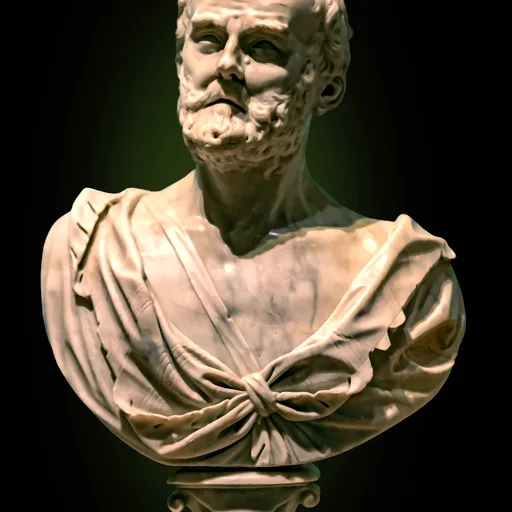
Heraclitus
TR (53 BC)
「Character is destiny.」
6th-century BCE pre-Socratic philosopher of Ephesus
Founded dialectical thinking with the doctrine of universal flux and the concept of logos
The recognition that change is the only constant — the bedrock insight for any VUCA-age strategy
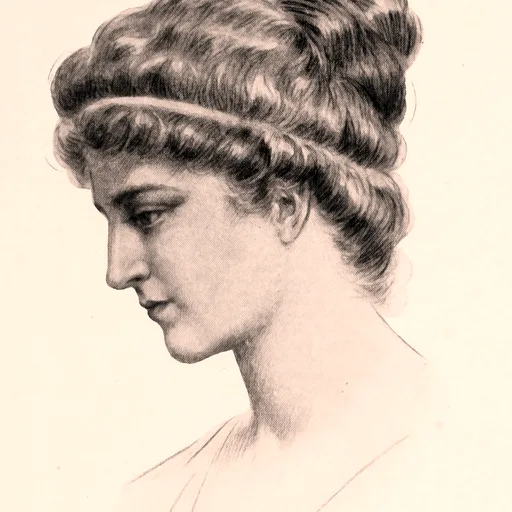
Hypatia
EG (0360)
「Reserve your right to think, for even to think wrongly is better than not to think at all.」
Philosopher and mathematician in 4th-century Alexandria
Led a school transcending sects and was called the last light of ancient intellect
The courage to maintain intellectual independence is essential in our era of social media polarization
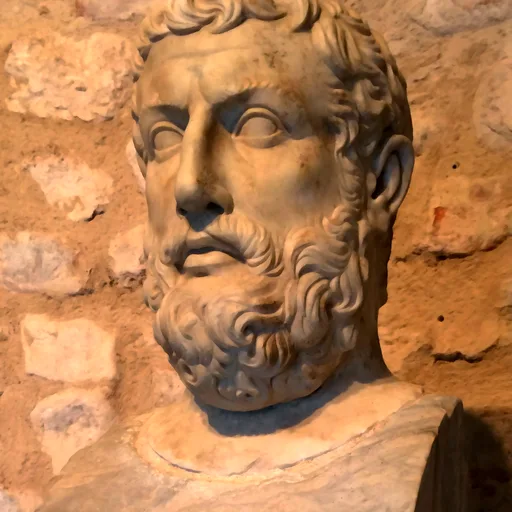
Parmenides
Italy (51 BC)
「You must learn all things: both the steadfast heart of well-rounded Truth and the opinions of mortals, in which there is no true trust.」
6th-century BCE founder of ontology from Elea
Declared 'what is, is; what is not, is not' and established ontological monism
The origin of the discipline of stripping away noise to see what is essential
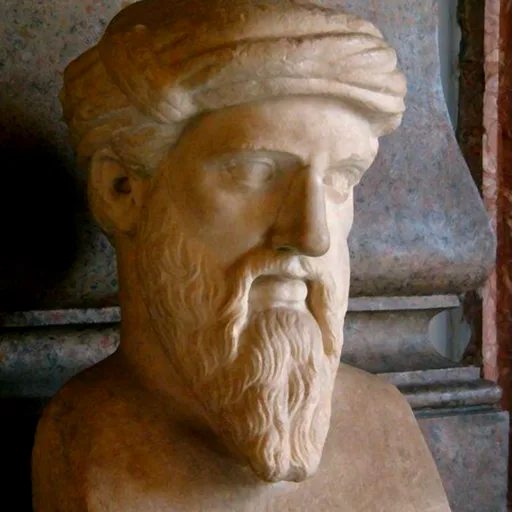
Pythagoras
Greece (58 BC)
「There is geometry in the humming of the strings, there is music in the spacing of the spheres.」
Mathematician and philosopher, 6th century BC
Proclaimed 'all is number' and laid the foundation for a mathematical worldview
The intellectual origin of our data-driven society begins here
Democritus
Greece (46 BC)
「Courage begins the difficult deed, but fortune governs its outcome.」
5th-century BCE ancient Greek natural philosopher
Proposed that the ultimate constituents of reality are atoms and void
Looking past surfaces to underlying structure is the starting point of fundamental analysis

Socrates
Greece (46 BC)
「I am not an Athenian or a Greek, but a citizen of the world.」
Philosopher of 5th-century BC Athens
Made others aware of their ignorance through dialectic and placed 'living well' at the center of philosophy
The attitude of continually asking 'is that really so?' is the prototype of critical thinking
Epicurus
Greece (34 BC)
「Live unknown.」
4th-century BCE ancient Greek philosopher
Defined the essence of pleasure as ataraxia — tranquility of mind through the removal of pain
His three-part classification of desires is a ready-made tool for reassessing consumption and career choices

Proclus
Greece (0412)
「Everything perfect proceeds outward from its own perfection.」
Born 412 in Constantinople, Proclus was the last great philosopher of late antiquity, head of the Athenian Academy for nearly fifty years. His Elements of Theology, 211 propositions modelled on Euclid, threaded one line.

Porphyry
LB (0233)
「Everything that is capable of turning back upon itself is incorporeal.」
Born c. 234 in Tyre, Porphyry was a Phoenician Neoplatonist who edited Plotinus into the Enneads. His logic primer Isagoge was the standard textbook of Aristotelian logic in medieval Europe and the Islamic world.

Crates of Thebes
Greece (36 BC)
「What frees you from slavery is not wealth but needing nothing.」
Theban Cynic philosopher (c. 365-285 BC) who renounced wealth to live on the streets of Athens with his wife Hipparchia. Pupil of Diogenes, teacher of Zeno of Citium, and the bridge from Cynic asceticism to Stoicism.
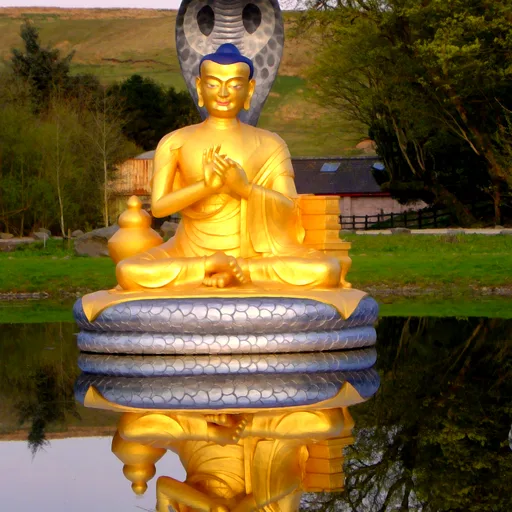
Nagarjuna
India (0150)
「For whom emptiness works, everything works. For whom emptiness does not work, nothing works.」
Mahayana Buddhist monk and philosopher, 2nd-century South India
Systematized the theory of 'emptiness' and founded the Madhyamaka school
The wisdom of releasing attachment to fixed ideas connects to fearless pivoting in business
Truth Seekers(85)
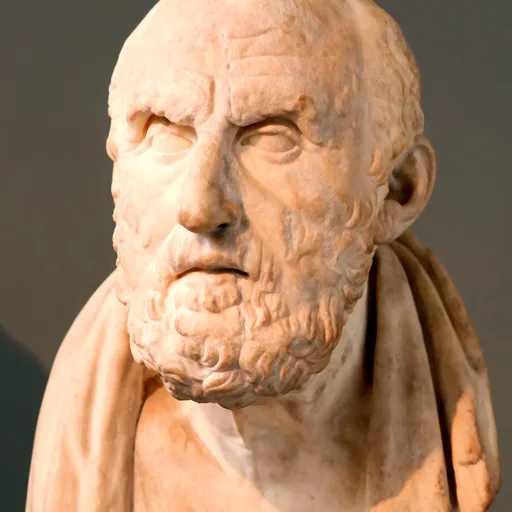
Chrysippus of Soli
Greece (28 BC)
「The wise man is free from passions, not because he does not feel, but because his judgments are correct.」
Third head of the Stoic school, 3rd century BC
Systematized Stoic philosophy into logic, ethics, and physics across 700+ works
The cognitive model treating passions as 'false judgments' is the very foundation of CBT
Zeno of Citium
CY (33 BC)
「Wellbeing is attained by little and little, and nevertheless is no little thing itself.」
Founder of Stoicism, 4th century BC, from Cyprus
After losing everything, taught that 'virtue is the only good'
The method of distinguishing controllable from uncontrollable is the source of modern resilience

Posidonius
Greece (13 BC)
「Even among barbarians, pride sometimes yields to wisdom, and Ares stands in awe of the Muses.」
Greek Stoic polymath (c. 135-51 BC), called the most learned of his age by Strabo. Based in Rhodes, taught Pompey and Cicero. His Earth figure, via Ptolemy, helped convince Columbus the Atlantic was crossable.
Hypatia
EG (0360)
「Reserve your right to think, for even to think wrongly is better than not to think at all.」
Philosopher and mathematician in 4th-century Alexandria
Led a school transcending sects and was called the last light of ancient intellect
The courage to maintain intellectual independence is essential in our era of social media polarization
Parmenides
Italy (51 BC)
「You must learn all things: both the steadfast heart of well-rounded Truth and the opinions of mortals, in which there is no true trust.」
6th-century BCE founder of ontology from Elea
Declared 'what is, is; what is not, is not' and established ontological monism
The origin of the discipline of stripping away noise to see what is essential
Pythagoras
Greece (58 BC)
「There is geometry in the humming of the strings, there is music in the spacing of the spheres.」
Mathematician and philosopher, 6th century BC
Proclaimed 'all is number' and laid the foundation for a mathematical worldview
The intellectual origin of our data-driven society begins here
Democritus
Greece (46 BC)
「Courage begins the difficult deed, but fortune governs its outcome.」
5th-century BCE ancient Greek natural philosopher
Proposed that the ultimate constituents of reality are atoms and void
Looking past surfaces to underlying structure is the starting point of fundamental analysis
Socrates
Greece (46 BC)
「I am not an Athenian or a Greek, but a citizen of the world.」
Philosopher of 5th-century BC Athens
Made others aware of their ignorance through dialectic and placed 'living well' at the center of philosophy
The attitude of continually asking 'is that really so?' is the prototype of critical thinking

Plato
Greece (42 BC)
「Unless philosophers rule as kings, or kings genuinely philosophize, there will be no end to troubles for states.」
Philosopher of 5th-century BC Athens
Laid the foundation of Western philosophy with the Theory of Forms and dialogues, and founded the Academy
The allegory of the cave is the origin of thinking free from the 'shadows' of social media
Epicurus
Greece (34 BC)
「Live unknown.」
4th-century BCE ancient Greek philosopher
Defined the essence of pleasure as ataraxia — tranquility of mind through the removal of pain
His three-part classification of desires is a ready-made tool for reassessing consumption and career choices

Pyrrho
Greece (36 BC)
「Things are equally indifferent, unstable, indeterminate.」
Greek philosopher (c. 360-270 BC), founder of Pyrrhonist scepticism. He marched with Alexander to India, met the sages there, and taught that suspending judgement is the only path to peace of mind. He wrote nothing.
Nagarjuna
India (0150)
「For whom emptiness works, everything works. For whom emptiness does not work, nothing works.」
Mahayana Buddhist monk and philosopher, 2nd-century South India
Systematized the theory of 'emptiness' and founded the Madhyamaka school
The wisdom of releasing attachment to fixed ideas connects to fearless pivoting in business
Champions of Freedom(58)
Gaius Musonius Rufus
Italy (0025)
「Exile is not an evil.」
Roman Stoic philosopher (c. 30-101 AD), teacher of Epictetus, the man three emperors banished and could not silence. He wrote nothing, taught in the street, and insisted on equal philosophical education for women.

Cato the Younger
Italy (9 BC)
「Behold a spectacle worthy of God's attention as he contemplates his work; behold a contest worthy of God: a brave man matched against ill fortune.」
Roman senator (95-46 BC) and the most uncompromising Stoic of the late Republic, remembered as the man who could not be bribed. He chose suicide at Utica over surrender to Julius Caesar, and his refusal to bend became a moral touchstone for Seneca, the American Founders, and the modern Stoicism revival.
Heraclitus
TR (53 BC)
「Character is destiny.」
6th-century BCE pre-Socratic philosopher of Ephesus
Founded dialectical thinking with the doctrine of universal flux and the concept of logos
The recognition that change is the only constant — the bedrock insight for any VUCA-age strategy

Diogenes of Sinope
TR (39 BC)
「I am a citizen of the world.」
5th-century BCE Cynic philosopher of ancient Greece
Lived in a storage jar and practiced the philosophy of self-sufficiency by rejecting social convention
'What do I truly need?' is a question at the very root of the FIRE movement
Crates of Thebes
Greece (36 BC)
「What frees you from slavery is not wealth but needing nothing.」
Theban Cynic philosopher (c. 365-285 BC) who renounced wealth to live on the streets of Athens with his wife Hipparchia. Pupil of Diogenes, teacher of Zeno of Citium, and the bridge from Cynic asceticism to Stoicism.

Zhuang Zhou
China (36 BC)
「Once Zhuang Zhou dreamed he was a butterfly, fluttering happily about, unaware he was Zhou. Suddenly he awoke, and there he was, unmistakably Zhou. He did not know whether Zhou had dreamed he was a butterfly, or a butterfly was dreaming it was Zhou.」
4th-century BCE Warring States period Daoist master
Taught the relativity of all things and effortless action through parables like the butterfly dream and Cook Ding
The wisdom of letting go of the compulsion to know everything is a prescription for the information-overloaded age
Confucius
China (55 BC)
「Knowing it is less than loving it; loving it is less than delighting in it.」
Founder of Confucianism, 6th century BC Spring and Autumn period
Built a practical moral system centered on benevolence, ritual, and filial piety, recorded in the Analerta
'Do not do unto others what you would not have done unto you' is the origin of business ethics
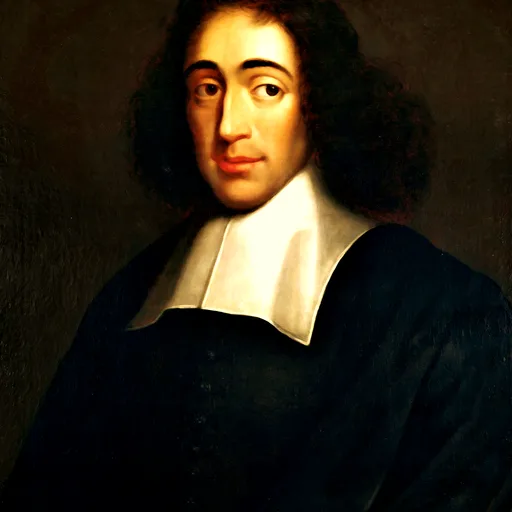
Benedictus de Spinoza
Netherlands (1632)
「Blessedness is not the reward of virtue but virtue itself.」
17th-century Dutch rationalist philosopher
Demonstrated the identity of God and Nature in the Ethics using the geometric method
The technique of recognizing the causes of emotion through reason and controlling them is a fundamental principle of stress management

Georg Wilhelm Friedrich Hegel
Germany (1770)
「I saw this world-spirit riding out through the city on reconnaissance.」
German idealist philosopher, 18th-19th century
Depicted history, spirit, and state as dynamic systems through dialectical thinking
The perspective of viewing conflict as a source of innovation connects to M&A strategy

Friedrich Wilhelm Joseph Schelling
Germany (1775)
「History as a whole is a progressive, gradually self-disclosing revelation of the Absolute.」
Major figure of German Idealism (1775-1854). At Tubingen aged fifteen with Hegel and Holderlin, he moved through Naturphilosophie, identity philosophy and a late philosophy of revelation — Proteus Schelling.
Simone de Beauvoir
France (1908)
「The present is not a potential past; it is the moment of choice and action.」
20th-century French existentialist philosopher and feminist
Presented the social construction of gender in 'The Second Sex' and pioneered feminist theory
The constructivist perspective of questioning 'what we take for granted' is the starting point of innovation

Jean-Paul Sartre
France (1905)
「A writer must not allow himself to be turned into an institution.」
20th-century French existentialist philosopher and playwright
Declared 'existence precedes essence' and systematized the philosophy of freedom and responsibility
The career view that present choices, not past attributes, define the self
Ethical Visionaries(62)
Chrysippus of Soli
Greece (28 BC)
「The wise man is free from passions, not because he does not feel, but because his judgments are correct.」
Third head of the Stoic school, 3rd century BC
Systematized Stoic philosophy into logic, ethics, and physics across 700+ works
The cognitive model treating passions as 'false judgments' is the very foundation of CBT
Seneca
Italy (0 BC)
「It is not that we have a short time to live, but that we waste much of it.」
Stoic philosopher and statesman, 1st-century Roman Empire
Warned against wasting time in 'On the Shortness of Life'
Here lies the prescription for the disposable time stolen by mindless scrolling
Zeno of Citium
CY (33 BC)
「Wellbeing is attained by little and little, and nevertheless is no little thing itself.」
Founder of Stoicism, 4th century BC, from Cyprus
After losing everything, taught that 'virtue is the only good'
The method of distinguishing controllable from uncontrollable is the source of modern resilience
Marcus Aurelius
Italy (0121)
「People seek retreats in the country, by the sea, in the mountains — but you can retire into yourself whenever you choose.」
Philosopher-emperor of the Roman Empire, 2nd century
Authored 'Meditations' and left a practical manual of Stoic philosophy
The insight that 'judgment causes suffering' is the very foundation of CBT
Gaius Musonius Rufus
Italy (0025)
「Exile is not an evil.」
Roman Stoic philosopher (c. 30-101 AD), teacher of Epictetus, the man three emperors banished and could not silence. He wrote nothing, taught in the street, and insisted on equal philosophical education for women.
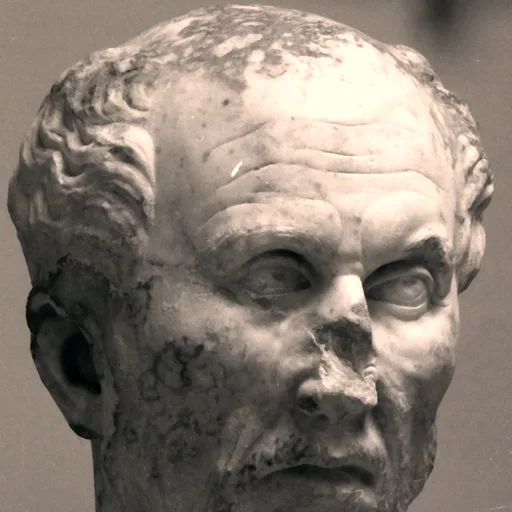
Plotinus
Italy (0205)
「Strive to return the divine in yourself to the divine in all.」
3rd-century Neoplatonic philosopher of the Roman Empire
Built a grand metaphysical system of emanation from 'the One'
'Strip away everything' is the philosophical prototype of essentialism
Socrates
Greece (46 BC)
「I am not an Athenian or a Greek, but a citizen of the world.」
Philosopher of 5th-century BC Athens
Made others aware of their ignorance through dialectic and placed 'living well' at the center of philosophy
The attitude of continually asking 'is that really so?' is the prototype of critical thinking
Aristotle
Greece (38 BC)
「All human beings by nature desire to know.」
Polymath of 4th-century BC ancient Greece
Systematized disciplines from logic to biology and defined the framework of Western knowledge
'The golden mean' and 'practical wisdom' remain uniquely human judgment that even AI cannot automate
Plato
Greece (42 BC)
「Unless philosophers rule as kings, or kings genuinely philosophize, there will be no end to troubles for states.」
Philosopher of 5th-century BC Athens
Laid the foundation of Western philosophy with the Theory of Forms and dialogues, and founded the Academy
The allegory of the cave is the origin of thinking free from the 'shadows' of social media
Diogenes of Sinope
TR (39 BC)
「I am a citizen of the world.」
5th-century BCE Cynic philosopher of ancient Greece
Lived in a storage jar and practiced the philosophy of self-sufficiency by rejecting social convention
'What do I truly need?' is a question at the very root of the FIRE movement

Antisthenes
Greece (44 BC)
「It is kingly, Socrates, to do good and be ill-spoken of.」
Greek philosopher (c. 446-366 BC), pupil of Socrates, traditional founder of Cynicism. He taught that virtue is a matter of deeds and alone suffices for happiness, laying the ascetic foundations Stoics would inherit.

Tetsuro Watsuji
Japan (1889)
「Fudo (climate and culture) is the collective term for the climate, air currents, geology, soil quality, topography, and landscape of a given land.」
Meiji-Showa era Japanese ethicist and thinker of aidagara (betweenness)
In Fudo (Climate and Culture) he developed a comparative-civilizational analysis of the relationship between climate and spiritual structure
The insight that the quality of relationships determines organizational productivity resonates with psychological safety theory
Investment Giants(47)
Benjamin Franklin
United States (1706)
「Well done is better than well said.」
18th-century American statesman, scientist, and entrepreneur
Made his fortune in printing, invented the lightning rod, and helped build the United States
He designed the prototype of subscription media 250 years ahead of its time

Kazuo Inamori
Japan (1932)
「Make an effort that yields to no one.」
Showa-Heisei era serial entrepreneur and management philosopher
Founded Kyocera and KDDI and turned around JAL in just two years
The self-interrogation 'is my motive virtuous?' is the core of altruistic management philosophy
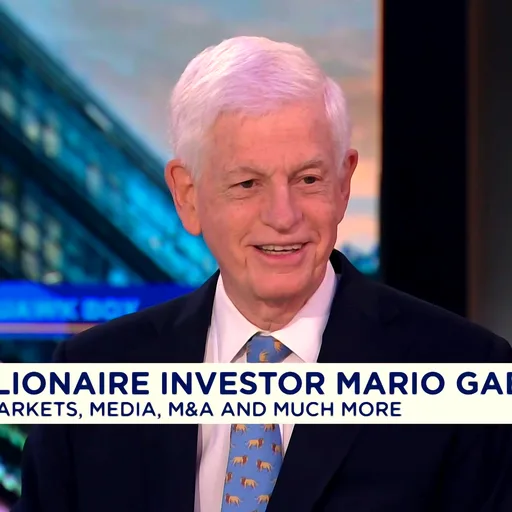
Mario Gabelli
United States (1942)
「I look at a company the way a private buyer would look at it.」
20th-century American value investor
Pioneered 'Private Market Value' to revolutionize corporate valuation
The question 'what would an acquirer pay?' measures undervaluation in three dimensions
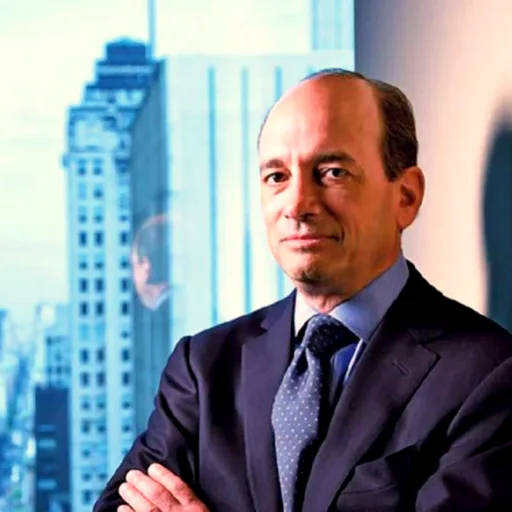
Joel Greenblatt
United States (1957)
「Choosing individual stocks without any idea of what you're looking for is like running through a dynamite factory with a burning match.」
20th-century American value investor and educator
Systematized stock selection via the Magic Formula using earnings yield and ROIC
A simple two-axis screen is the most practical gateway to individual stock picking

Jeremy Grantham
United Kingdom (1938)
「You don't get rewarded for taking risk; you get rewarded for buying cheap assets.」
20th-century British-born bubble-prediction guru
Co-founded GMO and accurately forewarned every major bubble collapse
Knowing that asset prices revert to the mean is the best antidote to optimism
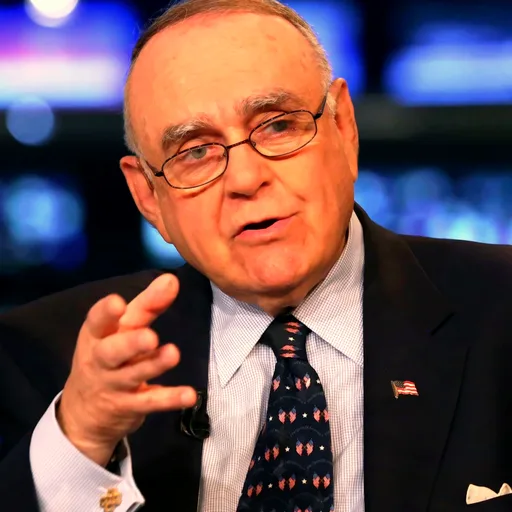
Leon G. Cooperman
United States (1943)
「The stock market is the only business I know that when things go on sale, the customers run out of the store.」
20th-century American value investor
Rose from Goldman Sachs to found Omega Advisors
Building the habit of reading quarterly reports is the foundation of stock-picking skill

Bruce Berkowitz
United States (1961)
「Concentration is the key. If you believe in something, you should bet big on it.」
21st-century American concentrated-value investor
Practiced extreme high-conviction investing at Fairholme Capital
Buying temporarily undervalued essential companies offers a framework for navigating market crashes

David Einhorn
United States (1968)
「The bulls might be right that the company's accounting is fine, but they're asking us to take it on faith. We prefer to verify.」
21st-century American value investor
Founded Greenlight Capital and flagged Lehman Brothers' problems before its collapse
The ability to read financial statements with your own eyes is the ultimate weapon in an age of information overload

Charlie Munger
United States (1924)
「The big money is not in the buying and selling, but in the waiting.」
20th-century American investor and intellectual giant
Vice Chairman of Berkshire who championed 'mental models' and multidisciplinary thinking
Those who judge by a single metric become 'a man with only a hammer'
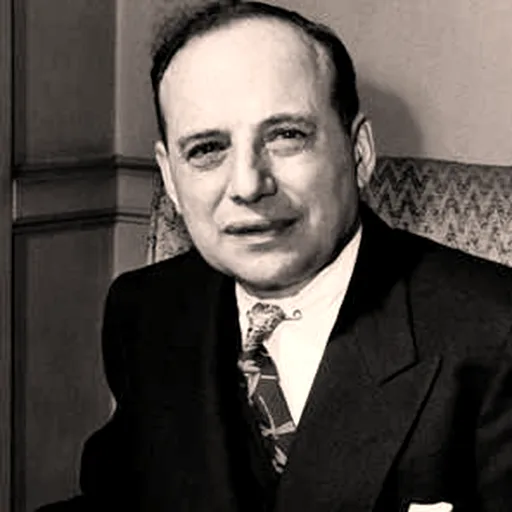
Benjamin Graham
United States (1894)
「In the short run, the market is a voting machine but in the long run, it is a weighing machine.」
Father of value investing, 20th-century America
Systematized rational investing through 'margin of safety' and 'Mr. Market'
An intellectual framework for tuning out market noise is the first step in investing

John Templeton
United States (1912)
「Bull markets are born on pessimism, grow on skepticism, mature on optimism, and die on euphoria.」
20th-century American global contrarian investor
Achieved annualized returns exceeding 15% over 38 years with the Templeton Growth Fund
A bargain market always exists somewhere -- the foundational principle of global diversification
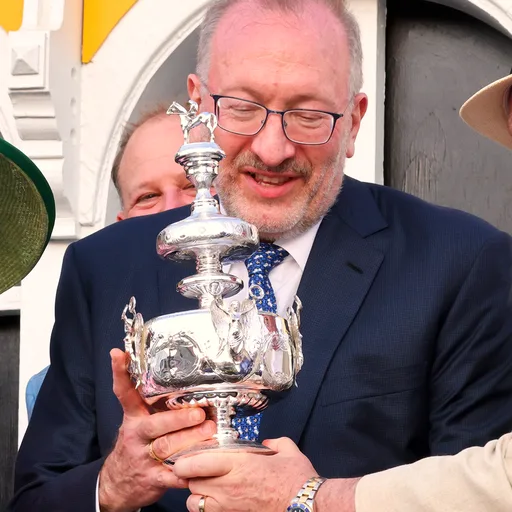
Seth Klarman
United States (1957)
「Value investing is at its core the marriage of a contrarian streak and a calculator.」
20th-century American value investor
Founded Baupost and carried the margin-of-safety concept into the modern era
'Don't lose money' takes priority over maximizing returns
Business Titans(45)
Dhirubhai Ambani
India (1932)
「Think big, think fast, think ahead. Ideas are no one's monopoly.」
20th-century Indian entrepreneur and founder of Reliance Industries
Integrated vertically from polyester trading to oil refining, building one of India's three largest conglomerates
Step-by-step backward integration from downstream demand is an approach applicable to any capital-constrained startup
Henry Ford
United States (1863)
「Failure is simply the opportunity to begin again, this time more intelligently.」
Revolutionary of the American automobile industry, 19th-20th century
Established the mass production and mass consumption model with the Model T and moving assembly line
The idea of creating the market itself through disruptive pricing is the prototype of the freemium model
John D. Rockefeller
United States (1839)
「Competition is a sin.」
19th-century American oil magnate and philanthropist
Controlled 90% of U.S. oil supply through Standard Oil
The vision to oversee the entire value chain is the prototype of platform management
Shibusawa Eiichi
Japan (1840)
「What is the root of wealth? Benevolence and moral principle. Unless grounded in right reason, wealth cannot endure.」
Bakumatsu-Taisho era industrialist, 'Father of Japanese Capitalism'
Involved in founding 500+ companies and advocated the unity of morality and economy in 'The Analects and the Abacus'
The unity of profit and ethics is the origin of purpose-driven management in the ESG era
Benjamin Franklin
United States (1706)
「Well done is better than well said.」
18th-century American statesman, scientist, and entrepreneur
Made his fortune in printing, invented the lightning rod, and helped build the United States
He designed the prototype of subscription media 250 years ahead of its time
Ratan Tata
India (1937)
「If you want to walk fast, walk alone. But if you want to walk far, walk together.」
20th-century Indian conglomerate leader and philanthropist
Transformed the Tata Group into a global enterprise through international M&A
The brand-and-technology acquisition strategy is a reference model for Asian companies expanding overseas
Elon Musk
CA (1971)
「I'd rather be optimistic and wrong than pessimistic and right.」
21st-century serial entrepreneur and technology disruptor
Commercialized electric vehicles with Tesla and private space transport with SpaceX
First-principles thinking rebuilds industry assumptions from the raw-material level up
Masaru Ibuka
Japan (1908)
「The establishment of an ideal factory — free, dynamic, and joyful — where earnest engineers can exercise their skills to the fullest.」
20th-century Japanese engineer and Sony co-founder
Created world-changing products including the transistor radio and Trinitron
The 'free, dynamic, and joyful ideal factory' is a pioneering vision of psychological safety
Mark Zuckerberg
United States (1984)
「People don't care about what you say, they care about what you build.」
21st-century American social-media entrepreneur
Founded Facebook and built a platform with over three billion monthly users
An embodiment of the MVP method: ship fast, iterate relentlessly
Bill Gates
United States (1955)
「Success is a lousy teacher. It seduces smart people into thinking they can't lose.」
20th-century American technology entrepreneur and philanthropist
Co-founded Microsoft and drove the PC revolution by dominating the OS market
Ecosystem design is the key to competitive advantage in platform strategy
Larry Page
United States (1973)
「Especially in technology, we need revolutionary change, not incremental change.」
21st-century American technology entrepreneur
Developed PageRank and co-founded Google, building the search engine into an infrastructure of the information age
Applying academic knowledge to a new context is all it takes to create disruptive innovation
Akio Morita
Japan (1921)
「I have always believed that the company should be a sort of family.」
20th-century Japanese industrialist and Sony co-founder
Conquered the world with the Walkman and redefined 'Made in Japan'
The power to create demand that does not yet exist cannot be measured by market research
Achievers(108)
Marcus Aurelius
Italy (0121)
「People seek retreats in the country, by the sea, in the mountains — but you can retire into yourself whenever you choose.」
Philosopher-emperor of the Roman Empire, 2nd century
Authored 'Meditations' and left a practical manual of Stoic philosophy
The insight that 'judgment causes suffering' is the very foundation of CBT
Democritus
Greece (46 BC)
「Courage begins the difficult deed, but fortune governs its outcome.」
5th-century BCE ancient Greek natural philosopher
Proposed that the ultimate constituents of reality are atoms and void
Looking past surfaces to underlying structure is the starting point of fundamental analysis
Aristotle
Greece (38 BC)
「All human beings by nature desire to know.」
Polymath of 4th-century BC ancient Greece
Systematized disciplines from logic to biology and defined the framework of Western knowledge
'The golden mean' and 'practical wisdom' remain uniquely human judgment that even AI cannot automate
Confucius
China (55 BC)
「Knowing it is less than loving it; loving it is less than delighting in it.」
Founder of Confucianism, 6th century BC Spring and Autumn period
Built a practical moral system centered on benevolence, ritual, and filial piety, recorded in the Analerta
'Do not do unto others what you would not have done unto you' is the origin of business ethics
Laozi
China (57 BC)
「The highest goodness is like water. Water benefits all things and does not compete; it dwells in places others disdain, and so is close to the Tao.」
Founder of Taoist thought, circa 6th century BC
Condensed the philosophy of 'the Way' and 'wu wei' into the 5,000-character 'Tao Te Ching'
The admonition against over-intervention, 'be like water,' resonates with the spirit of agile management
Simone de Beauvoir
France (1908)
「The present is not a potential past; it is the moment of choice and action.」
20th-century French existentialist philosopher and feminist
Presented the social construction of gender in 'The Second Sex' and pioneered feminist theory
The constructivist perspective of questioning 'what we take for granted' is the starting point of innovation
Bertrand Russell
United Kingdom (1872)
「Three passions, simple but overwhelmingly strong, have governed my life: the longing for love, the search for knowledge, and unbearable pity for the suffering of mankind.」
19th-20th century British philosopher and logician
Attempted to ground mathematics in logic with Principia Mathematica
Decomposing complex problems into their smallest units is the essence of data-driven management
William James
United States (1842)
「The true is the name of whatever proves itself to be good in the way of belief, and good, too, for definite, assignable reasons.」
19th-century American psychologist and pragmatist philosopher
Opened America's first psychology course and coined the 'stream of consciousness'
Pragmatism's test — 'does it actually work?' — is the operating principle for the AI age
Dhirubhai Ambani
India (1932)
「Think big, think fast, think ahead. Ideas are no one's monopoly.」
20th-century Indian entrepreneur and founder of Reliance Industries
Integrated vertically from polyester trading to oil refining, building one of India's three largest conglomerates
Step-by-step backward integration from downstream demand is an approach applicable to any capital-constrained startup
Henry Ford
United States (1863)
「Failure is simply the opportunity to begin again, this time more intelligently.」
Revolutionary of the American automobile industry, 19th-20th century
Established the mass production and mass consumption model with the Model T and moving assembly line
The idea of creating the market itself through disruptive pricing is the prototype of the freemium model
Benjamin Franklin
United States (1706)
「Well done is better than well said.」
18th-century American statesman, scientist, and entrepreneur
Made his fortune in printing, invented the lightning rod, and helped build the United States
He designed the prototype of subscription media 250 years ahead of its time
Ratan Tata
India (1937)
「If you want to walk fast, walk alone. But if you want to walk far, walk together.」
20th-century Indian conglomerate leader and philanthropist
Transformed the Tata Group into a global enterprise through international M&A
The brand-and-technology acquisition strategy is a reference model for Asian companies expanding overseas
Lifelong Learners(51)
Seneca
Italy (0 BC)
「It is not that we have a short time to live, but that we waste much of it.」
Stoic philosopher and statesman, 1st-century Roman Empire
Warned against wasting time in 'On the Shortness of Life'
Here lies the prescription for the disposable time stolen by mindless scrolling
Hypatia
EG (0360)
「Reserve your right to think, for even to think wrongly is better than not to think at all.」
Philosopher and mathematician in 4th-century Alexandria
Led a school transcending sects and was called the last light of ancient intellect
The courage to maintain intellectual independence is essential in our era of social media polarization
Xunzi
China (31 BC)
「Blue dye is extracted from the indigo plant, yet it is bluer than indigo itself.」
3rd-century BCE Confucian scholar of the Warring States era
Proclaimed the doctrine of evil nature and championed acquired self-cultivation through ritual and study
The idea of channeling behavior through institutional design converges with modern nudge theory
Confucius
China (55 BC)
「Knowing it is less than loving it; loving it is less than delighting in it.」
Founder of Confucianism, 6th century BC Spring and Autumn period
Built a practical moral system centered on benevolence, ritual, and filial piety, recorded in the Analerta
'Do not do unto others what you would not have done unto you' is the origin of business ethics
Laozi
China (57 BC)
「The highest goodness is like water. Water benefits all things and does not compete; it dwells in places others disdain, and so is close to the Tao.」
Founder of Taoist thought, circa 6th century BC
Condensed the philosophy of 'the Way' and 'wu wei' into the 5,000-character 'Tao Te Ching'
The admonition against over-intervention, 'be like water,' resonates with the spirit of agile management
Mencius
China (37 BC)
「Those who fully develop their mind know their nature. Knowing their nature, they know Heaven.」
Confucian sage and 'Second Sage', 4th century BC Warring States
Systematized the theory of innate goodness and advocated benevolent governance
The belief in innate seeds of goodness is the Eastern origin of Theory Y management

Zhu Xi
China (1130)
「Investigate things to extend knowledge.」
Southern Song Confucian (1130-1200), the systematizer of Neo-Confucianism. His Four Books commentaries served as China's civil-service exam basis from 1313 to 1905, shaping East Asia's governing class for six centuries.
Friedrich Nietzsche
Germany (1844)
「Whoever fights monsters should see to it that in the process he does not become a monster. And when you gaze long into an abyss, the abyss gazes also into you.」
19th-century German philosopher
Shook modern philosophy to its foundations with 'God is dead,' 'Ubermensch,' and 'eternal return'
After the collapse of absolute values, we are challenged to create our own

Francis Bacon
United Kingdom (1561)
「Knowledge itself is power.」
Born 1561 in London, Francis Bacon rose to Lord Chancellor under James I and laid the philosophical foundation of modern science. Author of "Knowledge is power" and the doctrine of the four Idols, his Novum Organum.

Thomas Aquinas
Italy (1225)
「Man cannot naturally will the good except under the aspect of the good.」
13th-century Italian theologian and philosopher
Systematically integrated Aristotelian philosophy with Christian theology
The method of accurately understanding an objection before building one's own argument is a timeless foundation for debate
Henry Ford
United States (1863)
「Failure is simply the opportunity to begin again, this time more intelligently.」
Revolutionary of the American automobile industry, 19th-20th century
Established the mass production and mass consumption model with the Model T and moving assembly line
The idea of creating the market itself through disruptive pricing is the prototype of the freemium model
Shibusawa Eiichi
Japan (1840)
「What is the root of wealth? Benevolence and moral principle. Unless grounded in right reason, wealth cannot endure.」
Bakumatsu-Taisho era industrialist, 'Father of Japanese Capitalism'
Involved in founding 500+ companies and advocated the unity of morality and economy in 'The Analects and the Abacus'
The unity of profit and ethics is the origin of purpose-driven management in the ESG era
Masters of Self-Reflection(90)
Zeno of Citium
CY (33 BC)
「Wellbeing is attained by little and little, and nevertheless is no little thing itself.」
Founder of Stoicism, 4th century BC, from Cyprus
After losing everything, taught that 'virtue is the only good'
The method of distinguishing controllable from uncontrollable is the source of modern resilience
Marcus Aurelius
Italy (0121)
「People seek retreats in the country, by the sea, in the mountains — but you can retire into yourself whenever you choose.」
Philosopher-emperor of the Roman Empire, 2nd century
Authored 'Meditations' and left a practical manual of Stoic philosophy
The insight that 'judgment causes suffering' is the very foundation of CBT
Hypatia
EG (0360)
「Reserve your right to think, for even to think wrongly is better than not to think at all.」
Philosopher and mathematician in 4th-century Alexandria
Led a school transcending sects and was called the last light of ancient intellect
The courage to maintain intellectual independence is essential in our era of social media polarization
Plotinus
Italy (0205)
「Strive to return the divine in yourself to the divine in all.」
3rd-century Neoplatonic philosopher of the Roman Empire
Built a grand metaphysical system of emanation from 'the One'
'Strip away everything' is the philosophical prototype of essentialism
Socrates
Greece (46 BC)
「I am not an Athenian or a Greek, but a citizen of the world.」
Philosopher of 5th-century BC Athens
Made others aware of their ignorance through dialectic and placed 'living well' at the center of philosophy
The attitude of continually asking 'is that really so?' is the prototype of critical thinking
Plato
Greece (42 BC)
「Unless philosophers rule as kings, or kings genuinely philosophize, there will be no end to troubles for states.」
Philosopher of 5th-century BC Athens
Laid the foundation of Western philosophy with the Theory of Forms and dialogues, and founded the Academy
The allegory of the cave is the origin of thinking free from the 'shadows' of social media

Kitarō Nishida
Japan (1870)
「The good, in a word, is the realization of personality.」
Meiji-to-Showa era philosopher and founder of the Kyoto School
Built an original philosophical system through 'pure experience' and the 'logic of place'
Integrating pre-reflective intuition with analysis is the core of leadership
Xunzi
China (31 BC)
「Blue dye is extracted from the indigo plant, yet it is bluer than indigo itself.」
3rd-century BCE Confucian scholar of the Warring States era
Proclaimed the doctrine of evil nature and championed acquired self-cultivation through ritual and study
The idea of channeling behavior through institutional design converges with modern nudge theory
Confucius
China (55 BC)
「Knowing it is less than loving it; loving it is less than delighting in it.」
Founder of Confucianism, 6th century BC Spring and Autumn period
Built a practical moral system centered on benevolence, ritual, and filial piety, recorded in the Analerta
'Do not do unto others what you would not have done unto you' is the origin of business ethics
Laozi
China (57 BC)
「The highest goodness is like water. Water benefits all things and does not compete; it dwells in places others disdain, and so is close to the Tao.」
Founder of Taoist thought, circa 6th century BC
Condensed the philosophy of 'the Way' and 'wu wei' into the 5,000-character 'Tao Te Ching'
The admonition against over-intervention, 'be like water,' resonates with the spirit of agile management
Mencius
China (37 BC)
「Those who fully develop their mind know their nature. Knowing their nature, they know Heaven.」
Confucian sage and 'Second Sage', 4th century BC Warring States
Systematized the theory of innate goodness and advocated benevolent governance
The belief in innate seeds of goodness is the Eastern origin of Theory Y management

Shinran
Japan (1173)
「Even the good are saved; how much more the evil one.」
Founder of Jodo Shinshu Buddhism (1173-1263). After twenty years on Mt Hiei he joined Honen's nembutsu movement at thirty-five. Exiled in 1207, he became neither monk nor layman, married, and taught absolute other-power.
Masters of Discipline(53)
Seneca
Italy (0 BC)
「It is not that we have a short time to live, but that we waste much of it.」
Stoic philosopher and statesman, 1st-century Roman Empire
Warned against wasting time in 'On the Shortness of Life'
Here lies the prescription for the disposable time stolen by mindless scrolling
Zeno of Citium
CY (33 BC)
「Wellbeing is attained by little and little, and nevertheless is no little thing itself.」
Founder of Stoicism, 4th century BC, from Cyprus
After losing everything, taught that 'virtue is the only good'
The method of distinguishing controllable from uncontrollable is the source of modern resilience
Marcus Aurelius
Italy (0121)
「People seek retreats in the country, by the sea, in the mountains — but you can retire into yourself whenever you choose.」
Philosopher-emperor of the Roman Empire, 2nd century
Authored 'Meditations' and left a practical manual of Stoic philosophy
The insight that 'judgment causes suffering' is the very foundation of CBT
Hypatia
EG (0360)
「Reserve your right to think, for even to think wrongly is better than not to think at all.」
Philosopher and mathematician in 4th-century Alexandria
Led a school transcending sects and was called the last light of ancient intellect
The courage to maintain intellectual independence is essential in our era of social media polarization
Plotinus
Italy (0205)
「Strive to return the divine in yourself to the divine in all.」
3rd-century Neoplatonic philosopher of the Roman Empire
Built a grand metaphysical system of emanation from 'the One'
'Strip away everything' is the philosophical prototype of essentialism
Democritus
Greece (46 BC)
「Courage begins the difficult deed, but fortune governs its outcome.」
5th-century BCE ancient Greek natural philosopher
Proposed that the ultimate constituents of reality are atoms and void
Looking past surfaces to underlying structure is the starting point of fundamental analysis
Epicurus
Greece (34 BC)
「Live unknown.」
4th-century BCE ancient Greek philosopher
Defined the essence of pleasure as ataraxia — tranquility of mind through the removal of pain
His three-part classification of desires is a ready-made tool for reassessing consumption and career choices
Kitarō Nishida
Japan (1870)
「The good, in a word, is the realization of personality.」
Meiji-to-Showa era philosopher and founder of the Kyoto School
Built an original philosophical system through 'pure experience' and the 'logic of place'
Integrating pre-reflective intuition with analysis is the core of leadership
Xunzi
China (31 BC)
「Blue dye is extracted from the indigo plant, yet it is bluer than indigo itself.」
3rd-century BCE Confucian scholar of the Warring States era
Proclaimed the doctrine of evil nature and championed acquired self-cultivation through ritual and study
The idea of channeling behavior through institutional design converges with modern nudge theory

Immanuel Kant
Germany (1724)
「Two things fill the mind with ever new and increasing admiration and reverence: the starry heavens above me and the moral law within me.」
18th-century Prussian philosopher
Brought a Copernican revolution to epistemology with the 'Critique of Pure Reason'
Distinguishing what can be known from what cannot elevates the quality of decision-making

Hannah Arendt
United States (1906)
「The sad truth is that most evil is done by people who never make up their minds to be good or evil.」
20th-century German-born political philosopher
Revealed how thoughtlessness enables great evil through the concept of 'the banality of evil'
The habit of thinking for yourself is the last bulwark against organizational misconduct
Dhirubhai Ambani
India (1932)
「Think big, think fast, think ahead. Ideas are no one's monopoly.」
20th-century Indian entrepreneur and founder of Reliance Industries
Integrated vertically from polyester trading to oil refining, building one of India's three largest conglomerates
Step-by-step backward integration from downstream demand is an approach applicable to any capital-constrained startup
Figures Who Moved Hearts(96)
Zeno of Citium
CY (33 BC)
「Wellbeing is attained by little and little, and nevertheless is no little thing itself.」
Founder of Stoicism, 4th century BC, from Cyprus
After losing everything, taught that 'virtue is the only good'
The method of distinguishing controllable from uncontrollable is the source of modern resilience
Marcus Aurelius
Italy (0121)
「People seek retreats in the country, by the sea, in the mountains — but you can retire into yourself whenever you choose.」
Philosopher-emperor of the Roman Empire, 2nd century
Authored 'Meditations' and left a practical manual of Stoic philosophy
The insight that 'judgment causes suffering' is the very foundation of CBT
Gaius Musonius Rufus
Italy (0025)
「Exile is not an evil.」
Roman Stoic philosopher (c. 30-101 AD), teacher of Epictetus, the man three emperors banished and could not silence. He wrote nothing, taught in the street, and insisted on equal philosophical education for women.
Hypatia
EG (0360)
「Reserve your right to think, for even to think wrongly is better than not to think at all.」
Philosopher and mathematician in 4th-century Alexandria
Led a school transcending sects and was called the last light of ancient intellect
The courage to maintain intellectual independence is essential in our era of social media polarization
Pythagoras
Greece (58 BC)
「There is geometry in the humming of the strings, there is music in the spacing of the spheres.」
Mathematician and philosopher, 6th century BC
Proclaimed 'all is number' and laid the foundation for a mathematical worldview
The intellectual origin of our data-driven society begins here
Socrates
Greece (46 BC)
「I am not an Athenian or a Greek, but a citizen of the world.」
Philosopher of 5th-century BC Athens
Made others aware of their ignorance through dialectic and placed 'living well' at the center of philosophy
The attitude of continually asking 'is that really so?' is the prototype of critical thinking
Tetsuro Watsuji
Japan (1889)
「Fudo (climate and culture) is the collective term for the climate, air currents, geology, soil quality, topography, and landscape of a given land.」
Meiji-Showa era Japanese ethicist and thinker of aidagara (betweenness)
In Fudo (Climate and Culture) he developed a comparative-civilizational analysis of the relationship between climate and spiritual structure
The insight that the quality of relationships determines organizational productivity resonates with psychological safety theory
Xunzi
China (31 BC)
「Blue dye is extracted from the indigo plant, yet it is bluer than indigo itself.」
3rd-century BCE Confucian scholar of the Warring States era
Proclaimed the doctrine of evil nature and championed acquired self-cultivation through ritual and study
The idea of channeling behavior through institutional design converges with modern nudge theory
Confucius
China (55 BC)
「Knowing it is less than loving it; loving it is less than delighting in it.」
Founder of Confucianism, 6th century BC Spring and Autumn period
Built a practical moral system centered on benevolence, ritual, and filial piety, recorded in the Analerta
'Do not do unto others what you would not have done unto you' is the origin of business ethics
Mencius
China (37 BC)
「Those who fully develop their mind know their nature. Knowing their nature, they know Heaven.」
Confucian sage and 'Second Sage', 4th century BC Warring States
Systematized the theory of innate goodness and advocated benevolent governance
The belief in innate seeds of goodness is the Eastern origin of Theory Y management

Mozi
China (46 BC)
「To do what is right is not to avoid blame and seek praise.」
Founder of Mohism in Warring States China (c. 470-390 BCE). Impartial care (jian ai) and non-aggression (fei gong) made Mohism the chief rival of Confucianism. Mohists also pioneered Chinese logic and engineering.

Han Fei
China (27 BC)
「Affairs unfold in the four directions; their hinge is at the centre.」
Warring States philosopher (c.280-233 BC) and great synthesiser of Legalism. He integrated Shang Yang's fa (law), Shen Buhai's shu (technique) and Shen Dao's shi (authority) — the backbone of Qin's unification.
Patient Visionaries(85)
Epictetus
Italy (0050)
「We suffer not from events but from our judgments about them.」
Stoic philosopher and former slave, 1st-century Roman Empire
Taught the distinction between controllable and uncontrollable in 'Discourses' and 'Enchiridion'
The dichotomy of control is the origin of stress management and CBT
Seneca
Italy (0 BC)
「It is not that we have a short time to live, but that we waste much of it.」
Stoic philosopher and statesman, 1st-century Roman Empire
Warned against wasting time in 'On the Shortness of Life'
Here lies the prescription for the disposable time stolen by mindless scrolling
Epicurus
Greece (34 BC)
「Live unknown.」
4th-century BCE ancient Greek philosopher
Defined the essence of pleasure as ataraxia — tranquility of mind through the removal of pain
His three-part classification of desires is a ready-made tool for reassessing consumption and career choices
Xunzi
China (31 BC)
「Blue dye is extracted from the indigo plant, yet it is bluer than indigo itself.」
3rd-century BCE Confucian scholar of the Warring States era
Proclaimed the doctrine of evil nature and championed acquired self-cultivation through ritual and study
The idea of channeling behavior through institutional design converges with modern nudge theory
Friedrich Nietzsche
Germany (1844)
「Whoever fights monsters should see to it that in the process he does not become a monster. And when you gaze long into an abyss, the abyss gazes also into you.」
19th-century German philosopher
Shook modern philosophy to its foundations with 'God is dead,' 'Ubermensch,' and 'eternal return'
After the collapse of absolute values, we are challenged to create our own
Dhirubhai Ambani
India (1932)
「Think big, think fast, think ahead. Ideas are no one's monopoly.」
20th-century Indian entrepreneur and founder of Reliance Industries
Integrated vertically from polyester trading to oil refining, building one of India's three largest conglomerates
Step-by-step backward integration from downstream demand is an approach applicable to any capital-constrained startup
Benjamin Franklin
United States (1706)
「Well done is better than well said.」
18th-century American statesman, scientist, and entrepreneur
Made his fortune in printing, invented the lightning rod, and helped build the United States
He designed the prototype of subscription media 250 years ahead of its time
Ratan Tata
India (1937)
「If you want to walk fast, walk alone. But if you want to walk far, walk together.」
20th-century Indian conglomerate leader and philanthropist
Transformed the Tata Group into a global enterprise through international M&A
The brand-and-technology acquisition strategy is a reference model for Asian companies expanding overseas
Bill Gates
United States (1955)
「Success is a lousy teacher. It seduces smart people into thinking they can't lose.」
20th-century American technology entrepreneur and philanthropist
Co-founded Microsoft and drove the PC revolution by dominating the OS market
Ecosystem design is the key to competitive advantage in platform strategy
Steve Jobs
United States (1955)
「Design is not just what it looks like and feels like. Design is how it works.」
20th-century American technology entrepreneur
Redefined personal computing with the iPhone and Mac
The focus to decide 'what not to do' becomes the ultimate competitive advantage
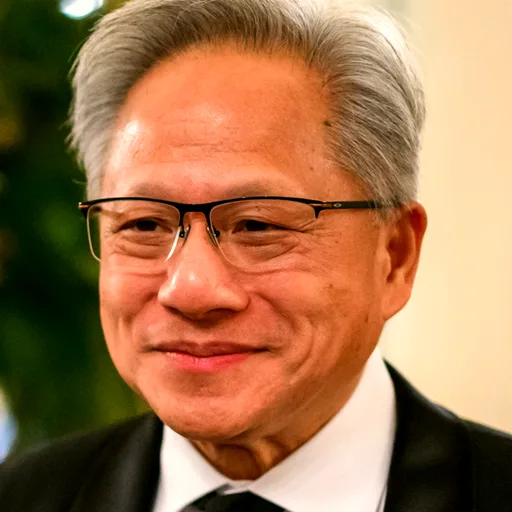
Jensen Huang
United States (1963)
「The conditions of surrender are so much better than the conditions of success. This is why successful people are rare.」
21st-century American semiconductor CEO
Co-founded NVIDIA and evolved the GPU into the infrastructure of the AI era
Building an integrated hardware-software ecosystem is what creates platform dominance
Jeff Bezos
United States (1964)
「If you double the number of experiments you do per year you're going to double your inventiveness.」
20th-century American technology entrepreneur
Founded Amazon and reshaped industry structures through e-commerce and cloud computing
The Regret Minimization Framework is a compass for irreversible decisions
Risk Takers(44)

Søren Kierkegaard
Denmark (1813)
「Anxiety is the dizziness of freedom.」
19th-century Danish father of existentialism
Challenged Hegel's system from the standpoint of the 'single individual' and delineated three stages of existence
The foresight to see that more choices breed more anxiety, not less
Benjamin Franklin
United States (1706)
「Well done is better than well said.」
18th-century American statesman, scientist, and entrepreneur
Made his fortune in printing, invented the lightning rod, and helped build the United States
He designed the prototype of subscription media 250 years ahead of its time

Reed Hastings
United States (1960)
「Do not tolerate brilliant jerks. The cost to teamwork is too high.」
21st-century American subscription-model entrepreneur
Executed Netflix's self-disrupting pivot from DVD rental to streaming
The willingness to destroy your own business is what overcomes the innovator's dilemma
Kazuo Inamori
Japan (1932)
「Make an effort that yields to no one.」
Showa-Heisei era serial entrepreneur and management philosopher
Founded Kyocera and KDDI and turned around JAL in just two years
The self-interrogation 'is my motive virtuous?' is the core of altruistic management philosophy
Joel Greenblatt
United States (1957)
「Choosing individual stocks without any idea of what you're looking for is like running through a dynamite factory with a burning match.」
20th-century American value investor and educator
Systematized stock selection via the Magic Formula using earnings yield and ROIC
A simple two-axis screen is the most practical gateway to individual stock picking
Jeremy Grantham
United Kingdom (1938)
「You don't get rewarded for taking risk; you get rewarded for buying cheap assets.」
20th-century British-born bubble-prediction guru
Co-founded GMO and accurately forewarned every major bubble collapse
Knowing that asset prices revert to the mean is the best antidote to optimism
Bruce Berkowitz
United States (1961)
「Concentration is the key. If you believe in something, you should bet big on it.」
21st-century American concentrated-value investor
Practiced extreme high-conviction investing at Fairholme Capital
Buying temporarily undervalued essential companies offers a framework for navigating market crashes
David Einhorn
United States (1968)
「The bulls might be right that the company's accounting is fine, but they're asking us to take it on faith. We prefer to verify.」
21st-century American value investor
Founded Greenlight Capital and flagged Lehman Brothers' problems before its collapse
The ability to read financial statements with your own eyes is the ultimate weapon in an age of information overload
Benjamin Graham
United States (1894)
「In the short run, the market is a voting machine but in the long run, it is a weighing machine.」
Father of value investing, 20th-century America
Systematized rational investing through 'margin of safety' and 'Mr. Market'
An intellectual framework for tuning out market noise is the first step in investing
John Templeton
United States (1912)
「Bull markets are born on pessimism, grow on skepticism, mature on optimism, and die on euphoria.」
20th-century American global contrarian investor
Achieved annualized returns exceeding 15% over 38 years with the Templeton Growth Fund
A bargain market always exists somewhere -- the foundational principle of global diversification
Seth Klarman
United States (1957)
「Value investing is at its core the marriage of a contrarian streak and a calculator.」
20th-century American value investor
Founded Baupost and carried the margin-of-safety concept into the modern era
'Don't lose money' takes priority over maximizing returns

Guy Spier
Switzerland (1966)
「I learned more about investing from that lunch with Warren Buffett than from any book I have ever read.」
21st-century Zurich-based value investor
Known for the Buffett charity lunch; advocates an investment philosophy centered on environment design
Building an environment that filters out information noise is what determines investment outcomes
Seekers of Happiness(56)
Seneca
Italy (0 BC)
「It is not that we have a short time to live, but that we waste much of it.」
Stoic philosopher and statesman, 1st-century Roman Empire
Warned against wasting time in 'On the Shortness of Life'
Here lies the prescription for the disposable time stolen by mindless scrolling
Zeno of Citium
CY (33 BC)
「Wellbeing is attained by little and little, and nevertheless is no little thing itself.」
Founder of Stoicism, 4th century BC, from Cyprus
After losing everything, taught that 'virtue is the only good'
The method of distinguishing controllable from uncontrollable is the source of modern resilience
Marcus Aurelius
Italy (0121)
「People seek retreats in the country, by the sea, in the mountains — but you can retire into yourself whenever you choose.」
Philosopher-emperor of the Roman Empire, 2nd century
Authored 'Meditations' and left a practical manual of Stoic philosophy
The insight that 'judgment causes suffering' is the very foundation of CBT
Hierocles
Italy
「It is the task of one rightly oriented toward others to draw the circles in toward the centre.」
Roman Stoic of the second century AD, known almost entirely through one papyrus recovered at Hermopolis in 1901. His concentric-circles model of cosmopolitanism remains a key tool in modern moral philosophy.
Gaius Musonius Rufus
Italy (0025)
「Exile is not an evil.」
Roman Stoic philosopher (c. 30-101 AD), teacher of Epictetus, the man three emperors banished and could not silence. He wrote nothing, taught in the street, and insisted on equal philosophical education for women.

Panaetius
Greece (18 BC)
「Only that which is to be sought for its own sake is truly moral (honestum).」
Greek Stoic (c. 185-109 BC), last head of the Athenian Stoa. He reformed strict early Stoicism into a liveable ethics. His On Duties survives via Cicero and shaped Western moral and political thought for two millennia.
Democritus
Greece (46 BC)
「Courage begins the difficult deed, but fortune governs its outcome.」
5th-century BCE ancient Greek natural philosopher
Proposed that the ultimate constituents of reality are atoms and void
Looking past surfaces to underlying structure is the starting point of fundamental analysis
Socrates
Greece (46 BC)
「I am not an Athenian or a Greek, but a citizen of the world.」
Philosopher of 5th-century BC Athens
Made others aware of their ignorance through dialectic and placed 'living well' at the center of philosophy
The attitude of continually asking 'is that really so?' is the prototype of critical thinking
Aristotle
Greece (38 BC)
「All human beings by nature desire to know.」
Polymath of 4th-century BC ancient Greece
Systematized disciplines from logic to biology and defined the framework of Western knowledge
'The golden mean' and 'practical wisdom' remain uniquely human judgment that even AI cannot automate
Epicurus
Greece (34 BC)
「Live unknown.」
4th-century BCE ancient Greek philosopher
Defined the essence of pleasure as ataraxia — tranquility of mind through the removal of pain
His three-part classification of desires is a ready-made tool for reassessing consumption and career choices
Antisthenes
Greece (44 BC)
「It is kingly, Socrates, to do good and be ill-spoken of.」
Greek philosopher (c. 446-366 BC), pupil of Socrates, traditional founder of Cynicism. He taught that virtue is a matter of deeds and alone suffices for happiness, laying the ascetic foundations Stoics would inherit.

Iamblichus
SY (0245)
「Communion between the gods and us is brought about through theurgy.」
Born c. 245 in Chalcis, Syria, Iamblichus turned Neoplatonism from contemplation toward ritual. A pupil of Porphyry but his rival on theurgy, he founded the Apamea school and shaped the later course of Neoplatonism.
Contrarian Thinkers(24)
Joel Greenblatt
United States (1957)
「Choosing individual stocks without any idea of what you're looking for is like running through a dynamite factory with a burning match.」
20th-century American value investor and educator
Systematized stock selection via the Magic Formula using earnings yield and ROIC
A simple two-axis screen is the most practical gateway to individual stock picking
Jeremy Grantham
United Kingdom (1938)
「You don't get rewarded for taking risk; you get rewarded for buying cheap assets.」
20th-century British-born bubble-prediction guru
Co-founded GMO and accurately forewarned every major bubble collapse
Knowing that asset prices revert to the mean is the best antidote to optimism
Leon G. Cooperman
United States (1943)
「The stock market is the only business I know that when things go on sale, the customers run out of the store.」
20th-century American value investor
Rose from Goldman Sachs to found Omega Advisors
Building the habit of reading quarterly reports is the foundation of stock-picking skill
Benjamin Graham
United States (1894)
「In the short run, the market is a voting machine but in the long run, it is a weighing machine.」
Father of value investing, 20th-century America
Systematized rational investing through 'margin of safety' and 'Mr. Market'
An intellectual framework for tuning out market noise is the first step in investing
John Templeton
United States (1912)
「Bull markets are born on pessimism, grow on skepticism, mature on optimism, and die on euphoria.」
20th-century American global contrarian investor
Achieved annualized returns exceeding 15% over 38 years with the Templeton Growth Fund
A bargain market always exists somewhere -- the foundational principle of global diversification
Seth Klarman
United States (1957)
「Value investing is at its core the marriage of a contrarian streak and a calculator.」
20th-century American value investor
Founded Baupost and carried the margin-of-safety concept into the modern era
'Don't lose money' takes priority over maximizing returns
Guy Spier
Switzerland (1966)
「I learned more about investing from that lunch with Warren Buffett than from any book I have ever read.」
21st-century Zurich-based value investor
Known for the Buffett charity lunch; advocates an investment philosophy centered on environment design
Building an environment that filters out information noise is what determines investment outcomes

Mohnish Pabrai
United States (1964)
「Invest in existing businesses. Invest in simple businesses. Invest in distressed businesses in distressed industries.」
21st-century American value-investing practitioner
Systematized the 'low risk, high return' principle in The Dhandho Investor
Calculating worst-case losses first is a discipline that prevents beginners from over-investing
.webp)
John Neff
United States (1931)
「We were ugly-duckling buyers from start to finish.」
20th-century American contrarian value investor
Beat the market for 31 consecutive years running the Windsor Fund
Screening for low-P/E stocks is the most accessible gateway to value investing

Warren Buffett
United States (1930)
「Risk comes from not knowing what you're doing.」
20th-century American investor, the 'Oracle of Omaha'
Led Berkshire Hathaway to ~20% compound annual growth over half a century
The discipline of competing only within your 'circle of competence' is the core of long-term investing
Honda Seiroku
Japan (1866)
「In prosperous times, save diligently; in downturns, invest boldly.」
Meiji-Showa era forestry scholar and individual investor
Built a fortune through the 'quarter savings' method and donated it all
Systematic investment is the strongest starting point in the era of tax-free accounts
Howard Marks
United States
「Being too far ahead of your time is indistinguishable from being wrong.」
20th-century American distressed debt investor and thinker
Co-founded Oaktree and championed the importance of 'second-level thinking'
The habit of always asking 'is it already priced in?' is the key