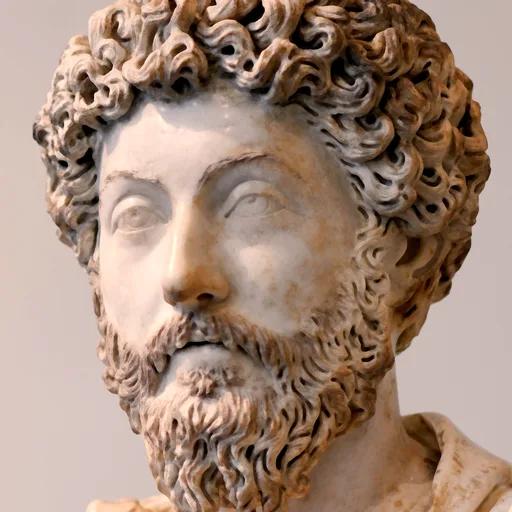
Philosophers / Ancient Greek

Proclus
Greece 0412-02-09 ~ 0485-04-18
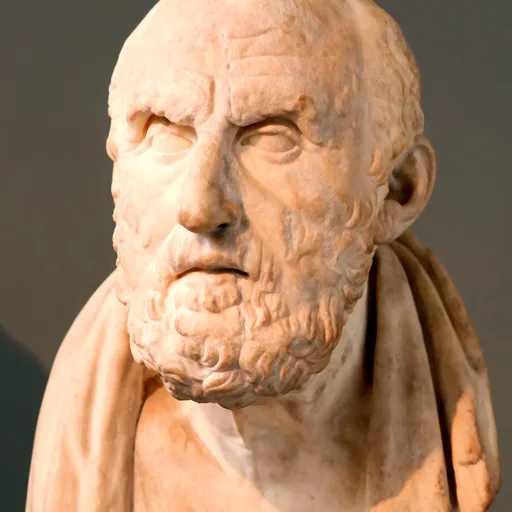
Born 412 in Constantinople, Proclus was the last great philosopher of late antiquity, head of the Athenian Academy for nearly fifty years. His Elements of Theology, 211 propositions modelled on Euclid, threaded one line.
What You Can Learn
What modern professionals can take from Proclus is a method for stacking enormous systems out of small, provable steps. His Elements of Theology is 211 propositions, each with a proof, climbing from the most abstract idea to the embodied soul. That is exactly how complex business plans, software architectures, and research programmes get built today: decompose, prove dependencies one by one, then stack. He also fused mathematics, theology, geometry, and ritual into a single working person — the classical case of.
Words That Resonate
Everything perfect proceeds outward from its own perfection.
Πᾶν τὸ τέλειον ἀπὸ τῆς ἑαυτοῦ τελειότητος προέρχεται.
Every unity either participates in the One or is itself the One.
Πᾶν τὸ ἓν ἢ μετέχει τοῦ ἑνὸς ἢ αὐτοέν ἐστιν.
The soul is forever the mover of itself.
Ἡ ψυχὴ ἑαυτὴν κινεῖ πάντοτε.
All beings proceed from the One.
Πάντα τὰ ὄντα ἐκ τοῦ ἑνὸς πρόεισιν.
Life & Legacy
Proclus brought Neoplatonism to its most complete systematic form and pushed that system, by way of medieval translators, all the way into German Idealism. His biographer reports he wrote seven hundred lines a day; the energy of a fading classical world poured into his books just before that world closed.
Born in 412 in Constantinople to a Lycian upper-class family, he was meant to be a lawyer like his father. After studying rhetoric, philosophy, and mathematics in Alexandria, he tried legal practice, decided philosophy was what he wanted, and returned to study Aristotle under Olympiodorus the Elder. In 431 he moved to Athens, joined the Neoplatonic Academy under Plutarch and Syrianus, and at twenty-five succeeded Syrianus as head.
He was a vegetarian, never married, generous to friends, ascetic — his life was the philosophy he taught. As Christianity tightened its grip on Athens he continued to perform pagan rites and is said to have practised theurgic acts including rainmaking and visions of Hekate. Christian pressure once forced him into a year of exile, but he returned and stayed at the Academy until his death in 485.
His three central works are the Elements of Theology, the Platonic Theology, and the Commentary on the First Book of Euclid's Elements. The Elements is a chain of 211 propositions, each with a proof, climbing from the One down to embodied souls. An Arabic adaptation reached medieval Europe as Liber de Causis, mistakenly attributed to Aristotle; only when Aquinas read William of Moerbeke's accurate Latin did the true source emerge.
The Euclid commentary is the major surviving ancient text on the philosophy of mathematics. Quoting Eudemus's lost History of Geometry, it preserves the early history of Greek mathematics and lays out a Platonic view of mathematical objects as independent entities sitting between mind and matter. That view runs forward into modern mathematical Platonism.
Hegel rated Proclus higher than Plotinus and called the.
Expert Perspective
Proclus is the last systematic philosopher of late antiquity, gathering two thousand years of Platonic accumulation into a single quasi-geometric architecture. His system absorbs Pythagorean number-theory, Platonic Forms, Aristotelian substance, Stoic providence, Neoplatonic emanation, and Chaldean.