Philosophers / Stoicism
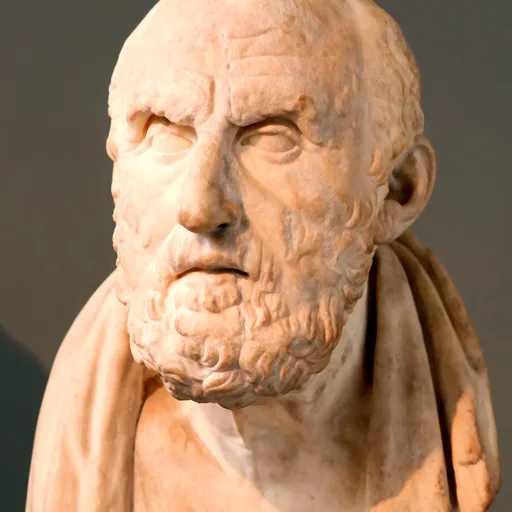
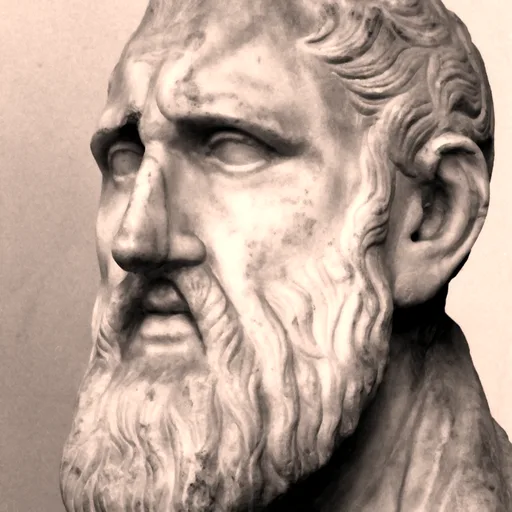
Chrysippus of Soli
Greece -0280-01-01 ~ -0207-01-01
Third head of the Stoic school, 3rd century BC
Systematized Stoic philosophy into logic, ethics, and physics across 700+ works
The cognitive model treating passions as 'false judgments' is the very foundation of CBT
Born c. 279 BC in Soli, Chrysippus became the Stoic school's third head and systematized its logic, physics, and ethics so thoroughly he earned the title Second Founder of Stoicism. His propositional logic endures.
What You Can Learn
Chrysippus's insight that emotions stem from faulty judgments is the direct ancestor of cognitive behavioral therapy. When workplace stress hits, examine the interpretation, not just the trigger. His concept of assent, separating what we control from what we do not, underpins modern resilience training. His propositional logic structures if-then reasoning essential for data-driven decisions. In short, he offers both emotional self-management and analytical rigor applicable to any professional context.
Words That Resonate
The wise man is free from passions, not because he does not feel, but because his judgments are correct.
If Chrysippus had not existed, the Stoa would not have existed.
ei me gar en Chrysippos, ouk an en Stoa
Fate is a natural order of all things, following one upon another from eternity, and their intertwining is inviolable.
If one had the logic of Chrysippus, one would not need the gods.
ei tis eiche ton Chrysippou logon, ouk an edeeto ton theon
The universe itself is God and the universal outpouring of its soul.
Life & Legacy
Chrysippus transformed Stoicism from a single thinker's vision into a rigorous system spanning logic, physics, and ethics. Without his scaffolding the school might not have survived centuries of competition. As the ancients put it: without Chrysippus, no Stoa.
Born around 279 BC in Soli, Cilicia, he moved to Athens young. He trained first at the skeptical Academy, then joined Cleanthes in the Stoa. When Cleanthes died around 230 BC, Chrysippus became third head. Facing aggressive skeptical attacks from Arcesilaus and Carneades, he responded with prolific writing, reportedly 500 lines a day.
His greatest logical achievement was propositional logic. Where Aristotle's syllogistic treated subject-predicate relations, Chrysippus focused on how propositions connect. He formulated five undemonstrated argument forms governing conditional, disjunctive, and conjunctive reasoning. This framework went largely unrecognized until Frege and Boole rebuilt propositional logic in the nineteenth century.
In physics he described the cosmos as pervaded by rational fire, pneuma. He upheld determinism while preserving moral responsibility through assent, synkatathesis: impressions arrive involuntarily, but accepting or rejecting them is rational. Epictetus later developed this into the distinction between what is up to us and what is not.
In ethics he defined passions as mistaken judgments, not irrational forces. Anger and fear arise from flawed evaluations. The goal is correcting cognition, not suppressing feeling. This model is structurally identical to cognitive behavioral therapy developed by Ellis and Beck, making it one of the most direct lines from ancient philosophy to modern psychology.
None of his 700-plus works survive intact; we know him through Diogenes Laertius, Plutarch, Cicero, and Seneca. Yet his framework became Stoic orthodoxy and shaped the Roman Stoics read widely today.
Expert Perspective
Chrysippus is a rare system-builder bridging logic and ethics. His propositional logic diverged from Aristotle and went unrecognized until modern symbolic logic. His cognitive theory of passions gave Stoicism its therapeutic base, directly informing Epictetus, Marcus Aurelius, and Seneca.