Philosophers / Stoicism
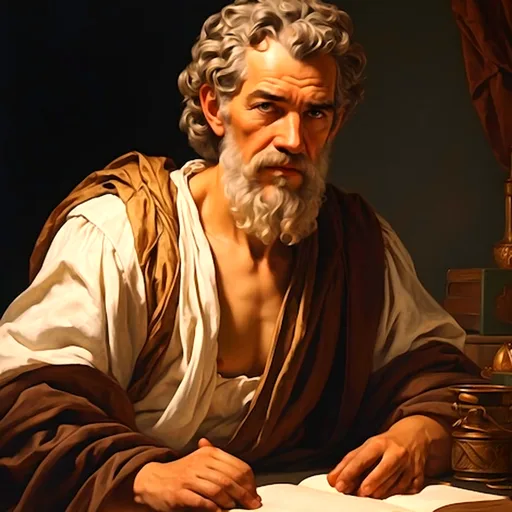
Epictetus
Italy 0050-01-01 ~ 0138-01-01
Stoic philosopher and former slave, 1st-century Roman Empire
Taught the distinction between controllable and uncontrollable in 'Discourses' and 'Enchiridion'
The dichotomy of control is the origin of stress management and CBT
Epictetus (c. 50-135 AD), born a slave in Phrygia, never wrote a word. His Discourses and Enchiridion, recorded by Arrian, are the most widely read Stoic texts and a direct ancestor of cognitive behavioral therapy.
What You Can Learn
Epictetus's dichotomy of control is a ready-made stress tool. A boss's mood and market swings lie outside control; your interpretation does not. Albert Ellis credited Epictetus when founding rational emotive therapy. A daily exercise: list what you can control and what you cannot. Presentation results depend on the audience; preparation is yours. In investing, prices are outside control, but honoring a stop-loss rule is within it.
Words That Resonate
We suffer not from events but from our judgments about them.
It is not things that disturb us, but our judgements about things.
Endure and renounce.
Ἀνέχου καὶ ἀπέχου.
Some things are within our power, while others are not.
Τῶν ὄντων τὰ μέν ἐστιν ἐφ᾽ ἡμῖν, τὰ δὲ οὐκ ἐφ᾽ ἡμῖν.
Do not seek for things to happen as you wish; wish for them to happen as they do, and you will find peace.
Μὴ ζήτει τὰ γινόμενα γίνεσθαι ὡς θέλεις, ἀλλὰ θέλε τὰ γινόμενα ὡς γίνεται, καὶ εὐροήσεις.
It is not things that disturb us, but our judgments about things.
Ταράσσει τοὺς ἀνθρώπους οὐ τὰ πράγματα, ἀλλὰ τὰ περὶ τῶν πραγμάτων δόγματα.
Life & Legacy
The name Epictetus means 'acquired' in Greek — a slave's name. Born around 50 AD in Hierapolis, Phrygia, he entered life without social freedom. Brought to Rome as property of Epaphroditus, a secretary to Nero, he was allowed to attend lectures by the Stoic Musonius Rufus — the turning point of his life.
From Musonius he absorbed philosophy as daily practice. After manumission he taught in Rome until Emperor Domitian banished philosophers around 93 AD, forcing him to relocate to Nicopolis in northwestern Greece. Students from across the empire flocked there.
Like Socrates, Epictetus wrote nothing. His pupil Arrian recorded the lectures, producing the eight-book Discourses (four survive) and the distilled Enchiridion. These remain the most widely read Stoic texts.
His thought rests on one luminous distinction: divide everything into what is 'up to us' and what is not. Judgments, desires, and aversions are within our power; body, property, and reputation are not. Misery arises from confusing the two.
This is no counsel of passivity. Epictetus demanded rigorous training: observe reactions, pause between stimulus and judgment, then ask whether disturbance comes from the event or from interpretation. The technique is structurally identical to cognitive behavioral therapy.
His influence is unbroken. Marcus Aurelius repeatedly cites him in the Meditations. Albert Ellis credited Epictetus when developing rational emotive therapy; Aaron Beck's cognitive therapy rests on the same insight. A slave who wrote nothing left a legacy spanning two millennia — the ultimate proof of his teaching's universality.
Expert Perspective
Epictetus distilled Stoicism into its most practical form. Inheriting Musonius's view that philosophy is a way of life, he focused on daily judgment. His slave origins lend weight to a happiness theory free of externals. Through Arrian he reached Marcus Aurelius, completing a slave-to-emperor arc.