Philosophers / Stoicism

Panaetius
Greece -0184-01-0 ~ -0110-01-0
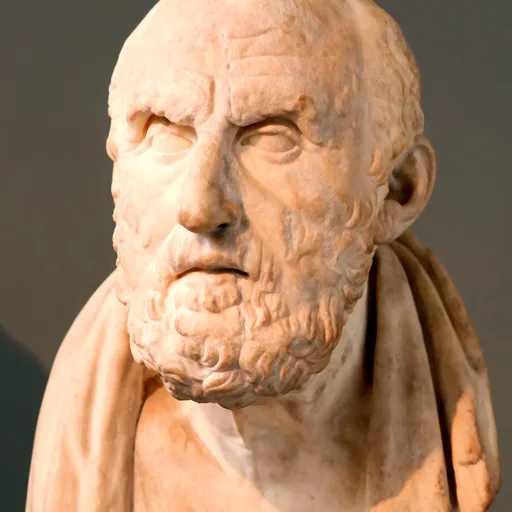
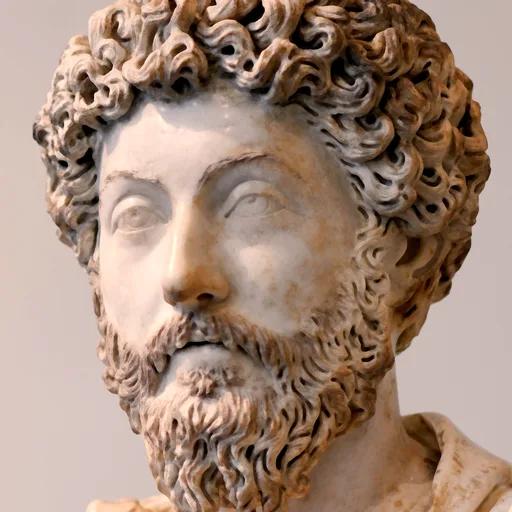
Greek Stoic (c. 185-109 BC), last head of the Athenian Stoa. He reformed strict early Stoicism into a liveable ethics. His On Duties survives via Cicero and shaped Western moral and political thought for two millennia.
What You Can Learn
Panaetius's doctrine of the four personae anticipates modern career theory. He held each person plays four roles: universal rational nature, individual temperament, the circumstances of birth, and the path one chooses. This four-layer model is the classical ancestor of every modern strengths-experience-values framework. His warning that nothing is fitting when Minerva is unwilling speaks to burnout from misalignment between role and self.
Words That Resonate
Only that which is to be sought for its own sake is truly moral (honestum).
Honestum quidem id solum esse quod expetendum sua sponte sit.
Nothing is fitting when Minerva is unwilling — that is, when nature opposes and resists.
Nihil decet invita Minerva, ut aiunt, id est adversante et repugnante natura.
The first duty of justice is to harm no one.
Iustitiae primum munus est, ut ne cui quis noceat.
The knowledge and contemplation of nature is somehow defective and incomplete unless action follows.
Etenim cognitio contemplatioque naturae manca quodam modo atque inchoata sit, si nulla actio rerum consequatur.
Life & Legacy
Panaetius founded middle Stoicism and rooted it in Roman public life. Born around 185 BC into a leading Rhodian family, he studied under Crates of Mallus at Pergamum, then moved to Athens to hear Diogenes of Babylon and Antipater of Tarsus, while also attending the sceptical Carneades. This eclectic exposure shaped his willingness to absorb Plato and Aristotle into Stoic doctrine.
In Rome, introduced by Gaius Laelius, he met Scipio Aemilianus and joined the Scipionic Circle — the senators and intellectuals who translated Greek philosophy into Roman habit. He went with Scipio on the eastern embassy of 139-138 BC and stayed years in Rome teaching senators. After Scipio's death in 129 BC he returned to Athens, succeeded Antipater as head of the Stoa, and declined the Athenian citizenship offered him. His most famous pupil was Posidonius. He died around 110/109 BC.
Three innovations stand out. He doubted the early Stoic doctrines of cosmic conflagration and immortal souls and rejected divination. He simplified the virtues into theoretical and practical, closer to Aristotle. And he abandoned the ideal of apatheia, allowing pleasures consistent with nature on the principle that ethics must reach people who are not yet sages.
His chief work, On Appropriate Action, planned three books: what is moral, what is useful, how to judge when they conflict. He never finished the third. A century later Cicero rewrote the project as De Officiis, following Panaetius closely in books one and two. Through Cicero, his ethics passed into medieval monasteries, became one of the earliest classical texts printed after Gutenberg, and shaped Frederick the Great, Adam Smith and the Western moral tradition.
In politics he praised the Roman republic as the best mixture of monarchy, aristocracy, and democracy, and defended Roman expansion as the just unification of disorderly peoples under one law, while insisting war is a last resort.
Expert Perspective
As founder of middle Stoicism, Panaetius redesigned the austerity of Zeno and Chrysippus into an ethic ordinary Romans could practice. Stoicism then shifted from Athens to Rhodes and Rome, becoming the moral spine of the elite. Through Cicero his ethics shaped Western moral imagination.