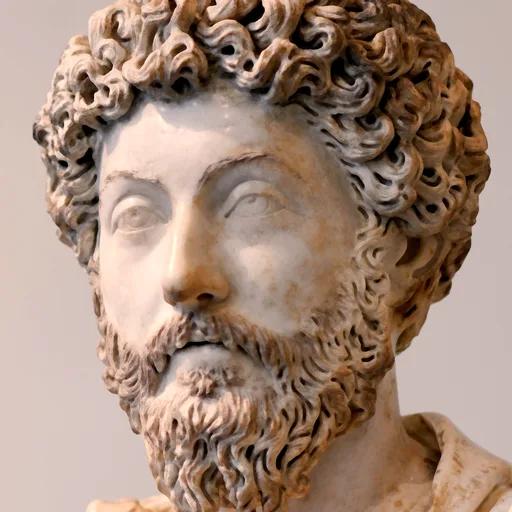
Philosophers / Ancient Greek

Aristotle
Greece -0383-01-01 ~ -0321-01-01
Polymath of 4th-century BC ancient Greece
Systematized disciplines from logic to biology and defined the framework of Western knowledge
'The golden mean' and 'practical wisdom' remain uniquely human judgment that even AI cannot automate
Ancient Greek philosopher born in 384 BC in Stagira. He studied under Plato for twenty years, then built an empiricist system spanning logic, ethics, politics, and biology, earning the title "father of every science."
What You Can Learn
The doctrine of the mean is a practical compass for business. Excessive caution breeds missed chances; reckless boldness invites ruin. Finding the right point in each context is what Aristotle called practical wisdom, a judgment sharpened by experience that resists automation even in the AI age. His claim that humans are political animals supports maintaining team bonds amid remote work. And his method of classifying knowledge across fields remains essential when data overload is the norm.
Words That Resonate
All human beings by nature desire to know.
Πάντες ἄνθρωποι τοῦ εἰδέναι ὀρέγονται φύσει.
The beginning is half of the whole.
ἀρχὴ ἥμισυ παντός.
One swallow does not make a spring.
μία χελιδὼν ἔαρ οὐ ποιεῖ.
Virtue lies in the middle.
ἐν τῷ μέσῳ ἡ ἀρετή.
Virtue is a kind of mean.
ἔστιν ἡ ἀρετὴ μεσότης τις.
Man is by nature a political animal.
ἄνθρωπος φύσει πολιτικὸν ζῷον.
Life & Legacy
Aristotle designed Western scholarship's template virtually alone. Born in 384 BC in Stagira, son of the Macedonian court physician Nicomachus, he absorbed the medical habits of observation and classification that became his empiricist foundation.
At 17 he entered Plato's Academy and stayed 20 years. A core divergence emerged: Plato placed true reality in transcendent Forms; Aristotle held that essence resides in individual things. The later saying, "Plato is dear to me, but dearer still is truth," captures his respectful independence.
After Plato's death in 347 BC he left Athens. On Lesbos he dissected marine creatures and classified over 500 species, the ancient world's most systematic biological survey. Around 343 BC Philip II asked him to tutor the 13-year-old Alexander.
Back in Athens by 335 BC, he founded the Lyceum. He created formal logic through the syllogism, the first explicit framework for deduction. The Nicomachean Ethics centered virtue on the mean: courage sits between recklessness and cowardice. This character-based ethics differs from rule-based and outcome-based alternatives.
The Politics defined humans as political animals, insisting individual and communal good are inseparable. His Metaphysics, with matter-form theory and four causes, was absorbed by Aquinas into Christian philosophy. Anti-Macedonian sentiment drove him from Athens after Alexander's death; he reportedly vowed to prevent Athens from sinning against philosophy twice. He died in 322 BC at 62. Translated into Arabic, his works returned to medieval Europe and set the stage for modern science.
Expert Perspective
Aristotle marks the pivot from Plato's idealism to empiricism. Locating essence in things rather than transcendent Forms, he prepared the ground for modern science. His virtue ethics was revived by Anscombe and MacIntyre and now stands alongside deontology and consequentialism as a major current.
Related Books
Aristotle - Search related books on AmazonConnections
Influenced by
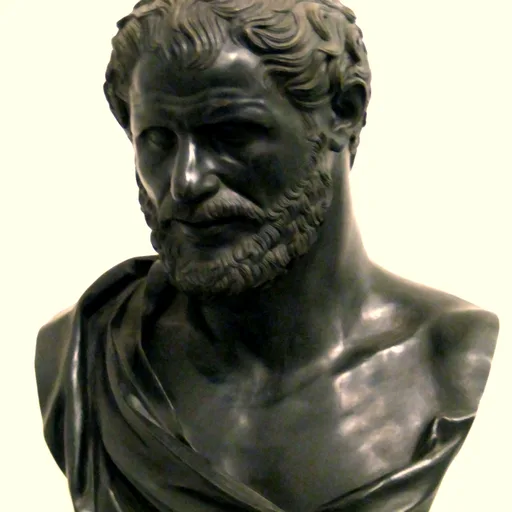


Influenced

悲劇論への参照。古典文献学者としての出発点

形而上学的体系構築の先駆として参照

幸福論や徳倫理の枠組みが功利主義の質的転換に間接的影響
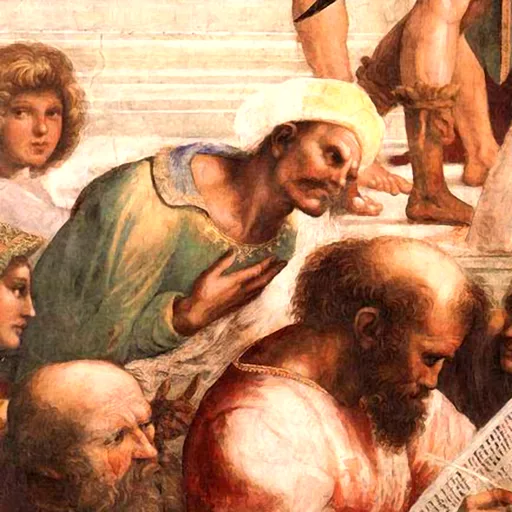
全著作に注釈を施した対象であり、哲学の根本的な方法論を継承

哲学的方法論と自然哲学の全体的な枠組みを継承し、キリスト教神学に統合
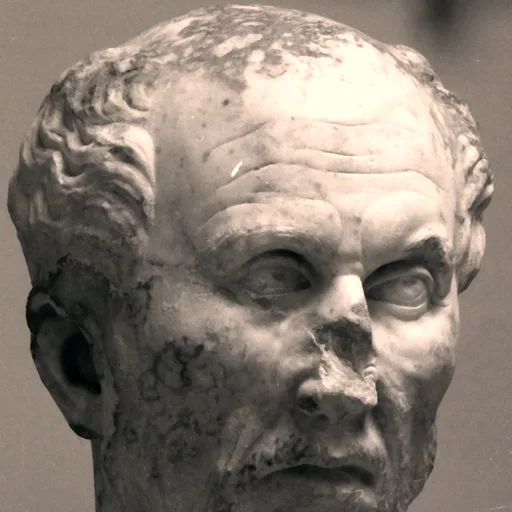
知性論(ヌース)の概念を批判的に摂取した

スコラ哲学を通じた間接的影響と批判的乗り越えの対象

論理学・形而上学の枠組みに影響
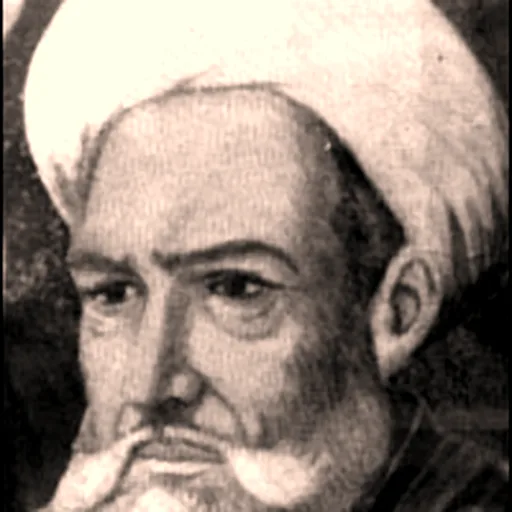
論理学・形而上学・自然哲学の全体的枠組みを継承し、イスラーム的文脈で再構築
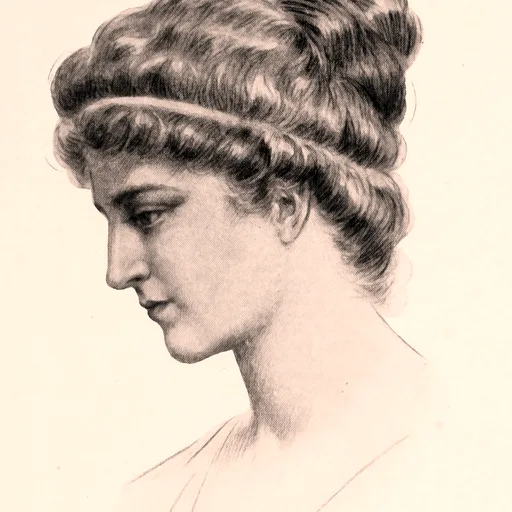
学塾で講読の対象とした哲学者

論理学全著作の翻訳者・注釈者

哲学的方法論の主要源泉

批判的継承、『オルガノン』への挑戦

気象学・自然学で参照

drew on his ethics for virtue dichotomy

弁論術の三分類(儀式・議会・法廷)と倫理学の枠組みを『構想論』『義務について』に取り入れた