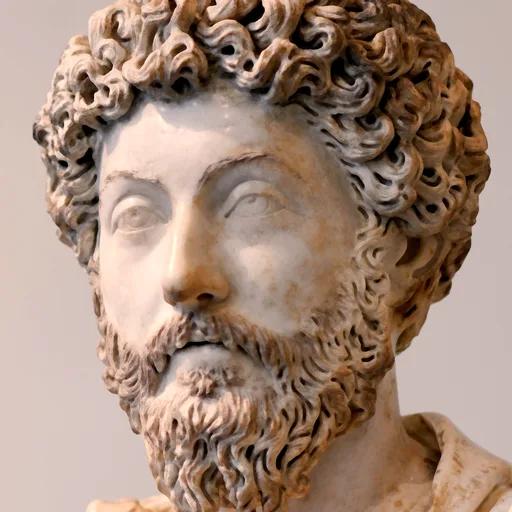
Philosophers / Medieval

Thomas Aquinas
Italy 1225-01-01 ~ 1274-03-14
13th-century Italian theologian and philosopher
Systematically integrated Aristotelian philosophy with Christian theology
The method of accurately understanding an objection before building one's own argument is a timeless foundation for debate
Born c. 1225 near Roccasecca in southern Italy, Thomas Aquinas was a Dominican friar and the greatest theologian-philosopher of the medieval period. In his magnum opus Summa Theologica he systematically integrated Aristotelian philosophy with Christian theology, representing the summit of Scholasticism. His Five Ways for demonstrating God's existence and his natural-law theory remain foundational in Catholic thought. He holds the title Doctor Angelicus (Angelic Doctor) of the Church.
What You Can Learn
The greatest practical value Aquinas's thought offers the modern era lies in his methodology for integrating different knowledge systems. Just as he reconciled Aristotelian philosophy and Christian theology without contradiction, today's business leaders are called upon to integrate data-driven decision-making with experience-based intuition, and short-term profit with long-term ethical responsibility. His three-step method — first understanding the objection accurately, then arguing one's own position, then responding to the objection — is directly applicable as a framework for addressing complex problems. His natural-law thinking is also noteworthy in the context of compliance and ESG investing: the idea that there are universal goods recognizable by reason even when not codified in statute can guide judgment in domains where regulation has not yet caught up to new technologies or AI ethics. Furthermore, his epistemological principle that 'whatever is received is received according to the mode of the receiver' speaks to the importance of understanding the other party's context before communicating — a lesson for organizational communication, customer insight, and cross-cultural management.
Words That Resonate
Man cannot naturally will the good except under the aspect of the good.
Homo non potest naturaliter velle bonum nisi sub ratione boni.
Grace does not destroy nature but perfects it.
Gratia non tollit naturam, sed perficit.
Whatever is received is received according to the mode of the receiver.
Omne quod recipitur ad modum recipientis recipitur.
I fear the man of a single book.
Timeo hominem unius libri.
Nothing is in the intellect that was not first in the senses.
Nihil est in intellectu quod non sit prius in sensu.
Good is to be done and pursued, and evil is to be avoided.
Bonum est faciendum et prosequendum, et malum vitandum.
Life & Legacy
The mark Thomas Aquinas left on intellectual history is widely recognized as one of the highest achievements of medieval European thought. His central accomplishment was receiving the Aristotelian system into Christian theology and systematically demonstrating that reason and faith can coexist without contradiction. This synthesis was no mere eclecticism but rested on the conviction that truths discovered by reason and truths revealed by God derive from the same source and therefore cannot conflict.
Born c. 1225 into a comital family at Roccasecca Castle in the Kingdom of Sicily, Aquinas was expected to pursue a worldly career befitting his noble birth. While studying at the University of Naples, however, he encountered the Dominican Order of mendicant friars and resolved to join. His family fiercely opposed the decision; his brothers are said to have abducted him and held him under house arrest for about a year. Yet Thomas would not relent, and he ultimately entered the Dominicans. This choice of intellectual inquiry and faith over secular honor epitomizes the posture that defined his life.
At the University of Paris, studying under Albert the Great, he encountered Aristotelian philosophy — the intellectual turning point of his career. Paris at the time was embroiled in fierce controversy over the works of Aristotle, newly available through Arabic transmission. Aristotle's natural philosophy stood in tension with the biblical worldview, and Church authorities repeatedly restricted its teaching. As Averroes's (Ibn Rushd's) commentaries on Aristotle spread, doctrines such as the eternity of the world and the unity of the intellect sharpened conflicts with Christian dogma. Thomas confronted this intellectual crisis head-on: he adopted Aristotle's method while critically rejecting those Averroist interpretations that contradicted faith.
The culmination of his work is the unfinished masterpiece Summa Theologica. In three parts covering God, humanity, and Christ, it addresses approximately three thousand articles in a rigorous format: posing a question, presenting objections, arguing the author's position, and replying to objections. The Five Ways at the opening of Part I — arguing from motion, efficient causality, contingency and necessity, degrees of perfection, and teleology — rank among the most famous arguments in the history of philosophy. Crucially, they proceed from empirical observation and logical inference alone, without relying on revelation.
The other pillar is his natural-law theory. Aquinas held that human beings can apprehend through reason a portion of God's eternal law, and from the fundamental precept 'do good and avoid evil' he derived inclinations toward self-preservation, propagation of the species, life in community, and the pursuit of truth. This framework influenced the foundations of modern human-rights thought and international law, leaving traces in the arguments of Grotius and Locke.
During a Mass in December 1273 Aquinas reportedly experienced an intense mystical episode, after which he ceased writing entirely. He is said to have remarked, 'All that I have written seems to me like straw.' This silence of a rationalist who had come to a profound awareness of the limits of reason has generated many interpretations. The following March, falling ill on his way to the Council of Lyons, he died at the Abbey of Fossanova at approximately forty-nine.
Although some of his propositions were initially condemned by the Bishop of Paris, Aquinas was canonized in 1323 and the Catholic Church adopted his thought as its official philosophical guide. The 1879 encyclical Aeterni Patris declared his philosophy the basis of Catholic education, and in the twentieth century Maritain and Gilson carried it forward as neo-Thomism. His endeavor to bridge reason and faith, philosophy and theology, ancient wisdom and the Christian worldview remains a methodological exemplar for integrating different knowledge systems, continuing to offer insights for interdisciplinary thinking in the modern era.
Expert Perspective
In the history of Western philosophy, Aquinas is positioned as the consummator of medieval Scholasticism, integrating ancient Greek realism with Christian metaphysics. He received Aristotle's hylomorphism and ontology while adding the distinctively original metaphysical insight of the real distinction between essence and existence, clarifying the ontological difference between creatures and God. In ethics, building on virtue ethics, he constructed a natural-law theory that predates both Kant's deontology and Bentham's utilitarianism as a systematic moral philosophy. His influence extends beyond Catholic philosophy: the revival of modern virtue ethics by analytic philosophers such as Anscombe and Foot draws directly on his legacy.
Related Books
Thomas Aquinas - Search related books on AmazonConnections
Influenced by
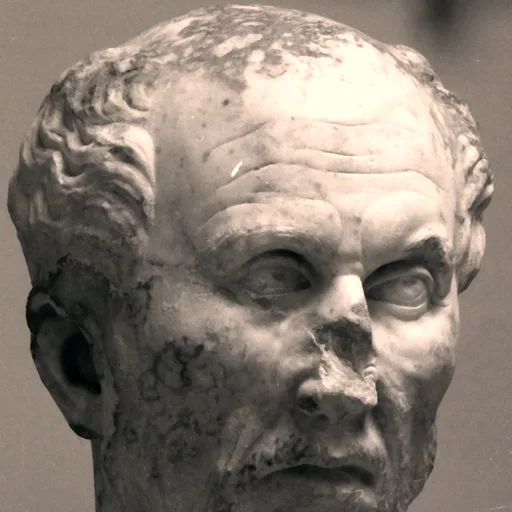
偽ディオニュシオスを経由してスコラ哲学に流出論的概念が流入
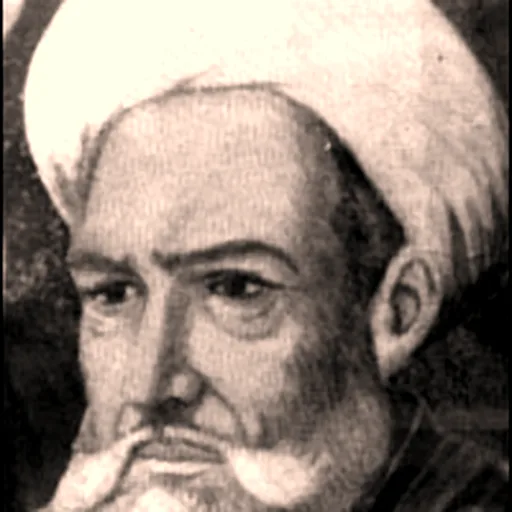
イブン・ルシュドを介して間接的に中世ラテン世界のスコラ学に影響を及ぼした
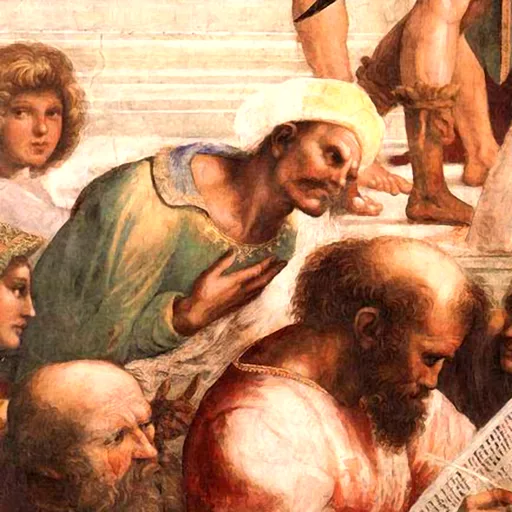
アリストテレス注釈を通じて強い影響を受けつつ、知性単一論など一部学説を批判的に退けた

哲学的方法論と自然哲学の全体的な枠組みを継承し、キリスト教神学に統合

『原因論註解』を通じて影響

存在論的証明への批判的継承

論理学・神学の基礎として

啓示と理性の調和論で深い影響

中世スコラ哲学への影響

戯曲『ヘンリー8世』(All Is True, 1613)で再解釈、英文学の歴史劇伝統に影響
Influenced

自然法論の枠組みが近代の自然権思想に影響を及ぼした

存在論と神論への影響

スコラ派自然法論の継承

演説と書簡における言語感覚・修辞構造に影響

ハーロー校・ケンブリッジ時代に蓄積した英文学素養が演説の修辞構造に反映

『英国憲政論』が博士論文『議会政府論』の方法論的祖型

『偶像の黄昏』の「なぜ生きるかを知る者は…」が『夜と霧』中核モチーフ

キンブリ戦争での同僚執政官・直属上官。マリウスとの軋轢回避先となった政治家

美学と心理学を哲学的に結びつける新カント主義的枠組みの源流