Investors / Value Investing
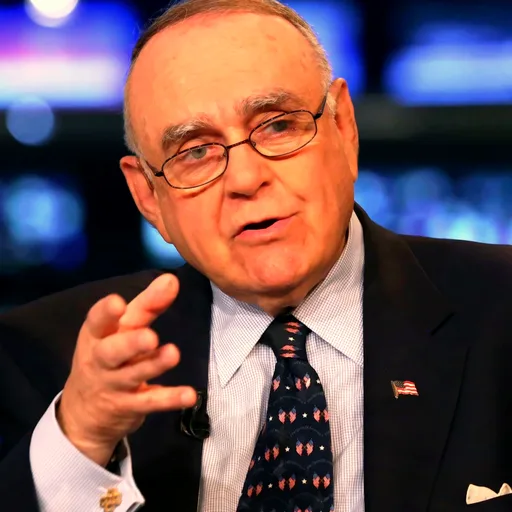
Leon G. Cooperman
United States 1943-04-25
20th-century American value investor
Rose from Goldman Sachs to found Omega Advisors
Building the habit of reading quarterly reports is the foundation of stock-picking skill
Born in 1943 in the South Bronx, New York, Leon Cooperman rose to head Goldman Sachs's investment-research division before founding Omega Advisors in 1991. He built decades of market-beating returns through bottom-up value investing and fundamental analysis. Known for his working-class origins, his forthright advocacy for the social responsibilities of the wealthy, and his pledge to give away most of his fortune.
What You Can Learn
Cooperman's career offers three practical lessons for individual investors. First, the importance of building analytical capacity over time: his 25 years at Goldman Sachs illustrate how patiently cultivating the habit of reading quarterly reports underpins stock-picking ability. Second, the value of combining bottom-up value screening with macro awareness: even the cheapest stock can decline further in a rising-rate environment. Adjusting the balance between equities and bonds based on the macro backdrop is Cooperman-style thinking adapted for individual portfolios. Third, the SEC settlement serves as a reminder of the paramount importance of legal compliance: trading on material non-public information is strictly prohibited. Recognizing the legal risks of acting on insider tips is a precondition for sound investing. Cooperman's career demonstrates both that talent and effort can take you to the top and that the consequences of crossing regulatory lines are severe.
Words That Resonate
The stock market is the only business I know that when things go on sale, the customers run out of the store.
I believe in a progressive income tax. I believe rich people should pay more. But I also believe that we should encourage people to give back voluntarily, not through forced redistribution.
I always look for a company where the stock price is below what I believe the value of the enterprise to be.
Life & Legacy
Leon Cooperman is an embodiment of the American Dream and an investor who has challenged the responsibilities of capitalism from the inside. After leading Goldman Sachs's investment-research division he launched his own hedge fund, delivering consistent results through equity investing grounded in fundamental analysis.
Born in 1943 in the South Bronx, Cooperman grew up in a family of modest means; his father was a plumber. He earned a bachelor's degree at Hunter College (now part of the City University of New York) and an MBA at Columbia Business School. Columbia is the storied program where Benjamin Graham once taught, and it was there that Cooperman absorbed the academic foundations of value investing.
He joined Goldman Sachs in 1967 and built his career in the investment-research department, eventually rising to co-head the division. During his 25 years at the firm he helped elevate the quality of institutional research and developed the ability to dissect corporate fundamentals and identify intrinsic value — skills that would become his hallmark.
In 1991, at 48, Cooperman left Goldman and founded Omega Advisors. Assets under management at one point exceeded 3.3 billion dollars, the bulk of it his own capital. His investment style centered on bottom-up value investing, screening for undervalued stocks using metrics such as P/E, price-to-book, and free-cash-flow yield. At the same time he incorporated macro analysis — interest-rate trends, sector rotation — into portfolio construction.
In September 2016 the SEC charged Cooperman and Omega with insider trading related to shares of Atlas Pipeline Partners. In May 2017 Omega settled for 4.9 million dollars without admitting wrongdoing; the settlement included the appointment of a compliance monitor and the submission of trading records. The episode remains the most significant blemish on Cooperman's career, though he has consistently denied wrongdoing.
In 2018 he converted Omega to a family office, ending outside-investor fund management. Since then he has focused on managing his own assets and on philanthropy. Cooperman signed the Giving Pledge, committing to donate the majority of his wealth to causes centered on education, medical research, and poverty alleviation.
A distinctive feature of Cooperman's investment process is his emphasis on free-cash-flow analysis. He goes beyond P/E to scrutinize the cash flow remaining after capital expenditures, judging whether the stock is cheap relative to that figure. He also incorporates catalysts — industry consolidation, management changes — as key elements in investment decisions, maintaining the discipline of not buying simply because something is cheap.
Cooperman is equally known for his candid public commentary. He openly opposed wealth-tax proposals, arguing that the rich should give back through voluntary philanthropy rather than forced redistribution. In a 2019 television appearance he was moved to tears discussing inequality — a moment that underscored his emotional sincerity. Proud of his working-class origins and a firm believer in upward mobility through effort and education, Cooperman's posture is American capitalism's faith in itself.
Expert Perspective
Among investor archetypes, Cooperman is a fundamentals-driven value investor rooted in Goldman Sachs's analytical culture. He belongs to the Graham-Buffett lineage but is distinguished by the precision of his quantitative analysis, honed through decades of institutional research. Compared with pure low-P/E practitioners like John Neff, Cooperman shows greater flexibility by incorporating macro analysis. The SEC litigation casts a shadow, but his decades-long track record and commitment to giving back represent a distinctive model of the Wall Street investor.