Entrepreneurs / Tech
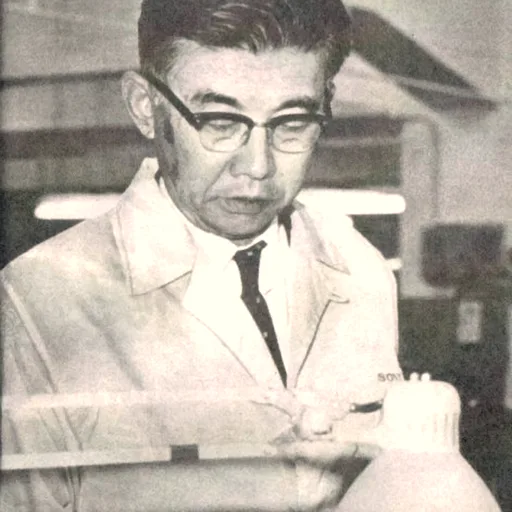
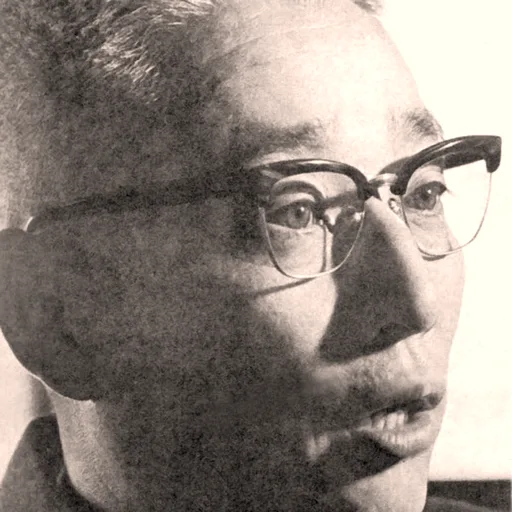
Masaru Ibuka
Japan 1908-04-11 ~ 1997-12-19
20th-century Japanese engineer and Sony co-founder
Created world-changing products including the transistor radio and Trinitron
The 'free, dynamic, and joyful ideal factory' is a pioneering vision of psychological safety
Born in Nikko, Tochigi Prefecture, Japan, in 1908, Masaru Ibuka co-founded Sony with Akio Morita and brought world-changing products — from transistor radios to the Trinitron — to life through an engineer's intuition and tenacity. The founding prospectus he authored, calling for an 'ideal factory, free, dynamic, and joyful,' became a spiritual pillar of postwar Japanese manufacturing. In his later years he championed early childhood education with his book Kindergarten Is Too Late. A rare industrialist who connected technology, management, and education.
What You Can Learn
Ibuka's founding prospectus vision of a 'factory, free, dynamic, and joyful' contains principles that translate directly to modern startup management. The psychologically safe organizations adopted by Google and Spotify rest on the same insight Ibuka grasped intuitively in 1946: 'engineers' creativity springs from freedom, not control.' The lesson for entrepreneurs is clear: do not defer the design of organizational culture. Ibuka codified the mission before building the product. That inversion of priorities laid the foundation of a company that has endured for more than seven decades. The transistor-radio case is also a textbook example of the innovation strategy of repurposing an existing technology: envisioning a portable radio rather than a hearing aid was a conceptual pivot that speaks directly to modern pivot strategy. And the division of labor with Morita is richly instructive — there is no need for one person to handle both technology and business; the power of co-founding grounded in trust in each other's strengths is the story Sony's history tells.
Words That Resonate
The establishment of an ideal factory — free, dynamic, and joyful — where earnest engineers can exercise their skills to the fullest.
真面目なる技術者の技能を、最高度に発揮せしむべき自由闊達にして愉快なる理想工場の建設
The reward for work is work itself.
仕事の報酬は仕事である。
Kindergarten is too late.
幼稚園では遅すぎる。
To create original products, you need an environment where original people can operate freely.
独創的な商品をつくるには、独創的な人間が自由に活動できる環境が必要だ。
I want to use the power of technology to create things that serve the world.
技術の力で、世の中の役に立つものをつくりたい。
Life & Legacy
Masaru Ibuka earned his place in history as Sony's co-founder not simply by building a successful company. In the rubble of postwar Tokyo, he envisioned 'an ideal factory, free, dynamic, and joyful, where earnest engineers can exercise their skills to the fullest,' and held to that vision for half a century. The founding prospectus he drafted for Tokyo Tsushin Kogyo (Tokyo Telecommunications Engineering Corporation) in 1946 is still read as an iconic document of Japanese venture spirit.
Born in Nikko, Tochigi Prefecture, Ibuka lost his father at a young age and was raised by his maternal grandfather. He showed intense interest in machines and electricity from boyhood. While studying at Waseda University's School of Science and Engineering, he reportedly exhibited a 'running neon sign' at the Paris World's Fair and won a gold medal. After graduating he joined the Photo-Chemical Laboratory (Shashin Kagaku Kenkyujo), where he worked on optical and audio equipment. The technical foundation and the insatiable passion for turning ideas into physical form that he developed during this period became the soil from which Sony's stream of original products grew.
Meeting Akio Morita during wartime military-research work changed Ibuka's life decisively. Their relationship is recounted as one of the most successful partnerships in Japanese business history. Ibuka set the direction of technology development; Morita handled market creation and international management. Ibuka reportedly said, 'Without Morita, I would have ended up as the owner of a small workshop.' In truth, however, without Ibuka's conviction in technology's possibilities and his courage to make management decisions on that basis, none of Sony's innovative products would have reached the world. The complementary dynamic between the two men was the engine that produced one of postwar Japan's most iconic global enterprises.
The transistor radio, launched in 1955, was the crystallization of Ibuka's technological vision. Sony had licensed transistor patents from Western Electric in the United States, but the intended application was hearing aids. Using transistors in a radio was considered technically impractical, yet Ibuka refused to abandon the idea of a 'portable radio.' After tenacious trial and error by his development team, the finished product transformed consumer electronics from a shared household appliance into a personal possession — a cultural shift. This stance of 'creating a market that does not yet exist through technology' carried through consistently to the Walkman and the Trinitron color television.
At the heart of Ibuka's management philosophy were curiosity and freedom. He valued employee autonomy over control and deliberately cultivated a culture that tolerated failure. The founding prospectus's phrase 'a factory, free, dynamic, and joyful' was not mere rhetoric but a management principle that defined the environmental conditions under which engineers do their best work. He is said to have disliked large-company malaise and preferred small-scale development teams. This culture is regarded as the fundamental reason Sony produced one innovative product after another.
In his later years Ibuka's interests broadened into early childhood education. His 1971 book Kindergarten Is Too Late became a bestseller, arguing for the importance of learning capacity and environment in the earliest years. He was also involved in establishing the Sony Education Foundation, dedicating himself to science education and the development of young children's potential. Turning an engineer's keen powers of observation toward the process of human growth reveals the breadth of Ibuka's intellectual curiosity.
He died in December 1997 at the age of 89. His life was animated by the conviction that 'technology can enrich people's lives.' From the founding prospectus to his writings on early education, Ibuka's interests appear diverse on the surface, but at their foundation lies a single idea: unwavering faith in human potential. That idea remains a guidepost for today's entrepreneurs.
Expert Perspective
Ibuka's distinctiveness as an entrepreneur lies in having established the archetype of the 'engineer-entrepreneur' in Japan. Where Konosuke Matsushita built Matsushita Electric on sales and management talent, Ibuka made an engineer's aesthetic sense and curiosity the direct engine of business. Decades before Steve Jobs, he practiced market-creating entrepreneurship by 'giving form, through technology, to desires the user does not yet know.' It was the magnetic power of Ibuka's vision that attracted Akio Morita, a management genius, and that magnetic force was the very origin of Sony as a global enterprise.