Entrepreneurs / Industrial Pioneer

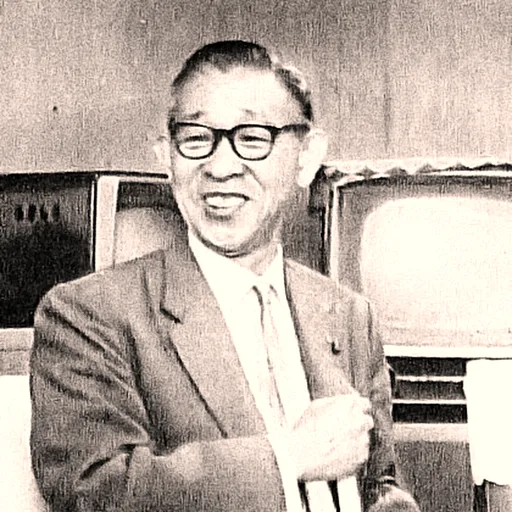
Shibusawa Eiichi
Japan 1840-03-16 ~ 1931-11-11
Bakumatsu-Taisho era industrialist, 'Father of Japanese Capitalism'
Involved in founding 500+ companies and advocated the unity of morality and economy in 'The Analects and the Abacus'
The unity of profit and ethics is the origin of purpose-driven management in the ESG era
Born in 1840, Eiichi Shibusawa became "Father of Japanese Capitalism," founding 500+ firms yet refusing zaibatsu. His Analects and the Abacus unites morality and commerce. His portrait graces the new yen note.
What You Can Learn
Shibusawa's Analects-and-abacus philosophy predates ESG by 150 years. The profit-morality proposition directly corrects shareholder-primacy excess. His gapponshugi -- broad capital-raising without family control, returning fruits to society -- anticipates crowdfunding and DAO logic. For smaller firms, deliberately choosing long-term social credibility over short-term dominance mirrors a mode of business where customer and partner trust is itself a durable form of capital.
Words That Resonate
What is the root of wealth? Benevolence and moral principle. Unless grounded in right reason, wealth cannot endure.
富をなす根源は何かと言えば、仁義道徳。正しい道理の富でなければ、その富は完全に永続することができぬ。
Trust is paramount in business. To earn the world's trust, you must first trust the world.
事業には信用が第一である。世間の信用を得るには、世間を信用することだ。
Each of us carries a heaven-sent mission; living joyfully in pursuit of that calling is the first requirement of a well-lived life.
一人ひとりに天の使命があり、その天命を楽しんで生きることが、処世上の第一要件である。
At forty or fifty you are still a novice; at sixty or seventy you hit your stride. If death knocks at ninety, tell it to wait until a hundred.
四十、五十は洟垂れ小僧、六十、七十は働き盛り、九十になって迎えが来たら、百まで待てと追い返せ。
The moment you say 'this is enough' is the moment decline begins.
もうこれで満足だという時は、すなわち衰える時である。
Life & Legacy
Eiichi Shibusawa designed capitalism's infrastructure in a Japan convulsing from feudalism to modernity. Over 500 enterprises bear his imprint, yet his significance lies in deliberately refusing monopoly control.
Born in 1840 in Musashi Province (now Saitama) to a prosperous farming family, he learned cost accounting and trade through the household indigo-dye business. His father valued the Confucian Analects, planting the seeds of a moral-commercial synthesis. As a young man he was drawn into the loyalist movement but abandoned radical plans and entered service under Tokugawa Yoshinobu, the last shogun.
In 1867 he accompanied Tokugawa Akitake to the Paris World Exposition. Over eighteen months in Europe he observed joint-stock corporations, banking, and double-entry bookkeeping firsthand. Most striking was the concept of gapponshugi -- enterprises in which nobles and commoners participated as equal shareholders regardless of birth.
Returning to a post-shogunate Japan, he joined the Ministry of Finance and led tax reform and national-bank legislation. In 1873 he resigned for the private sector, establishing the First National Bank (now part of Mizuho), Japan's first joint-stock bank. From this base he launched firms across manufacturing, transport, insurance, and gas. Critically, he never sought controlling stakes. While Mitsui and Mitsubishi built zaibatsu through family ownership, Shibusawa chose dispersed shareholding by design.
His philosophy, captured in The Analects and the Abacus: commerce without ethics is crime, ethics without commerce is idle talk. By connecting Confucius to business he challenged merchant-class disdain and reframed commercial activity as a moral endeavor.
Beyond industry, he supported the Red Cross, built hospitals, and backed Hitotsubashi University and Japan Women's University. He died in 1931 at ninety-one, holding the rank of Viscount -- higher than zaibatsu founders' barons -- testimony to a life devoted to social return.
Expert Perspective
Shibusawa designed an industrial ecosystem, not one giant firm. While Carnegie and Rockefeller built vertical monopolies, he shaped Japan through dispersed joint-stock firms. 500+ companies, never seeking control: serial-entrepreneur forerunner and social-entrepreneur archetype.