Entrepreneurs / Tech
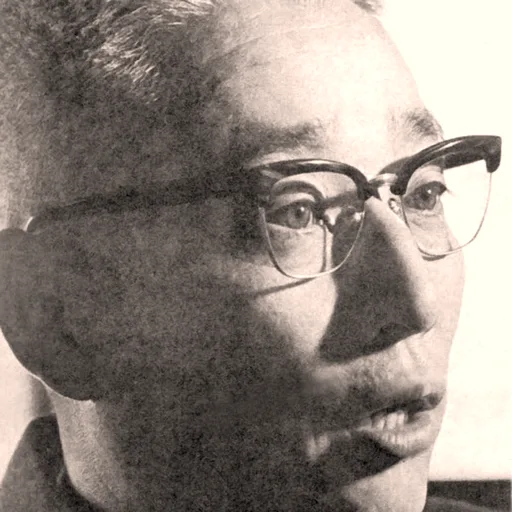
Akio Morita
Japan 1921-01-26 ~ 1999-10-03
20th-century Japanese industrialist and Sony co-founder
Conquered the world with the Walkman and redefined 'Made in Japan'
The power to create demand that does not yet exist cannot be measured by market research
Born in 1921 into a Nagoya sake-brewing family, Akio Morita co-founded Sony with Masaru Ibuka. From transistor radios to the Walkman, he conquered world markets and transformed 'Made in Japan' from a byword for cheapness into a symbol of quality and creativity. His book Made in Japan broadcast his management philosophy globally, making him a pioneer of Japanese corporate internationalization.
What You Can Learn
Morita's management philosophy grows more relevant as globalization and technology accelerate. First, his stance that 'we don't do market research for products the public doesn't yet know about' challenges the lean-startup orthodoxy now dominant among founders. Listening to customers and presenting value they cannot yet imagine are different capabilities, and the Walkman is the quintessential illustration. Second, his decision to decline OEM supply in order to protect Sony's own brand is a guiding principle for any Japanese D2C brand or tech company expanding overseas today. Building a proprietary brand experience rather than depending on a platform is especially urgent in an era of Big Tech dominance. Third, Morita's relocation to New York — immersing himself and his family in local culture — holds lessons for global management even in the remote-work age. Cross-cultural understanding is a bodily experience that cannot be gained through video calls; his example teaches that truly understanding a market requires putting down roots.
Words That Resonate
I have always believed that the company should be a sort of family.
We don't believe in market research for a new product unknown to the public. So we never do any.
I knew we needed a weapon to break through to the American market, and it had to be something different, something that nobody else was making.
Curiosity is the driving force behind corporate growth.
好奇心は会社を成長させる原動力だ。
The public does not know what is possible, but we do.
Life & Legacy
Akio Morita's greatest contribution to industrial history was translating technological capability into a world-class brand. In postwar Japan, where 'build it well and it will sell' was conventional wisdom, Morita posed the question 'how do you deliver something excellent?' — and spent a lifetime answering it.
Born the eldest son of the Morita family, a prestigious sake-brewing house in Nagoya, young Akio showed an intense interest in phonographs and electrical equipment from childhood. Though expected to succeed to the family business, he studied physics at Osaka Imperial University and served as a Navy technical officer during the war. It was during his military service that he met Masaru Ibuka, the man with whom he would share his destiny. Drawn by Ibuka's pure passion for technology, Morita entrusted the family business to his younger brother and in 1946 co-founded Tokyo Tsushin Kogyo (later Sony) with Ibuka. In Japan of that era, walking away from a distinguished family enterprise was an extraordinary decision.
The division of labor at early Sony was clear. Ibuka was the 'creator' who produced breakthrough technology; Morita was the 'connector' who brought it to market. In the 1950s, when Morita took Japan's first transistor radio to the United States, a major buyer placed an order for 100,000 units — on condition that Sony remove its own brand name and supply on an OEM basis. Morita declined. He was convinced that establishing the company's brand name worldwide would be the long-term source of corporate value, outweighing any immediate windfall. That decision became the starting point for Sony's rise as a global brand.
The Walkman, launched in 1979, epitomizes Morita's market instinct. Many inside the company were skeptical of a portable cassette player that could not record. But Morita grasped the value of proposing an entirely new lifestyle — 'carrying music with you.' This approach of creating a market from lived experience rather than product specifications is widely recognized as a precursor to the strategy Steve Jobs later employed with the iPod.
At the heart of Morita's management philosophy lay cross-cultural communication. In the 1960s he opened a showroom on Fifth Avenue in New York and relocated his family to the United States to absorb local business customs and consumer psychology firsthand. The relationships he built through English-language negotiations and social engagements went beyond business, fostering mutual understanding between Japan and America. His 1986 book Made in Japan explained Japanese management practices to an international audience and sparked worldwide interest in Japanese-style business.
The Ibuka-Morita partnership is often cited as an ideal example of co-founder governance. The complementary relationship — Ibuka on technology, Morita on business — was sustained by mutual respect for each other's domain and candid exchange of views. This collaborative model predates the co-founder pairings of later technology companies such as Hewlett and Packard, or Jobs and Wozniak.
In the late 1980s, as U.S.-Japan trade friction intensified, Morita co-authored The Japan That Can Say No with politician Shintaro Ishihara, asserting Japan's technological independence — a move that sparked considerable controversy and even diplomatic repercussions. The stance was, however, an extension of Morita's lifelong insistence on equal partnership.
After suffering a cerebral hemorrhage in 1993, Morita withdrew from public life and died in 1999 at the age of 78. Sony's technological legacy is incalculable, but Morita's personal legacy may be that he proved, by example, that a Japanese businessperson could stand as an equal on the world stage.
Expert Perspective
Morita's distinctiveness as an entrepreneur lies in the fact that, while trained as an engineer, he possessed a deep understanding of marketing and branding. Where most Japanese manufacturers of his generation focused on engineering quality, Morita grasped early on that 'a product's value lives in the customer's experience.' His complementary partnership with Masaru Ibuka, one of the great engineers of the age, is equally noteworthy. The co-founder model that divided technology and business leadership predated the co-founder pairings of Silicon Valley and established the archetype of a Japan-born global enterprise, giving Morita an essential place in entrepreneurial history.