Philosophers / Contemporary Western

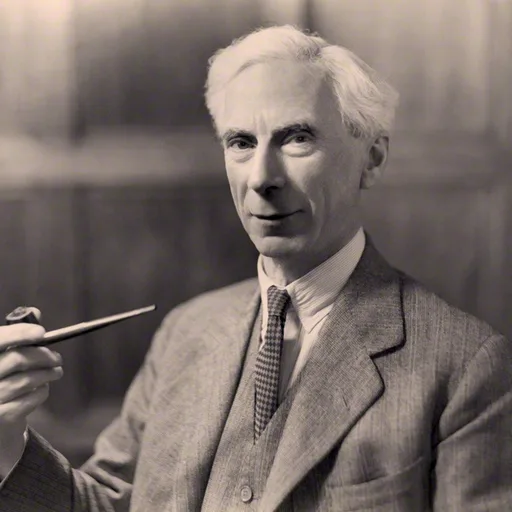
G. E. Moore
United Kingdom 1873-11-04 ~ 1958-10-24
Cambridge philosopher (1873-1958), with Russell and Wittgenstein a founder of analytic philosophy. Principia Ethica launched metaethics with the naturalistic fallacy; "Here is one hand" is his iconic reply to scepticism.
What You Can Learn
Three of Moore's instincts have direct purchase today. First, plain language: he treated unclarity as unfinished thinking, not depth. Reviewing a strategy doc, ask: "Have we said exactly what we mean?" Second, the naturalistic fallacy stays on duty in data cultures. "Natural," "trending" or "empirical" do not entail "good." When a metric becomes a target, ask whether reaching the number is what we want. Third, his view that the highest goods are friendship and aesthetic experience corrects optimisation cultures.
Words That Resonate
It is raining, but I don't believe that it is raining.
Good is good, and that is the end of the matter.
By far the most valuable things, which we know or can imagine, are certain states of consciousness, which may be roughly described as the pleasures of human intercourse and the enjoyment of beautiful objects.
Here is one hand, and here is another.
Life & Legacy
George Edward Moore was, with Russell and Wittgenstein, an initiator of analytic philosophy. Born in Upper Norwood, south-east London, in 1873, he was the middle of seven children of a medical doctor. After Dulwich College he went up to Trinity College, Cambridge, in 1892, taking a double first in classics and moral sciences. He became a Fellow of Trinity in 1898 and held the Cambridge Chair of Mental Philosophy and Logic from 1925 to 1939, influencing the Bloomsbury Group while keeping his distance from it.
His Principia Ethica (1903) launched modern metaethics. Its central move is the naturalistic fallacy: when ethicists identify "good" with a natural property — pleasure, fitness, complexity — the open question "is the pleasant always good?" remains intelligible, so the two notions are not identical. Goodness, Moore argues, is a simple, unanalysable, non-natural property grasped by intuition. The accompanying theory is ideal utilitarianism: a plurality of intrinsic goods rather than pleasure alone. Principia Ethica was formative for Keynes and Virginia Woolf in Bloomsbury.
In epistemology Moore was the chief opponent of British idealism. His 1903 paper "The Refutation of Idealism" argued that consciousness and its objects must be distinguished. In 1939 his "Proof of an External World" presented the famous demonstration: he held up one hand, then the other, and concluded that at least two external objects exist. Replying to scepticism with commonsense certainties became known as commonsense philosophy.
In philosophy of language he is remembered for Moore's paradox: "It is raining, but I don't believe it is raining" — a sentence that is not contradictory yet absurdly assertable, an anomaly Wittgenstein later mined for what it shows about belief. Moore received the Order of Merit in 1951. Russell once wrote that Moore "fulfilled my ideal of genius," and Wittgenstein took the title of his Tractatus on Moore's suggestion.
Expert Perspective
Moore occupies two pivotal places in twentieth-century analytic philosophy. He led the realist revolt against British idealism and founded metaethics with Principia Ethica. The naturalistic fallacy and open-question argument remain introductory must-reads; intuitionism revived with late-century moral realism.