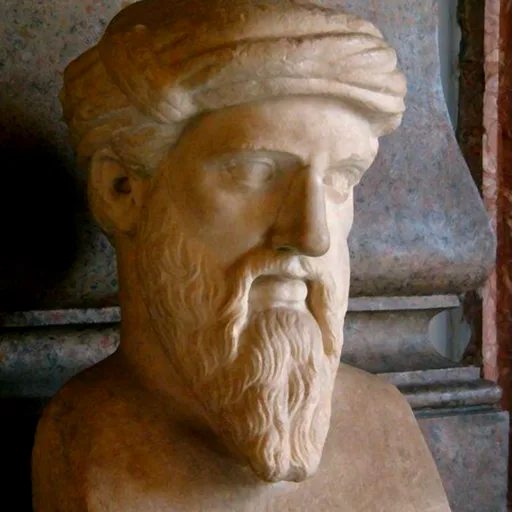
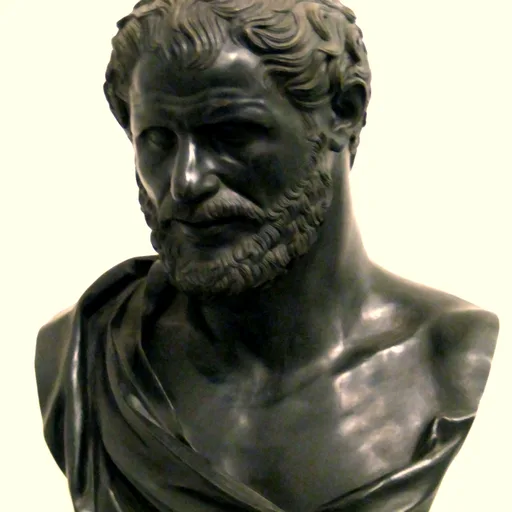
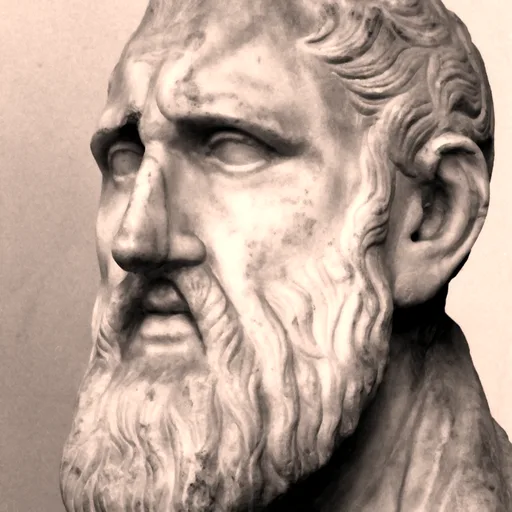
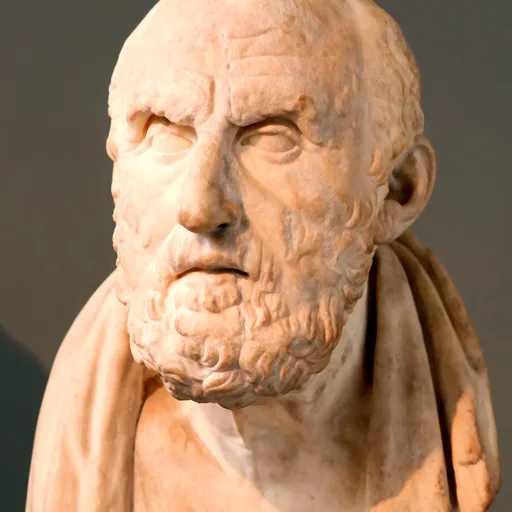
Philosophers / Ancient Greek
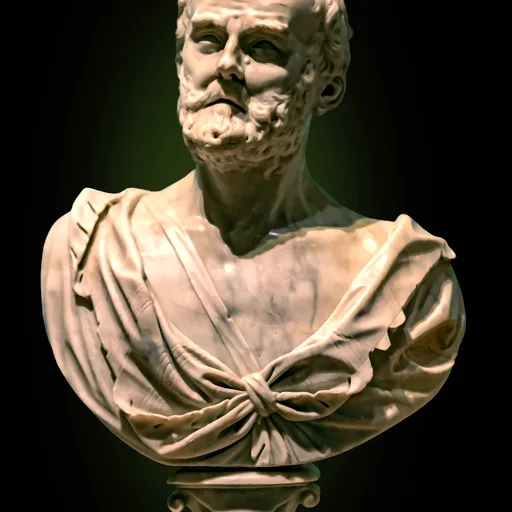
Heraclitus
TR -0534-01-01 ~ -0470-01-01
6th-century BCE pre-Socratic philosopher of Ephesus
Founded dialectical thinking with the doctrine of universal flux and the concept of logos
The recognition that change is the only constant — the bedrock insight for any VUCA-age strategy
Born in Ephesus in Asia Minor around the 6th century BCE, Heraclitus was a pre-Socratic philosopher who proposed the doctrine of universal flux and the concept of logos as the rational principle governing all change. His vision that opposites are interdependent laid the foundations of dialectical thinking. Called 'the Obscure' for his deliberately enigmatic style, he profoundly influenced the Stoics, Hegel, and Nietzsche.
What You Can Learn
Heraclitus's doctrine of universal flux maps directly onto the VUCA business environment where change is the only constant. Markets, technologies, and customer needs shift ceaselessly; companies that cling to yesterday's success model are swept away — vindicating his insight. The recognition that 'you cannot step into the same river twice' is a potent warning against attachment to past achievements, applicable to executives and career planners alike. Meanwhile, his concept of logos — the pattern underlying change — philosophically grounds the value of data analysis and trend forecasting: the goal is not to be tossed about by change but to cultivate the eye that reads its patterns. And the fragment 'character is destiny' strikes at the core of self-development: one's attitude toward external change determines outcomes, an idea that resonates with contemporary research on resilience and the growth mindset.
Words That Resonate
Character is destiny.
ἦθος ἀνθρώπῳ δαίμων
All things flow.
panta rhei (πάντα ῥεῖ)
Upon those who step into the same rivers, ever different waters flow.
ποταμοῖσι τοῖσιν αὐτοῖσιν ἐμβαίνουσιν ἕτερα καὶ ἕτερα ὕδατα ἐπιρρεῖ
War is the father of all and the king of all.
πόλεμος πάντων μὲν πατήρ ἐστι, πάντων δὲ βασιλεύς
The hidden harmony is stronger than the visible.
ἁρμονίη ἀφανὴς φανερῆς κρείττων
Life & Legacy
Heraclitus was born around 540 BCE in Ephesus, an Ionian Greek city on the coast of Asia Minor then under Persian rule, yet still a vital center of Greek intellectual life. He is said to have descended from Ephesian royalty but to have ceded political office to his brother, choosing the life of the mind. Behind this choice lay apparent disillusionment with his fellow citizens — an early sign of the acerbic critical temper that marks his surviving fragments.
The cornerstone of his thought is the insight that 'all things flow.' As his famous river image conveys — 'upon those who step into the same rivers, ever different waters flow' — he conceived the world not as a collection of fixed substances but as an unceasing process of change. This stands in direct opposition to the static ontology of his contemporary Parmenides, and the tension between their positions posed questions that would shape the philosophies of Plato and Aristotle.
Yet for Heraclitus, change did not mean chaos. He posited logos as the fundamental principle of the cosmos — at once 'word,' 'reason,' and 'law,' the rational order pervading all things. Most people, he charged, encounter this logos daily yet live as though asleep, never grasping it. Here lies his biting challenge to the complacency of received wisdom. To understand the logos was not to accumulate facts but to perceive the single governing pattern behind all phenomena.
Another pillar of his thought is the unity of opposites. Day and night, life and death, the road up and the road down are one and the same — claims that seem contradictory until one recognizes the relational insight they encode: each term depends on its counterpart for its very existence. Using the metaphor of bow and lyre, he argued that harmony arises from the equilibrium of opposing tensions. This concept of the mutual dependence of opposites was taken up more than two millennia later by Hegel's dialectic, where thesis and antithesis are synthesized — making Heraclitus the remote headwater of one of Western philosophy's central methods.
He also chose fire as the arche (fundamental element). Following the Milesian tradition where Thales proposed water and Anaximenes air, Heraclitus selected fire — itself the embodiment of transformation — a choice perfectly consonant with his doctrine of flux. The cyclical cosmology in which the world arises from and returns to fire directly influenced the Stoic conception of periodic cosmic renewal.
Heraclitus reportedly composed a single work, but the original is lost. What survive are roughly 130 fragments preserved as quotations in later authors. Their style is intentionally oracular — chains of riddling aphorisms that earned him the epithet 'the Obscure' even in antiquity. This difficulty was no accident: it was a strategic choice to convey the profundity of the logos, denying readers easy comprehension and drawing them into deeper thought. His prose was itself a philosophical practice.
He is believed to have died around 480 BCE. Anecdotes about his final years — treating dropsy with cow dung — are of doubtful reliability. The designation 'the weeping philosopher,' paired against Democritus the 'laughing philosopher,' derives from later tradition interpreting his view of human impermanence. What is certain is that his fragmentary words have been reinterpreted at every turning point in the history of philosophy, from Plato and Aristotle through the Stoics to Nietzsche and Heidegger.
Expert Perspective
In the history of Western philosophy, Heraclitus is classified among the pre-Socratic natural philosophers, yet his reach extends from ontology through epistemology to ethics. Standing at the opposite pole from Parmenides's static ontology and grasping becoming as the essence of reality, he is also a distant precursor of process philosophy. Hegel honored him as the wellspring of dialectical thinking; Nietzsche found in him an affinity with eternal recurrence. Including his direct influence on the Stoic concept of logos, he is a rare figure who, through fragments alone, sowed seeds in multiple currents of philosophical history.