Philosophers / Ancient Greek
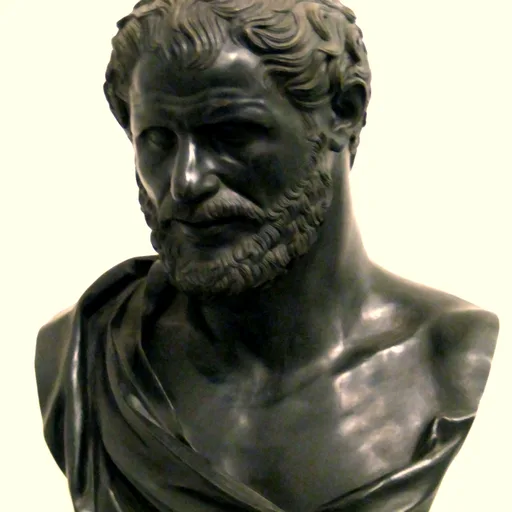
Democritus
Greece -0460-01-01 ~ -0360-01-01
5th-century BCE ancient Greek natural philosopher
Proposed that the ultimate constituents of reality are atoms and void
Looking past surfaces to underlying structure is the starting point of fundamental analysis
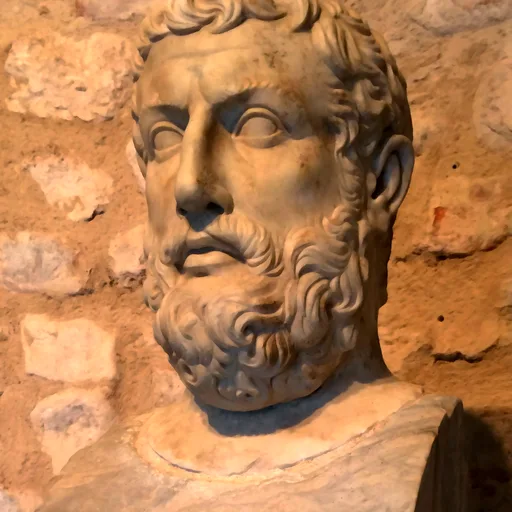
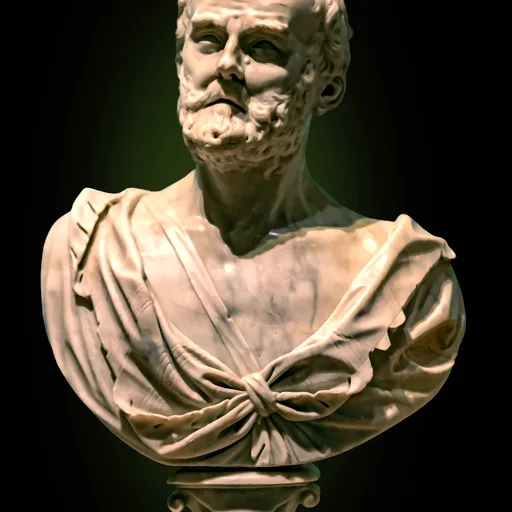
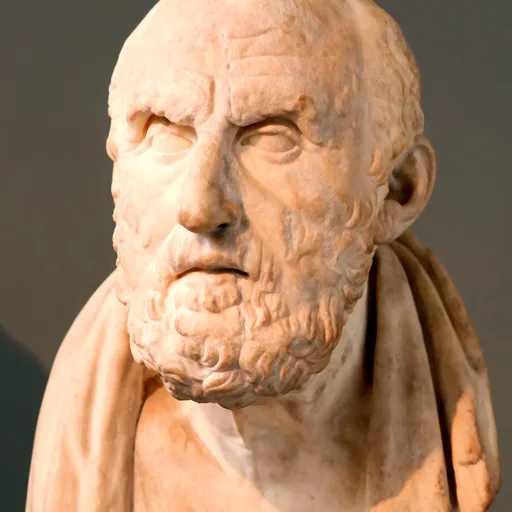
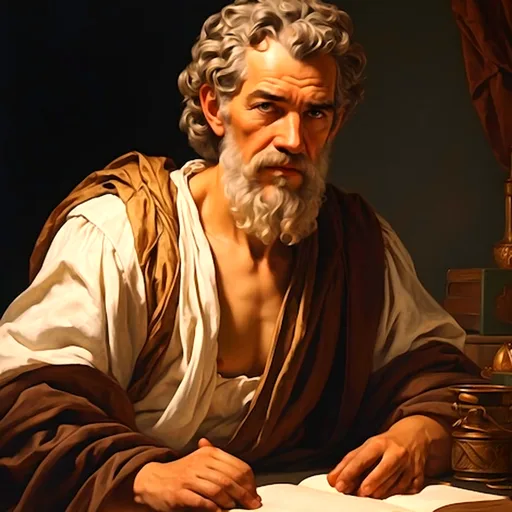
Born around 460 BCE in Abdera, Thrace, Democritus was an ancient Greek natural philosopher who, together with his teacher Leucippus, proposed that the fundamental constituents of reality are 'atoms' (indivisible particles) and 'void' (empty space). Known as 'the laughing philosopher,' his ethical vision locating human happiness in euthymia (tranquility of mind) was carried forward by Epicurus.
What You Can Learn
Democritus's atomistic thinking offers surprisingly practical guidance for modern business and self-development. First, the stance of 'looking past visible phenomena to the underlying structure' is the fundamental posture of data analysis and fundamental investing: discerning a company's earnings structure (the 'atoms') rather than chasing surface-level stock-price movements is the starting point of long-term investment. Second, his concept of euthymia (tranquility of mind) can be reinterpreted for modern mental health and mindfulness. For people exhausted by the relentless stimulation and social comparison of social media, anchoring happiness in inner stability rather than external validation offers a concrete prescription. Third, his ethical principle of avoiding excess and knowing sufficiency resonates with the FIRE movement and sustainable wealth-building: the insight that not chasing more than enough ultimately leads to durable well-being is a direct message from a philosopher in Abdera twenty-four centuries ago to today's individual investor.
Words That Resonate
Courage begins the difficult deed, but fortune governs its outcome.
andreia arche deinon pragmaton, tyche de telos kratei.
Color exists by convention, sweet by convention, bitter by convention; in reality there are only atoms and void.
nomoi [nomos] chroia, nomoi glyky, nomoi pikron, eteei de atoma kai kenon.
Tranquility arises for human beings from moderation in enjoyment and a balanced life.
anthropoisin euthumien ginesthai metrioteiti terpsis kai biou summetriein.
He who would be tranquil should not undertake too many things, either private or public.
ho boulos euthymeein me polla presseito mete idie mete xynie.
For those who want more, time is never enough.
tois pleonektein boulomenoisin ho kairos holigostos.
Life & Legacy
Democritus brought about a decisive turn in ancient Greek natural philosophy by arguing that invisible, infinitesimal particles are the true foundation of the world. In an age still dominated by mythological worldviews, his attempt to explain the structure of matter rationally became the starting point of an intellectual lineage that, after more than two millennia, connected to modern atomic theory. He was simultaneously 'the laughing philosopher,' whose ethical thought locating happiness in inner tranquility left a deep imprint on posterity.
Born around 460 BCE in Abdera, a Greek colony in Thrace, Democritus is said to have grown up in a wealthy family. According to Diogenes Laertius, he spent his inheritance on travel: studying geometry from priests along the Nile in Egypt, absorbing astronomical knowledge from Magi in Persia, and reportedly conversing with Indian gymnosophists (naked ascetics). This extensive travel gave him a perspective transcending the Greek intellectual framework. Back in Abdera, he lived as an independent researcher, keeping his distance from the philosophical mainstream in Athens. Plato's complete silence on Democritus has long been noted, and ideological rivalry between the two is widely inferred.
The core of Democritus's philosophy is the atomism he inherited from his teacher Leucippus and independently developed. According to his view, only two things exist: atoms (atomon — 'the uncuttable') and void (kenon). Countless atoms move through the void, colliding and combining to generate all things. Atoms differ in shape, arrangement, and orientation, but sensory qualities like color, taste, and temperature do not belong to atoms themselves — they are products of human perception. This distinction between primary and secondary qualities anticipates by nearly two thousand years the formulations of Galileo and John Locke in the 17th century. Aristotle criticized Democritus's physics at length yet discussed it in detail, and ironically those criticisms became the primary channel through which Democritus's thought was transmitted to posterity.
In ethics, too, Democritus displayed notable originality. The goal he set for human life — euthymia (tranquility, cheerfulness of mind) — located the basis of happiness not in external wealth or fame but in inner stability. His counsel against excessive desire and in favor of a moderate, balanced life directly influenced the hedonistic philosophy of Epicurus. The epithet 'the laughing philosopher' is said to derive from his habit of laughing at human folly rather than lamenting it. Beneath that laughter lay the composure of one who had grasped the principles constituting the world, and a deep insight into human existence itself. This 'cheerfulness grounded in knowledge' is the trait that most distinguishes Democritus among ancient philosophers.
Democritus reportedly wrote over seventy works spanning physics, ethics, mathematics, astronomy, biology, and music theory, but all originals are lost. His thought survives only through fragments and citations in later authors. Besides Aristotle, Epicurus, Lucretius, and Cicero all referenced him, ensuring that his influence persisted despite the loss of primary texts. He is believed to have died around 370 BCE, reputedly living past ninety. A long life combined with habitual cheerfulness may itself be the most practical proof of the 'tranquility of mind' he preached.
Expert Perspective
In the lineage of ancient Greek philosophy, Democritus stands as a thoroughgoing materialist at the opposite pole from Plato's idealism. Where Parmenides declared 'being is one and unchanging,' Democritus answered 'being is countless atoms in motion,' establishing a pluralistic realism. In epistemology, he held that sensation is merely a subjective phenomenon produced by atomic arrangements, and that true knowledge can be attained only through reason. This rationalist stance broadened ancient philosophy along an axis distinct from the ethical concerns of Socrates and Plato, forming an intellectual current that, via the Epicurean school, flowed into the mechanistic natural philosophy of the early modern era.