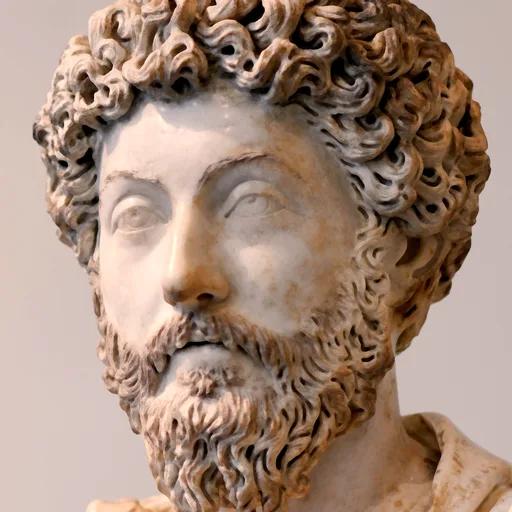
Philosophers / Modern Western

Karl Marx
Germany 1818-05-05 ~ 1883-03-14
19th-century German philosopher and economist
Constructed historical materialism and dissected capitalism's structural contradictions in Das Kapital
The lens of asking where value is created and to whom it flows remains relevant today
Born in 1818 in Trier, Prussia, Karl Marx inverted Hegelian dialectics into materialism and constructed historical materialism, locating the driving force of history in economic relations of production. With Engels he authored The Communist Manifesto, presenting the theory of class struggle, and in his life's work Das Kapital he dissected the structural contradictions of capitalism through the concept of surplus value. His analytical methods transformed the methodology of social science as a whole.
What You Can Learn
Marx's analytical method still provides a useful lens for thinking about contemporary economic inequality. When analyzing the division of labor between developed and developing countries in global supply chains, the concept of surplus value offers a framework for asking where value is created and to whom it is distributed. The way technology companies extract value from user behavioral data through platforms is also discussed as a modern application of alienation theory. In individual career planning, consciously examining the relationship between the value one's labor produces and the compensation received is a starting point for negotiating fair terms. Furthermore, the historical-materialist perspective — that the economic base conditions the superstructure — can be repurposed as a framework for reading how changes in technology and industrial structure ripple through legal systems and social consciousness. The point is not to adopt Marx's conclusions wholesale but to internalize the methodology of structurally reading the economic interests behind social phenomena.
Words That Resonate
Capital is dead labour, that, vampire-like, only lives by sucking living labour, and lives the more, the more labour it sucks.
Das Kapital ist verstorbne Arbeit, die sich nur vampyrmaessig belebt durch Einsaugung lebendiger Arbeit und um so mehr lebt, je mehr sie davon einsaugt.
The history of all hitherto existing society is the history of class struggles.
Die Geschichte aller bisherigen Gesellschaft ist die Geschichte von Klassenkampfen.
Religion is the sigh of the oppressed creature, the heart of a heartless world, and the soul of soulless conditions. It is the opium of the people.
Die Religion ist der Seufzer der bedrengten Kreatur, das Gemuth einer herzlosen Welt, wie sie der Geist geistloser Zustende ist. Sie ist das Opium des Volkes.
Workers of all lands, unite!
Proletarier aller Laender, vereinigt Euch!
Being determines consciousness.
Das Sein bestimmt das Bewusstsein.
The philosophers have only interpreted the world, in various ways; the point, however, is to change it.
Die Philosophen haben die Welt nur verschieden interpretiert; es kommt aber darauf an, sie zu verandern.
Life & Legacy
What Karl Marx left as an intellectual legacy is not a blueprint for a particular political system but an analytical apparatus for reading society from its economic base. The key to understanding his thought lies in the fundamental proposition of historical materialism: 'It is not the consciousness of men that determines their being, but, on the contrary, their social being that determines their consciousness.'
Born into a Jewish legal family in Trier, Marx studied at the Universities of Bonn and Berlin, where he received his baptism in Hegelian philosophy. Though he moved in the circle of the Young Hegelians, he is said to have harbored early skepticism about remaining within the framework of idealism. After obtaining his doctorate from the University of Jena in 1841, he entered journalism; his experience as editor of the Rheinische Zeitung, fighting censorship, drove him from theory to practice.
The Paris period was the decisive turning point in Marx's intellectual formation. In the Economic and Philosophic Manuscripts of 1844 he analyzed the structure of alienation — workers severed from the products of their own labor. The insight that labor's inherent potential for self-realization is inverted under wage labor into suffering and loss has influenced twentieth-century sociology of work and organizational theory. In Paris he reunited with Friedrich Engels, beginning a collaboration that would last forty years. Engels not only provided ongoing financial support as a businessman but was also an indispensable source of firsthand information about factory-labor conditions in England.
The Communist Manifesto, co-authored with Engels and published in 1848, opens with the declaration: 'The history of all hitherto existing society is the history of class struggles.' Depicting the conflict between the bourgeoisie, who own the means of production, and the proletariat, who have nothing to sell but their labor power, as the engine of history, the document provided a theoretical framework for movements seeking social transformation. Revolutions erupted across Europe that year but were suppressed, and Marx ultimately settled in exile in London.
The London years were three decades of poverty and research. Visiting the British Museum reading room daily and combing through vast economic materials, Marx devoted himself to writing Das Kapital. Volume I, published in 1867, built on the labor theory of value — that the value of a commodity is determined by the socially necessary labor time required for its production — to explain how capitalists appropriate surplus value, the portion of value produced by workers that exceeds their wages. This theorization of the source of profit as a structure of exploitation constituted a fundamental challenge to the premises of classical economics. Volumes II and III were compiled and published posthumously by Engels from Marx's manuscripts.
Historical materialism holds that the superstructure — law, politics, religion, art — is conditioned by the economic base. This perspective demanded analysis from the standpoint of material conditions of life rather than treating ideas and institutions as products of autonomous development. At the same time, it suggests a bidirectional relationship in which the superstructure can react upon the base — a point that guards against reductive economic determinism.
Marx served as the de facto theoretical leader of the International Workingmen's Association (First International), founded in 1864, but irreconcilable disputes with Bakunin and other anarchists led to its dissolution in 1876. The experience illuminated questions of organizational structure and power within revolutionary movements.
Marx died in London in 1883 and was buried at Highgate Cemetery. His analytical methods remain an unavoidable reference point for supporters and critics alike. The fact that capitalism has survived and transformed itself since his time reveals the limits of his predictions while paradoxically vindicating the enduring utility of his method for structural crisis analysis.
Expert Perspective
In the history of Western modern philosophy, Marx occupies a singular position: he inverted Hegel's dialectics from idealism to materialism and redefined philosophy as a practical instrument of social transformation. While departing from traditional philosophy focused on epistemology and ontology, he established a comprehensive method of social analysis spanning economics, sociology, and history. Though belonging to a lineage distinct from analytic philosophy or post-structuralism, his influence on twentieth-century intellectual currents — from the Frankfurt School's Critical Theory to Fredric Jameson's cultural criticism — has been both broad and enduring.
Related Books
Karl Marx - Search related books on AmazonConnections
Influenced by


Influenced

Poor Charlie's Almanackの書名の由来となった多才な知識人の理想像

実存主義とマルクス主義の統合を試みた

マルクスの労働概念を批判的に検討し活動的生の理論を構築

理論的基盤、『資本論』と史的唯物論を生涯にわたり研究

Provided the materialist class-struggle frame that Mao adapted to Chinese conditions

唯物弁証法と労働=道具論。高次精神機能の社会的形成という核心定式

疎外論と初期マルクスのヒューマニズムを精神分析に統合、社会的性格論の理論的支柱