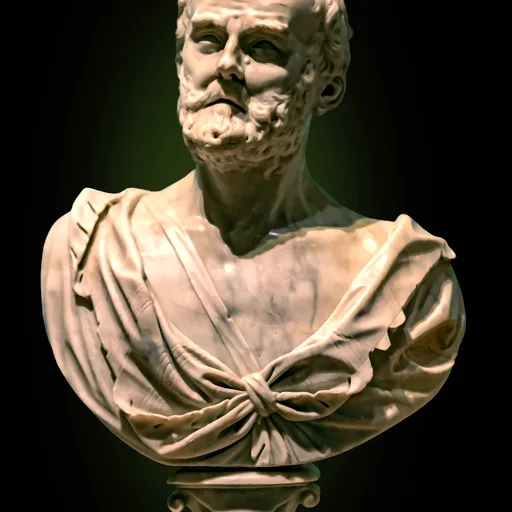
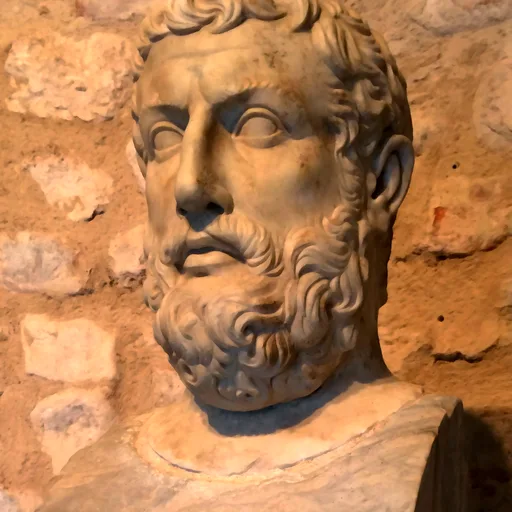
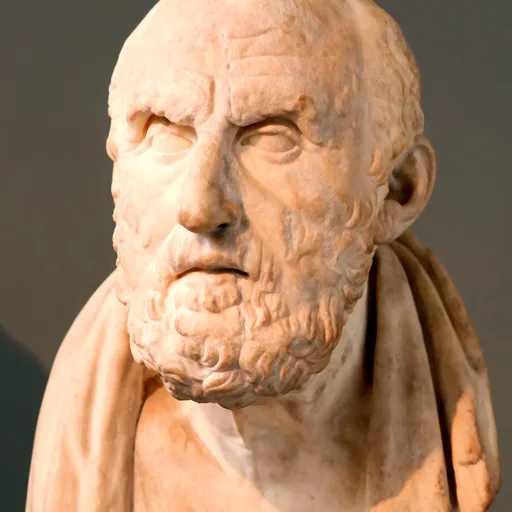
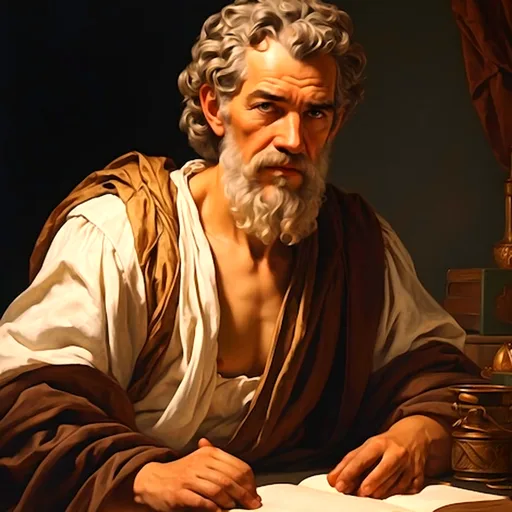
Philosophers / Ancient Greek
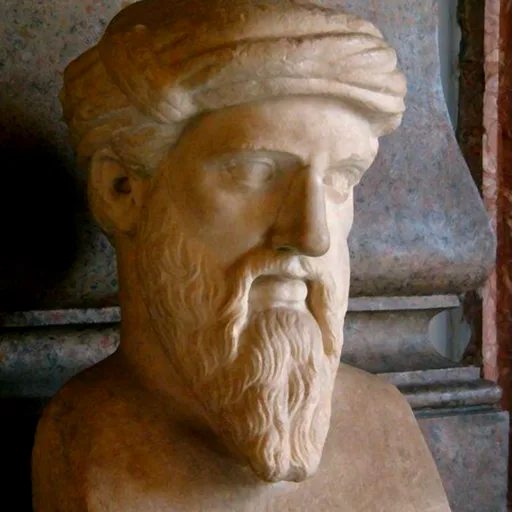
Pythagoras
Greece -0582-01-01 ~ -0490-01-01
Mathematician and philosopher, 6th century BC
Proclaimed 'all is number' and laid the foundation for a mathematical worldview
The intellectual origin of our data-driven society begins here
Ancient Greek thinker from Samos (c. 570 BC) who led a religious community in Croton. He linked string ratios to harmony, taught transmigration of souls, and planted the conviction that nature's truths are mathematical.
What You Can Learn
"All is number" anticipates the data-driven age. Every phenomenon is now quantified and mined for patterns -- a modern Pythagorean exercise. His discovery of structural analogy between music and math models the cross-domain insight essential to innovation. The Croton community, blending shared values with individual expertise, prefigures the startup mix of mission alignment and deep specialization.
Words That Resonate
There is geometry in the humming of the strings, there is music in the spacing of the spheres.
Friends are companions on a journey who ought to help each other persevere on the road to a happier life.
Friends are as companions on a journey, who ought to aid each other to persevere in the road to a happier life.
Educate the children and it will not be necessary to punish the men.
Educate the children and it won't be necessary to punish the men.
Do not say a little in many words, but a great deal in few.
All is number.
Panta arithmos estin.
Life & Legacy
Pythagoras calls to mind a geometry theorem, yet the man was first a religious visionary who saw divine order in numbers. Born around 570 BC on Samos, he reportedly traveled to Egypt and Babylon, absorbing geometry and sacred rites, though the historicity of these journeys is debated.
Around 530 BC he left Samos for Croton in southern Italy, founding a community that was equal parts school and religious order. Initiates observed years of silence, shared property, and abstained from beans. Behind these rules lay metempsychosis: the soul migrates into new bodies, purifying toward a divine state. Respect for life and vegetarianism followed logically.
The school's motto was "All is number." Using a monochord, members discovered that pleasing intervals match simple integer ratios: octave 2:1, fifth 3:2, fourth 4:3. Finding math inside sensory beauty was revolutionary -- it implied one principle unites structure and sensation. The "music of the spheres" extended this cosmically: each planet emits a tone, producing an inaudible harmony.
Modern scholarship is cautious. The right-triangle relationship was likely known in Babylon and India earlier. After Burkert's 1962 study, consensus holds Pythagoras may have added nothing to formal mathematics. Yet what matters is the methodological attitude: treating nature as numerical relationships. That attitude passed through Plato's Timaeus to Copernicus, Kepler, and Newton.
Around 510 BC the Pythagoreans clashed with democratic factions and their halls were burned. Pythagoras may have fled to Metapontum or perished. His school survived through Philolaus and Archytas. Having left no writings, he transmitted ideas entirely by word of mouth -- a testament to the power of thought to outlive its author.
Expert Perspective
Pythagoras bridges Milesian natural philosophy and Plato's Ideas. By grounding reality in number, he moved philosophy from concrete to abstract. His soul-doctrine reworked Orphic tradition. The coexistence of rationality and mysticism marks an era before philosophy and science diverged.