Entrepreneurs / Industrial Pioneer
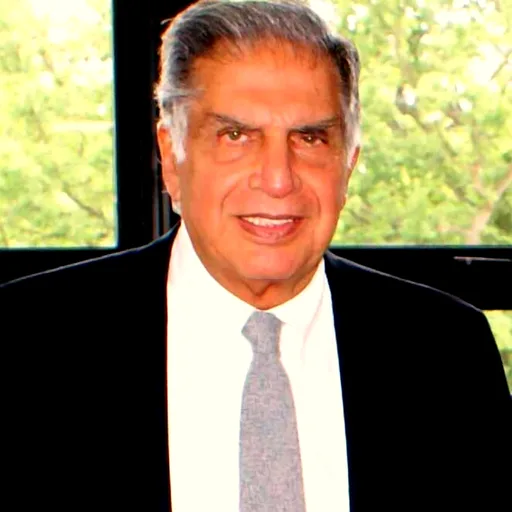
Ratan Tata
India 1937-12-28 ~ 2024-10-09
20th-century Indian conglomerate leader and philanthropist
Transformed the Tata Group into a global enterprise through international M&A
The brand-and-technology acquisition strategy is a reference model for Asian companies expanding overseas
Born in 1937 in Mumbai, India, into the distinguished Parsi (Zoroastrian) Tata family. Ratan Tata served as chairman of the Tata Group from 1991 to 2012, transforming an India-centric conglomerate into a global enterprise through landmark international acquisitions including Tetley, Jaguar Land Rover, and Corus. Known for his personal modesty and deep commitment to social contribution, he was called 'the conscience of India.' He died in October 2024 at the age of 86.
What You Can Learn
Ratan Tata's management offers lessons of particular relevance to the globalization of emerging-market companies and the integration of social responsibility. First, the strategy of acquiring brands and technology through M&A: the Jaguar Land Rover deal exemplifies acquiring in one transaction the brand equity and engineering capability that would take decades to build organically. As more Asian companies acquire Western brands, Ratan's approach serves as a reference model. Second, the institutional integration of philanthropy and business: the Tata Group's structure — in which charitable trusts hold the majority of the holding company's equity, channeling profits structurally back to society — is attracting renewed attention in the context of ESG and impact investing as a model for embedding corporate social responsibility in governance design. Third, personal humility as a source of brand value: Ratan's modest lifestyle earned him the title 'the conscience of India' and elevated trust in the Tata brand itself.
Words That Resonate
Life & Legacy
Ratan Tata was the business leader who steered India's largest corporate group onto the international stage, embodying an entrepreneurial spirit that treated business growth and social contribution as inseparable. When he died on October 9, 2024, at the age of 86, the depth of mourning across India testified that he was far more than a business executive.
A great-grandson of Tata Group founder Jamsetji Tata — though not in the direct line, being the son of Naval Tata, who was adopted by his grandfather Ratanji Tata — Ratan was born in Mumbai in 1937. His parents divorced during his childhood, and he was raised by his grandmother. He earned a bachelor's degree in architecture from Cornell University in the United States and later completed the Advanced Management Program at Harvard Business School.
He joined the Tata Group in 1962, beginning his career on the factory floor at Tata Steel. This ground-level start is said to have grounded the practical sensibility that informed his later strategic decisions. In 1991, upon the retirement of his predecessor J.R.D. Tata, he became chairman of Tata Sons. At that time the group comprised roughly 80 companies, but each operated with considerable autonomy and no integrated group-wide strategy existed.
The most significant transformation Ratan drove was globalization through large-scale international M&A. Starting with the acquisition of the British tea brand Tetley in 2000, he went on to acquire Anglo-Dutch steelmaker Corus for approximately $12 billion in 2007 and British automaker Jaguar Land Rover from Ford for approximately $2.3 billion in 2008. These deals symbolized a new wave in which Indian companies acquired Western brands. The Jaguar Land Rover acquisition in particular vindicated Ratan's foresight: many analysts were skeptical at the time, but Ratan believed in the brand value and engineering capability, and JLR subsequently grew into one of the Tata Group's core profit centers.
At the same time, Ratan positioned social responsibility as integral to business. The Tata Group has a longstanding tradition of channeling a significant share of profits back to charitable trusts, and Ratan strengthened this tradition further. The Tata Trusts are among India's leading funders of education, healthcare, and rural development, supporting the operations of major research institutions and hospitals. His Padma Bhushan (2000) and Padma Vibhushan (2008) honors were the Indian government's recognition of his achievements in both business and philanthropy.
Ratan was known for personal austerity. He never married, lived in modest quarters rather than a mansion, and was characteristically understated in public. His personal involvement in stray-dog rescue was widely known. The contrast between this personal humility and the boldness of his global M&A decisions formed the distinctive appeal of Ratan Tata as a figure.
After stepping down as chairman in 2012, he briefly returned as interim chairman during 2016-2017 amid a dispute over the removal of his successor Cyrus Mistry. As an individual, he also invested in more than 40 startups, contributing to the development of India's startup ecosystem.
Having transformed a family enterprise founded in colonial-era India into a global multinational group while preserving its philanthropic tradition, Ratan's management stands as a case study in the compatibility of profit and public good — influencing business leaders not only in India but around the world.
Expert Perspective
Among entrepreneurial archetypes, Ratan Tata is classified as a conglomerate-transforming social business leader. He inherited — rather than founded — a massive existing organization and reshaped its structure for globalization, a challenge akin to that faced by post-Matsushita leaders of Panasonic. What distinguishes Ratan is his simultaneous pursuit of globalization through M&A and preservation of the philanthropic tradition. He is sometimes compared with Jack Ma as an emerging-market global business leader, but Ratan stands apart in his prioritization of organizational and societal contribution over personal wealth accumulation.