Investors / Value Investing
.webp)
John Neff
United States 1931-09-19 ~ 2019-06-04
20th-century American contrarian value investor
Beat the market for 31 consecutive years running the Windsor Fund
Screening for low-P/E stocks is the most accessible gateway to value investing
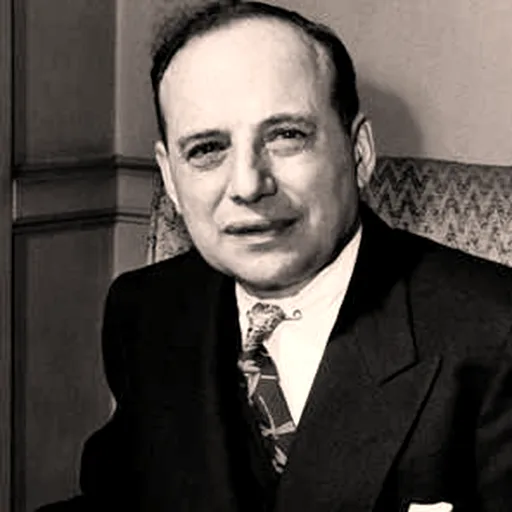
Born in 1931 in Ohio, died in 2019. John Neff managed the Vanguard Windsor Fund for 31 years from 1964, delivering an annualized return of 13.7% and beating the S&P 500 by more than three percentage points per year. He consistently practiced contrarian low-P/E investing, finding value in stocks other investors shunned, earning him a reputation as the consummate professional contrarian — a quiet giant who let his record do the talking.
What You Can Learn
Neff's low-P/E strategy offers one of the most accessible entry points into value investing for individual investors building portfolios of individual stocks. First, it teaches the practical use of the P/E ratio: screening for stocks with P/E ratios well below the market average, then determining whether the low valuation reflects temporary setbacks or structural decline, is a simplified version of Neff's own process — and it is something any investor can do with a brokerage's screening tools. Second, the emphasis on dividend yield resonates strongly with income-minded investors. Following Neff's total-return-ratio approach — adding dividend yield to earnings growth and dividing by P/E — gives investors a homemade yardstick for gauging cheapness. Third, his contrarian principle that 'the opportunity is in the sectors nobody wants' is a prescription against chasing trending tickers on social media, thereby avoiding the crowd-driven overpaying that erodes returns. Neff's 31-year record stands as evidence that a modest method, patiently executed, can beat the market over the long run.
Words That Resonate
Life & Legacy
John Neff may be one of the most underappreciated giants in the history of investing. His story lacks the colorful anecdotes or glamorous pedigree that attract headlines; what it has instead is 31 years of steady outperformance — a record that speaks entirely for itself.
Born in 1931 in Ohio, Neff came from modest circumstances. He graduated from the University of Toledo and earned an MBA from Case Western Reserve University. After working in the research department of National City Bank, he joined Wellington Management (predecessor of the Vanguard Group).
In 1964, at 33, Neff took charge of the Vanguard Windsor Fund. He ran it for the next 31 years until his retirement in 1995. Over that span, Windsor delivered an annualized return of 13.7%, comfortably ahead of the S&P 500's 10.6%. Compounded over three decades, that three-plus-point annual margin produced an enormous difference in terminal wealth; Windsor became the highest-returning mutual fund in the United States. By the 1980s asset inflows had grown so large that the fund temporarily closed to new investors.
Neff's investment philosophy can be distilled to a single sentence: buy low-P/E stocks and wait for the market to re-rate them. He looked for companies whose shares had been beaten down by temporary bad news or industrywide unpopularity, pushing their price-to-earnings ratios well below the market average. But cheapness alone was not enough. Neff placed heavy emphasis on what he called the 'total return ratio' — dividend yield plus earnings growth rate divided by the P/E — and favored stocks where this figure was high.
The hallmark of Neff's approach was his willingness to concentrate in dull, out-of-favor sectors that growth investors would never touch: banks, insurers, automakers, utilities. He called his own style 'ugly duckling' investing, reflecting a deep contrarian conviction that opportunity lives precisely where most market participants refuse to look.
An important element in Neff's stock selection was his assessment of management quality. Among low-P/E stocks, many are cheap for structural reasons that preclude recovery. Neff guarded against such 'value traps' by verifying that management was executing credible turnaround plans and that the balance sheet could withstand stress. This blend of quantitative screening and qualitative judgment enabled him to uncover opportunities that simple P/E filters would miss.
The strategy worked because of a persistent bias in market psychology: investors flock to high-performing companies and oversell those suffering temporary setbacks. Neff systematically exploited this behavioral pattern, buying undervalued names at depressed prices and taking profits once earnings recovered or the market reassessed. The approach demands patience and is ill-suited to anyone seeking quick results, but for a long-horizon investor willing to let time work in their favor it is formidable.
After retiring in 1995, Neff continued to follow markets closely until his death in June 2019 at 87. His book John Neff on Investing remains a practical guide to low-P/E investing. Having beaten the market with nothing more than numbers and patience, far from the noise of Wall Street, Neff's career is eloquent proof that consistency, not flash, determines investment outcomes.
Expert Perspective
Among investor types, Neff is the most successful practitioner of low-P/E investing on record. He translated Graham's margin-of-safety concept into specific, actionable metrics — P/E, dividend yield, earnings growth rate — and built a systematic screening methodology. Where Buffett evolved toward 'buying wonderful businesses at fair prices,' Neff remained true to the purest strain of value investing: 'buying cheap stocks at cheap prices.' The consistency of his outperformance over 31 years stands as a quiet rebuke to short-termism and as proof that patience and discipline can themselves be sources of alpha.