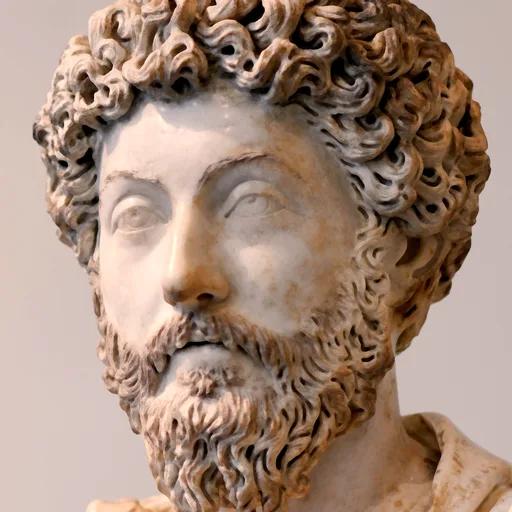
Philosophers / Ancient Greek

Porphyry
LB 0233-01-01 ~ 0301-01-01
Born c. 234 in Tyre, Porphyry was a Phoenician Neoplatonist who edited Plotinus into the Enneads. His logic primer Isagoge was the standard textbook of Aristotelian logic in medieval Europe and the Islamic world.
What You Can Learn
Porphyry shows that editing and introducing others' ideas can rival original speculation. He shaped Plotinus's drafts into the Enneads — the text on which 1,500 years of metaphysics leaned. In modern terms, that is knowledge management, tech writing, curation. His Isagoge prototypes every primer: take a complex system and surface only the concepts a beginner needs. Onboarding docs, wikis, and UX design live downstream. Digesting what you learn and passing it on compounds quietly over decades.
Words That Resonate
Everything that is capable of turning back upon itself is incorporeal.
Πᾶν τὸ πρὸς ἑαυτὸ ἐπιστρεπτικὸν ἀσώματόν ἐστιν.
The philosopher must be the priest of the god who is over all things.
Δεῖ τὸν φιλόσοφον ἱερέα τοῦ ἐπὶ πᾶσι θεοῦ εἶναι.
Strive to become a lover of learning rather than one who has merely learned a great deal.
Σπεῦδε φιλομαθεῖν μᾶλλον ἢ πολυμαθεῖν.
All things are in all things, but in each in the way that suits its own nature.
Πάντα ἐν πᾶσιν, ἀλλ᾽ οἰκείως ἐν ἑκάστῳ.
Life & Legacy
Porphyry of Tyre is the Neoplatonist who organised Plotinus's thought and ushered late-antique philosophy into the medieval mind. He is remembered less as an original speculator than as the consummate editor and primer-writer.
Born around 234 in Tyre, he was given the Aramaic name Malkos, "king." In Athens he studied under Cassius Longinus, who renamed him Porphyrius, "clad in purple." In 262 he travelled to Rome to join Plotinus. Six years of ascetic study damaged his health to the point of suicidal despair; on his teacher's advice he retreated to Sicily for five years. Returning to Rome after Plotinus's death, he edited the master's scattered notebooks into the six-volume Enneads, prefaced by his own Life of Plotinus.
His most consequential work is the Isagoge — a slim primer to Aristotle's Categories that reduced substance to five terms: genus, species, difference, property, and accident. Boethius translated it into Latin, and it became the gateway logic textbook of every European university for a thousand years. Through a Syriac route it reached Arabic as Isaghuji and held the same position in the Islamic world. The Porphyrian Tree is the conceptual ancestor of every taxonomic chart used in biology today.
Porphyry was also a religious controversialist. His Against the Christians offered the most learned pagan critique of early Christianity and noted that the Book of Daniel must postdate Antiochus IV; Theodosius II ordered every copy burned, so it survives only through Christian refuters. He defended Plotinus's contemplative path against his own pupil Iamblichus, who moved Neoplatonism toward ritual theurgy. He also wrote On Abstinence, antiquity's most thorough case for vegetarianism.
Late in life he married Marcella and addressed to her a philosophical exhortation as personal correspondence. He died around 305. Through him, Plato, Aristotle, Pythagoras, and Eastern Mediterranean religion flowed onward to Boethius, Augustine, Avicenna, and Aquinas.
Expert Perspective
In Western philosophy Porphyry sits between Plotinus and Iamblichus, marking the fork between contemplative and theurgic Neoplatonism. In the history of logic he is the hinge between Aristotle and Boethius — without his Isagoge, the medieval problem of universals could not have been formulated.