Philosophers / Eastern

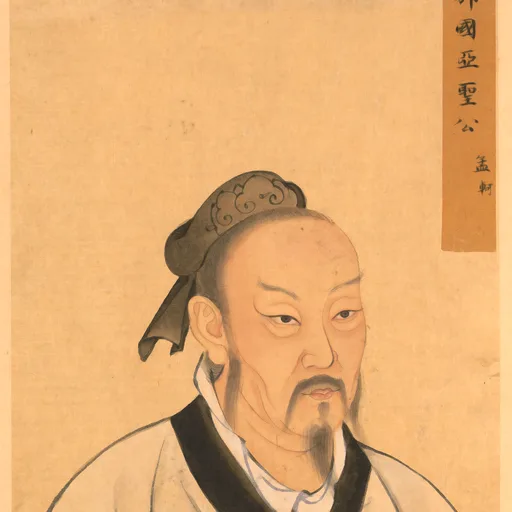
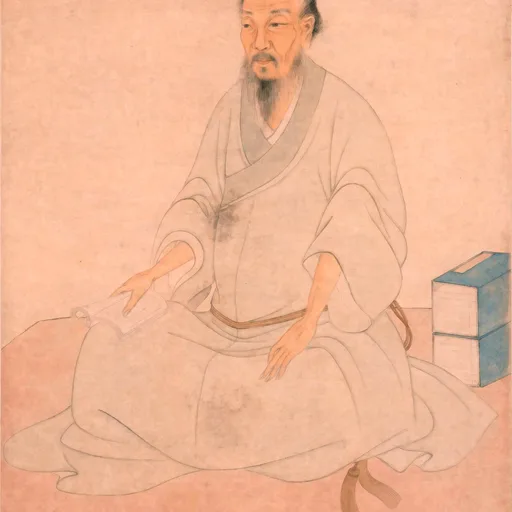
Confucius
China -0550-01-01 ~ -0478-01-01
Founder of Confucianism, 6th century BC Spring and Autumn period
Built a practical moral system centered on benevolence, ritual, and filial piety, recorded in the Analerta
'Do not do unto others what you would not have done unto you' is the origin of business ethics
Born c. 551 BCE in Lu, Confucius built a moral system on ren, li, and xiao. The Analects became East Asia's intellectual bedrock, shaping ethics across the civilization sphere for twenty-five centuries.
What You Can Learn
His Silver Rule connects directly to stakeholder management: asking "Would I want this done to me?" is a more fundamental compass than memorizing compliance codes. "Learning without thought is labor lost" urges conscious reflection in an age of information overload. The junzi ideal of self-accountability gives leaders a starting point for building ownership culture over blame. Twenty-five centuries old, these principles retain practical force in both management and personal development.
Words That Resonate
Knowing it is less than loving it; loving it is less than delighting in it.
知之者不如好之者、好之者不如樂之者
When three walk together, one is surely my teacher. I follow what is good and correct what is not.
三人行、必有我師焉。擇其善者而從之、其不善者而改之
The exemplary person demands it of himself; the petty person demands it of others.
君子求諸己、小人求諸人
I transmit but do not create; I trust in and love the ancients.
述而不作、信而好古
Learning without thought is labor lost; thought without learning is perilous.
學而不思則罔、思而不學則殆
Do not impose on others what you yourself do not desire.
己所不欲、勿施於人
To err and not correct it -- that is the real error.
過而不改、是謂過矣
Life & Legacy
Confucius occupies a place in history far exceeding that of a mere thinker. Ranked with Socrates, the Buddha, and Jesus as a sage, he shaped the ethical framework of all East Asia.
Born c. 551 BCE in Lu, when Zhou authority was collapsing, he came from a declining noble family. He lost his father young, yet displayed extraordinary passion for learning. Amid an era of upheaval, he aspired to restore Zhou-era ritual institutions.
Briefly serving as Minister of Crime in Lu, he failed to realize his ideals and spent roughly fourteen years traveling to Wei, Chen, Cai, and Chu, seeking a ruler willing to govern by benevolence. None gave him the role he sought. That odyssey of failure refined his thought into practical wisdom. In later years he devoted himself to educating some three thousand disciples.
At his core lies ren -- benevolence and sincerity in human relations. His Silver Rule, "Do not impose on others what you do not desire," expresses a universal ethical principle. Li (ritual propriety) realized ren socially; xiao (filial piety) served as ethics' starting point, extending into loyalty and community duty. The ideal junzi was presented as attainable by anyone through moral cultivation, revolutionary in a hereditary society.
After his death, disciples compiled the Analects over four centuries. Mencius advanced innate-goodness theory; Xunzi championed ritual governance from an opposing view. The Han dynasty made Confucianism state doctrine; Zhu Xi systematized Neo-Confucianism in the Song, profoundly influencing Korea and Edo-period Japan. Mao's Cultural Revolution denounced Confucius, yet recent decades have seen rehabilitation.
Confucius called himself a transmitter, not a creator. In reality, by uniting morality and politics, he gave East Asian culture an irreversible direction. His open-door education policy anticipated the universalization of learning by centuries.
Expert Perspective
Confucius integrated practical ethics with political philosophy earliest. Unlike Laozi's naturalism, he confronted social order through concrete norms. His ren-li-xiao system links inner cultivation to social duty, paralleling Aristotelian virtue ethics in the West.


.webp)