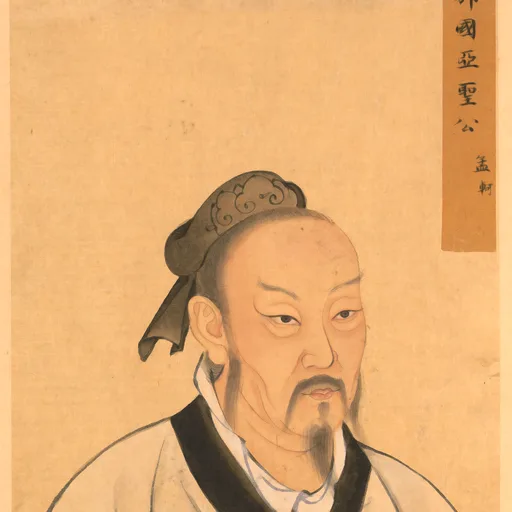
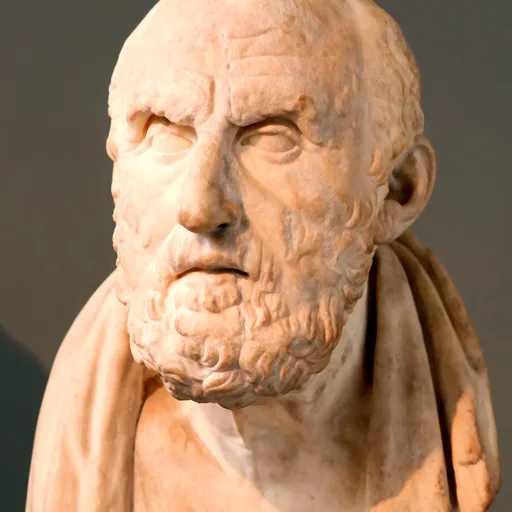
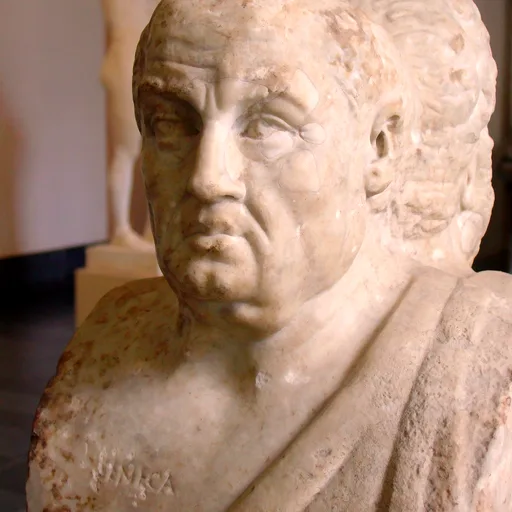
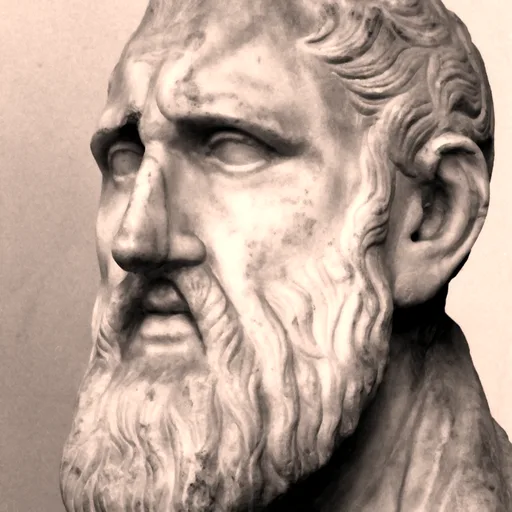
Philosophers / Eastern
.webp)
Xunzi
China -0312-01-01 ~ -0230-01-01
3rd-century BCE Confucian scholar of the Warring States era
Proclaimed the doctrine of evil nature and championed acquired self-cultivation through ritual and study
The idea of channeling behavior through institutional design converges with modern nudge theory
A Confucian scholar born in the state of Zhao during the late Warring States period, 3rd century BCE. Xunzi directly opposed Mencius's doctrine of innate human goodness, declaring that 'human nature is evil; its goodness is the result of deliberate effort.' He argued that only acquired self-cultivation — through ritual practice and ceaseless study — can elevate human beings into moral agents. Through his pupils Han Fei and Li Si he exerted a decisive influence on Legalist thought, making him both the greatest heretic and the greatest innovator in the history of Confucianism.
What You Can Learn
Xunzi's doctrine of evil nature carries pointed implications for modern organizational management and self-management. Start from the premise that people naturally tend toward laziness, and it becomes clear how fragile any management system is that relies solely on individual goodwill or willpower. Just as Xunzi channeled human behavior through the institution of ritual, modern organizations need rules, processes, and incentive structures that reliably elicit desirable behavior — an insight that converges with behavioral economics' nudge theory, articulated 2,300 years in advance. His injunction that 'learning must never cease' speaks directly to the necessity of lifelong learning in an era of accelerating technological change: as AI and digitization rapidly obsolete existing skills, Xunzi's view of learning supplies the philosophical grounding for continuous self-investment. His naturalistic cosmology in the Discourse on Heaven can also be reread as Stoic-style practical wisdom: do not agonize over uncontrollable market fluctuations — concentrate on what you can control.
Words That Resonate
Blue dye is extracted from the indigo plant, yet it is bluer than indigo itself.
青取之於藍、而青於藍。
The course of Heaven is constant: it does not prevail because of Yao, nor does it cease because of Jie.
天行有常、不為堯存、不為桀亡。
Learning must never cease.
学不可以已。
Human nature is evil; its goodness is the result of deliberate effort.
人之性悪、其善者偽也。
If you carve without ceasing, even metal and stone can be engraved.
鍥而不舎、金石可鏤。
Life & Legacy
Xunzi is the thinker who left the most contested proposition in the history of Confucianism. Within the orthodox stream flowing from Confucius, Mencius had declared that 'human nature is inherently good.' Xunzi countered: 'Human nature is evil; whatever is good in it is the result of deliberate effort' (wei). By 'deliberate effort' he meant human artifice and exertion: moral character is not given at birth but built through education and the practice of ritual (li). This unflinching view of human nature posed a fundamental challenge to Confucian orthodoxy and ignited a debate between the goodness and evil of human nature that has persisted for more than two millennia.
Born around 313 BCE in the state of Zhao, Xunzi (whose personal name was Xun Kuang) studied in his youth at the Jixia Academy in the state of Qi, where he was exposed to all the major intellectual currents of the day — Confucianism, Daoism, and Mohism alike. The Jixia Academy was the premier center of learning in the Warring States era; scholars gathered there from across the Chinese world and engaged in uninhibited debate. This environment forged Xunzi not as a mere transmitter of Confucian doctrine but as a critical synthesizer of the Hundred Schools. He was three times appointed jijiu — the equivalent of chancellor — in recognition of his intellectual authority. He also spent time in the state of Chu refining his scholarship, then returned to the Academy as one of its most revered teachers.
The turning point in Xunzi's intellectual legacy was the way his ideas were channeled into concrete political practice through his pupils. Han Fei inherited his master's clear-eyed view of human nature and systematized it into the Legalist theory of governance built on law, technique, and power. Li Si, another pupil, rose to become Prime Minister of the Qin state and drove forward centralized, bureaucratic statecraft under the First Emperor. That disciples of a Confucian master went on to build the Legalist state demonstrates that Xunzi's thought carried the power to transform real-world governance — a philosophical paradox in which Legalism gestated inside Confucianism. Other students, such as Fu Qiubo and Mao Heng, devoted themselves to transmitting and annotating the Confucian classics, underscoring Xunzi's unique position as a thinker who bequeathed intellectual legacies to both Confucianism and Legalism.
The most original feature of Xunzi's system is the organic unity of his view of human nature and his theory of institutions. Left unchecked, human beings will follow their desires into conflict; only by learning and practicing the norms of ritual (li), as established by the ancient sages, can social order be maintained. Xunzi's concept of ritual is remarkably broad, encompassing everything from state ceremonies to the manners of everyday life. He also emphasized music as a means of properly channeling human emotions, constructing an integrated educational philosophy of ritual and music. This emphasis on institutional design stands in sharp contrast to Mencius's focus on cultivating the inner virtue of the individual.
In his essay on Heaven (Tian Lun), Xunzi reconceived Heaven not as a personal deity but as the regularity of nature. His declaration — 'The course of Heaven is constant: it does not prevail because of Yao, nor does it cease because of Jie' — was a rationalist manifesto rejecting the superstitious conflation of natural phenomena with human fortune. Whether a ruler governs wisely or despotically, nature operates independently. Therefore, rather than relying on the Mandate of Heaven, human beings must use their own wisdom and effort to improve society. This thoroughgoing humanism has a strikingly modern ring within the landscape of ancient Chinese thought.
As Song-dynasty Neo-Confucianism (Zhu Xi's school) elevated Mencius into the canon of the Four Books and enshrined him as orthodox, Xunzi was long marginalized as heterodox. Since the 20th century, however, rising interest in institutional design and rationalism has prompted a major reassessment. Beneath the label 'human nature is evil' lies a powerful conviction that people can transform themselves through acquired effort. Xunzi's worldview is neither optimistic nor pessimistic: it is a philosophy of hope grounded in sober realism.
Expert Perspective
In the lineage of Eastern philosophy, Xunzi stands as the third great figure of Confucianism after Confucius and Mencius, yet occupies its most anomalous position. Against the mainstream premise of innate goodness, he asserted the evil of human nature and shifted Confucianism's center of gravity from idealism to institutional design. The consequence — his pupils Han Fei and Li Si systematizing Legalism — reveals a paradox in intellectual history: the rule of law was incubated inside Confucianism itself. His rationalist treatment of Heaven as natural law resonates with Daoist thought while forming a distinct system. After centuries of neglect under Song-dynasty Neo-Confucianism, he is now being reassessed as a pioneer of institutional theory and educational philosophy.