Investors / Value Investing
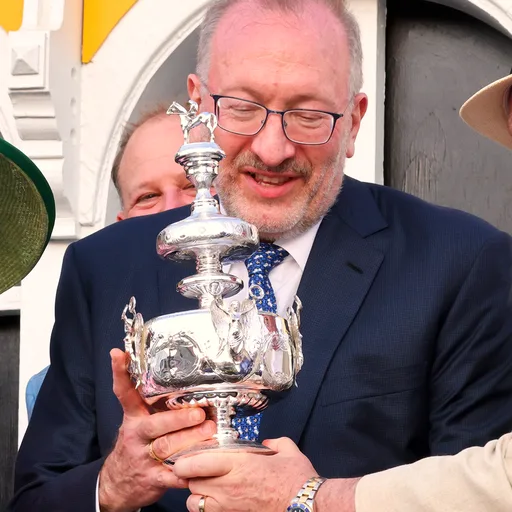
Seth Klarman
United States 1957-05-21
20th-century American value investor
Founded Baupost and carried the margin-of-safety concept into the modern era
'Don't lose money' takes priority over maximizing returns
Born in 1957 in New York, Seth Klarman founded the Baupost Group in 1982 with 27 million dollars in seed capital and has compounded it at roughly 20% annually ever since. He carries forward Benjamin Graham's margin-of-safety concept into the modern era; his book Margin of Safety became an investing classic that commands over a thousand dollars on the secondhand market. He is known as 'the Oracle of Boston.'
What You Can Learn
The most important message Klarman's philosophy conveys to today's individual investors is the priority of not losing money. Many new investors focus on maximizing returns, but Klarman places risk avoidance first. In practice, that means resisting the urge to chase popular names at elevated prices and instead recognizing that the margin of safety tends to be widest in the least fashionable corners of the market. His discipline of holding cash when opportunities are scarce — rather than forcing capital to work — is equally applicable to individual portfolios: when the market feels overheated, parking a portion of contributions in safer instruments is a form of Klarman-style patience. His observation that 'at the root of all financial bubbles is a good idea carried to excess' provides a lens for coolly evaluating hype around themes like AI. The Klarman approach to wealth-building boils down to preparing to buy amid fear rather than rushing to buy amid euphoria.
Words That Resonate
Value investing is at its core the marriage of a contrarian streak and a calculator.
The single greatest edge an investor can have is a long-term orientation.
The stock market is the story of cycles and of the human behavior that is responsible for overreactions in both directions.
At the root of all financial bubbles is a good idea carried to excess.
Life & Legacy
Seth Klarman is widely regarded as one of the most faithful and successful practitioners of value-investing principles in the complexity of modern markets. He shuns media exposure to an extreme degree and does not even publish his fund's performance reports, a reticence that, paired with his track record, has earned him the sobriquet 'the Oracle of Boston' — a nod to Buffett's 'Oracle of Omaha.'
Born in 1957 in New York, Klarman studied economics at Cornell before earning an MBA at Harvard Business School, where he encountered the value-investing canon — Benjamin Graham and David Dodd's Security Analysis made a lasting impression. In 1982, at 25, he founded the Baupost Group in Boston with 27 million dollars in seed capital from Harvard faculty members.
Over more than four decades, Baupost has reportedly compounded at roughly 20% per year. Assets under management have grown to approximately 30 billion dollars, placing it among the world's largest institutional hedge funds. Yet Klarman's style is the antithesis of asset gathering. When he judges opportunities scarce, he holds a substantial share of the fund in cash — an unusual posture — and has on occasion returned capital to investors. This discipline is widely credited as the foundation of Baupost's long-run success.
The core of Klarman's investment philosophy is distilled in his 1991 book, titled Margin of Safety. He took Graham's margin-of-safety principle — invest only when a company's intrinsic value exceeds its market price by a comfortable margin — and extended it into unloved, complex corners of the market: distressed debt, liquidating companies, and other areas most investors avoid. The paradoxical insight at the heart of his approach is that the margin of safety is widest precisely where other investors refuse to look.
The book's limited first printing and subsequent out-of-print status sent its price to a thousand dollars or more on the collectors' market, adding to Klarman's mystique. But the substance matters more than the scarcity. He defines investing not as the pursuit of returns but as the avoidance of risk, placing the priority on not losing money.
Klarman's approach to risk management is rigorous. Against modern finance theory, which equates risk with volatility, he insists that true risk is the permanent loss of capital. A temporary drop in stock price is not a problem; the real danger is capital that never comes back. This perspective leads him to focus relentlessly on downside scenarios, designing positions so that even worst-case outcomes do not produce catastrophic losses.
Klarman's investments span a broad opportunity set. Beyond equities, Baupost buys claims traded in corporate bankruptcies, real-estate-linked securities, and undervalued foreign assets — territories traditional value investors rarely enter. This flexibility constitutes an 'opportunistic' approach that has evolved Graham's principles for contemporary market structures.
During the 2008 financial crisis, Klarman deployed capital aggressively, snapping up bargain assets while others panic-sold. The cash reserves accumulated in calmer times served as purchasing power in the storm — the clearest demonstration of Baupost's strategy. Klarman is sometimes described as spending more time out of the market, waiting, than in it. That patience is the engine of his long-term compounding.
Expert Perspective
Among investor archetypes, Klarman is the most orthodox modern heir of Graham-style value investing. Where Buffett evolved toward 'buying wonderful businesses at fair prices,' Klarman has stayed closer to Graham's origins — 'buying unloved assets at prices that embed a margin of safety.' His willingness to wade into distressed debt and liquidation analysis, areas other value investors avoid, marks him as a practitioner of 'deep value.' His media-averse posture also serves a strategic purpose, protecting Baupost's informational edge — a case where investment style and organizational style are perfectly aligned.