Entrepreneurs / Tech
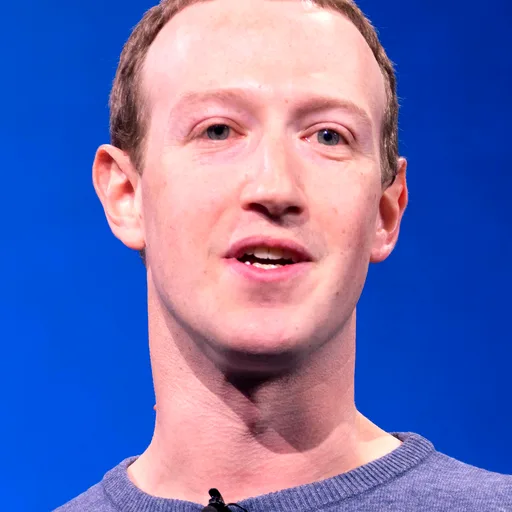
Mark Zuckerberg
United States 1984-05-14
21st-century American social-media entrepreneur
Founded Facebook and built a platform with over three billion monthly users
An embodiment of the MVP method: ship fast, iterate relentlessly
Born in New York State in 1984, Mark Zuckerberg launched Facebook from his Harvard dormitory in 2004 and built a platform with over two billion monthly users in under a decade. He renamed the company Meta in 2021 and pivoted toward the metaverse. The youngest self-made billionaire at 23, he is the entrepreneur who defined the social-media era.
What You Can Learn
Zuckerberg's founding process offers multiple lessons for today's business professionals. First, the MVP approach: TheFacebook launched with nothing more than photos and basic information, yet the enthusiastic early response guided the next iteration. Shipping before perfection applies equally to side projects. Second, his rejection of Yahoo's billion-dollar offer illustrates the power of choosing long-term compound network effects over immediate payoff — a principle applicable to investment and career design alike. Third, his rapid pivot to mobile-first when he recognized the company's lag demonstrates the importance of adaptability over loyalty to past success. Meanwhile, the delayed response to privacy issues serves as a cautionary tale about balancing growth velocity with social responsibility.
Words That Resonate
People don't care about what you say, they care about what you build.
Move fast and break things. Unless you are breaking stuff, you are not moving fast enough.
By giving people the power to share, we're making the world more transparent.
The biggest risk is not taking any risk. In a world that is changing really quickly, the only strategy that is guaranteed to fail is not taking risks.
If you just work on stuff that you like and you're passionate about, you don't have to have a master plan with how things will play out.
Life & Legacy
Mark Zuckerberg is the platform-business architect who fundamentally changed how people connect, and a quintessential 21st-century entrepreneur who built global information infrastructure within years of dropping out of college. Facebook was not merely a web service; it permeated every layer of society — communication, journalism, advertising, political organizing — and altered the way the internet itself is used.
Born in 1984 in White Plains, New York, to a dentist father and psychiatrist mother, Zuckerberg taught himself programming in middle school and reportedly built messaging software connecting his father's dental-office reception to their home. In high school he developed Synapse, an AI program that learned MP3 listening patterns, attracting recruiting interest from Microsoft and AOL — yet he chose university instead.
In February 2004, during his sophomore year at Harvard, he launched 'TheFacebook' from his dorm room. Initially a directory limited to Harvard students, more than 1,200 signed up within 24 hours — revealing latent demand for a real-name online social graph far exceeding expectations. The service spread rapidly to other Ivy League schools, then to universities nationwide. By the end of his second year, Zuckerberg dropped out.
During the expansion, Zuckerberg made several pivotal decisions. In 2005, on Sean Parker's advice, he relocated to Silicon Valley and established a venture-capital funding structure. In 2006 he rejected Yahoo's one-billion-dollar acquisition offer — an extraordinary sum relative to revenue at the time — out of conviction in the platform's growth potential. This judgment epitomizes a management philosophy that prioritizes long-term network effects over short-term gains.
The May 2012 IPO was the largest ever for a technology company, surpassing $100 billion in market capitalization. Yet the immediate post-IPO stock decline and criticism of slow mobile adaptation forced Zuckerberg to mandate an internal pivot to mobile-first strategy. The 2012 Instagram acquisition and 2014 WhatsApp acquisition were both moves to shore up weaknesses — embodying the survival strategy of a platform enterprise.
Meanwhile, the 2018 Cambridge Analytica scandal and mounting criticism over data handling and disinformation intensified. Zuckerberg was summoned to U.S. congressional hearings and confronted with hard questions about platform operators' social responsibility — exposing the structural challenge of reconciling network-effect benefits with the difficulty of information governance.
In October 2021, Zuckerberg renamed the company Meta Platforms, committing to the 'metaverse' — a convergence of virtual and augmented reality. The pivot, investing roughly $10 billion annually in Reality Labs, aims to escape advertising dependence and seize next-generation computing infrastructure. From 2023 onward, aggressive AI investments have further diversified the business portfolio.
In 2015, with his wife Priscilla Chan, he established the Chan Zuckerberg Initiative, pledging 99% of their shares to philanthropic purposes over their lifetimes. Targeting education, healthcare, and scientific research, this long-term social-investment vehicle represents a new model of tech-entrepreneur philanthropy.
Expert Perspective
Among entrepreneurial archetypes, Zuckerberg's distinctiveness lies in his role as a platform-business designer. Where Carnegie and Ford derived competitive advantage from physical production assets, he placed network effects and data — intangible assets — at the core of his enterprise. From founding at 20, through dropout, VC funding, strategic acquisitions, IPO, and a name-change pivot, his trajectory condenses the full lifecycle of a Silicon Valley tech startup into a single leader's career — making it an exceptionally instructive case study for modern entrepreneurs.