Philosophers / Eastern

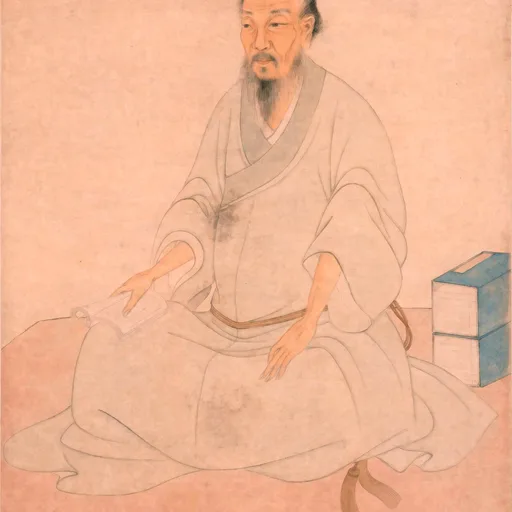
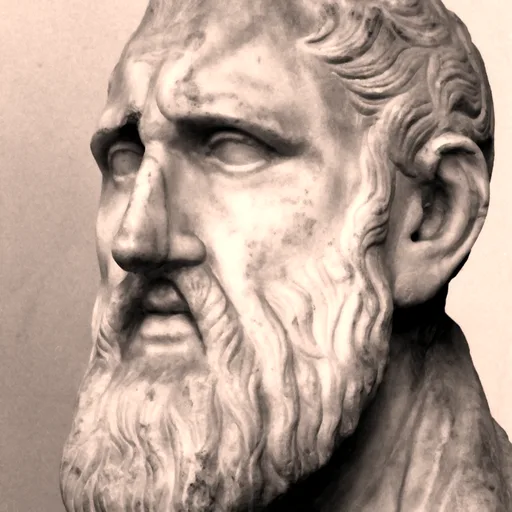
Laozi
China -0579-01-01 ~ -0500-01-01
Founder of Taoist thought, circa 6th century BC
Condensed the philosophy of 'the Way' and 'wu wei' into the 5,000-character 'Tao Te Ching'
The admonition against over-intervention, 'be like water,' resonates with the spirit of agile management
Semi-legendary Chinese philosopher of the 6th century BC who taught wu wei -- effortless action aligned with nature. His Tao Te Ching founded Taoism and shaped twenty-five centuries of East Asian thought.
What You Can Learn
Laozi's wu wei offers leaders a corrective to micro-management: the best leader is one the team barely notices. "The highest goodness is like water" resonates with agile strategy -- flowing into uncontested niches rather than confronting rivals head-on. Self-knowledge and incremental action ground personal development amid information overload. His philosophy of subtraction -- gaining by letting go -- anticipates minimalism and digital detox.
Words That Resonate
The highest goodness is like water. Water benefits all things and does not compete; it dwells in places others disdain, and so is close to the Tao.
上善若水。水善利万物而不争、処衆人之所悪、故幾於道。
Nothing in the world is softer than water, yet nothing surpasses it in overcoming the hard and strong.
天下莫柔弱於水、而攻堅強者莫之能勝。
In the pursuit of learning, one gains daily. In the pursuit of the Tao, one loses daily -- losing and losing until one arrives at wu wei. Through non-action, nothing is left undone.
為学日益、為道日損。損之又損、以至於無為。無為而無不為。
The Tao that can be spoken is not the eternal Tao. The name that can be named is not the eternal name.
道可道、非常道。名可名、非常名。
A journey of a thousand miles begins with a single step.
千里之行、始於足下。
Knowing others is intelligence; knowing yourself is true wisdom. Mastering others is strength; mastering yourself is true power.
知人者智、自知者明。勝人者有力、自勝者強。
Life & Legacy
Any discussion of Laozi must begin with a question: did he exist? Sima Qian's Records of the Grand Historian identifies him as Li Er, a Zhou royal archivist, but modern scholarship suspects the account conflates several figures. The Tao Te Ching likely took shape over generations. "Laozi" may name a tradition as much as a person -- an ambiguity mirroring the teaching that the Tao cannot be pinned down in words.
The best-known anecdote describes a meeting with young Confucius, whom Laozi warned against rigid attachment to ritual. Whether historical or not, the story crystallizes the tension between Confucianism's emphasis on social order and Taoism's call to release artifice and follow nature's course.
At the heart of Laozi's thought is the Tao, the generative principle behind all things, yet one that escapes definition: "The Tao that can be spoken is not the eternal Tao." Wu wei is often misread as passivity; its essence is acting without forced intervention -- soft as water yet irresistible. In governance, the ideal ruler is one whose people feel they achieved everything on their own. Power displayed is power diminished.
Zhuangzi extended his ideas into literary parable. Organized Taoism deified him as Taishang Laojun. When Buddhism arrived in China, Taoist vocabulary -- concepts like emptiness and nothingness -- shaped its Chinese interpretation, leaving marks on Chan (Zen) Buddhism and Japanese wabi-sabi aesthetics. According to legend, Laozi wrote the Tao Te Ching at a border pass for its keeper Yin Xi, then vanished westward -- a departure that itself enacts his teaching: seek no fame, claim no credit, and leave quietly.
Expert Perspective
Laozi founded Taoist naturalism opposite Confucian social-order thinking. He posited the Tao as an unnameable first principle, foregrounded the limits of language, and through wu wei challenged prescriptive morality. His legacy flows through Zhuangzi, Chan Buddhism, and Japanese aesthetics.