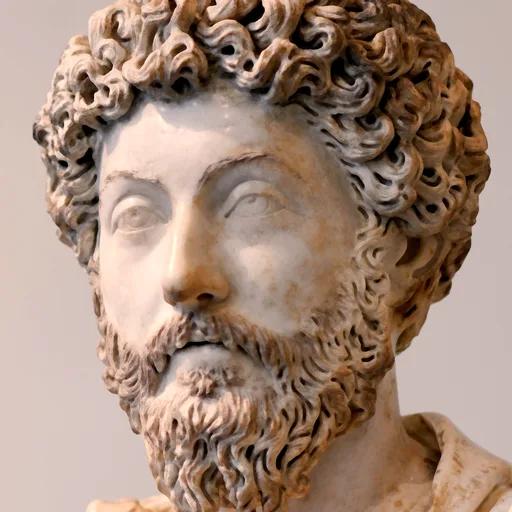
Philosophers / Ancient Greek

Crates of Thebes
Greece -0364-01-0 ~ -0284-01-0
Theban Cynic philosopher (c. 365-285 BC) who renounced wealth to live on the streets of Athens with his wife Hipparchia. Pupil of Diogenes, teacher of Zeno of Citium, and the bridge from Cynic asceticism to Stoicism.
What You Can Learn
Crates is the oldest source for voluntary simplicity, and the message lands with force in an attention economy. Ordinary life's chains, he argues, are not poverty but need — each new craving is a new master. For knowledge workers on cortisol, his prescription is subtraction: cut dependencies, and freedom appears as a side effect. His Door-Opener role also speaks to teams: the colleague who enters a tense meeting and helps people see they are on the same side is doing what Crates did, just dressed differently.
Words That Resonate
What frees you from slavery is not wealth but needing nothing.
ἐλευθερωτής δουλείας οὐχ ὁ πλοῦτος, ἀλλὰ τὸ μηδενὸς δεῖσθαι.
What wealth is to the rich, philosophy is to the poor.
ὅπερ τοῖς πλουσίοις ἐστιν ὁ πλοῦτος, τοῦτο τοῖς πένησιν ἡ φιλοσοφία.
There is a city called Pera in the midst of the wine-dark fog of pretension.
πῆρα τίς ἐστι πόλις τύφου ἐν μέσῳ οἰνοπί.
Crates with only his wallet and tattered cloak laughed out his life jocosely, as if he had been always at a festival.
Life & Legacy
Crates of Thebes (c. 365-285 BC) is among the quietly consequential figures of Western philosophy. Born to a wealthy family, he gave away his fortune to live as a Cynic in Athens, owning only a beggar's wallet and a tattered cloak. Through his student Zeno of Citium, he is the bridge from Cynic street-philosophy to the Stoic tradition that still shapes Western ethics.
Accounts of his renunciation differ. Diogenes Laërtius records that Crates was moved by a tragedy about the beggar-king Telephus and gave his money to Theban citizens; another version has him entrusting it to a banker, to be returned to his sons only if they did not become philosophers. He chose poverty as a philosophical instrument, not a misfortune. Plutarch wrote that Crates "laughed out his life jocosely, as if he had been always at a festival."
Athenians nicknamed him the Door-Opener because he would enter any house uninvited to reconcile feuding families, correcting gently. His marriage to Hipparchia of Maroneia became one of the most discussed unions of antiquity. Raised in wealth, she fell in love with his way of life and rejected respectable society to live with him in the streets. By Athenian standards, the partnership was radical: built on mutual respect and equality.
The core of his teaching attacks tuphos — the fog of pretension and unexamined desire that envelops most lives. A surviving fragment of his poem on the ideal city Pera ("the beggar's wallet") parodies Homer to imagine a polis with no money or warfare, where citizens want only what they have. The point was not deprivation but joy.
Late in life he taught Zeno of Citium, a shipwreck survivor who had read about Socrates. Zeno absorbed the Cynic conviction that virtue alone is good and nothing external can damage flourishing. From that seed grew Stoicism — the philosophy of Marcus Aurelius and Seneca, and of every modern reader who picks up Meditations. The thread runs back to a hunchbacked Theban laughing in the agora.
Expert Perspective
Within Western philosophy, Crates occupies a rare position: a thinker known almost entirely through the lives he changed. His writings are lost, but his influence survives because Zeno turned what he learned at Crates' side into Stoicism — the form supple enough to reach Roman senators and modern readers alike.