Philosophers / Eastern
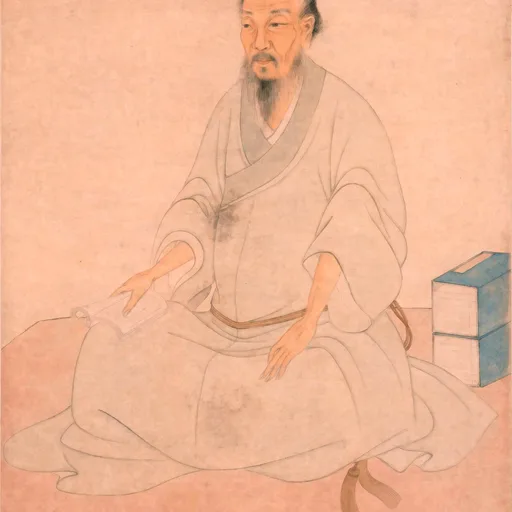
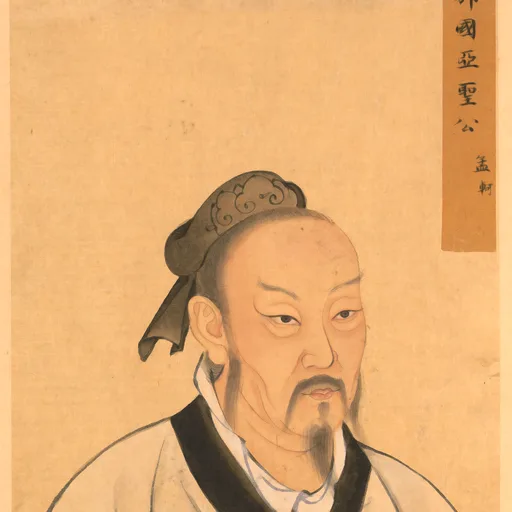
Wang Yangming
China 1472-11-09 ~ 1529-01-19
15th-16th century Ming dynasty Confucian scholar and military strategist
Proposed the 'unity of knowing and acting' — knowledge and action are inseparable
A radical prescription for the modern trap of learning endlessly without acting
Born in 1472 in Zhejiang during China's Ming dynasty, Wang Yangming was a Confucian scholar and military strategist. He overturned the orthodox Neo-Confucian doctrine of 'first knowledge, then action' with his thesis that knowledge and action are inseparable — the 'unity of knowing and acting.' His school of thought, Yangming studies, influenced Japanese reformers from Oshio Heihachiro to Yoshida Shoin.
What You Can Learn
Wang Yangming's 'unity of knowing and acting' is a radical prescription for the modern tendency to over-study and under-act. In an age of information overload, the accumulation of credentials and seminars without implementation does not constitute real knowledge — a point whose edge only sharpens with time. His doctrine of 'extending innate moral knowledge' suggests that in an era of compliance and ESG, the foundation of ethical business lies not in mechanical rule-following but in exercising one's own moral intuition. When confronted with organizational misconduct, asking what one's inner conscience demands — rather than searching for loopholes — grounds sustainable decision-making. And the maxim 'it is easy to vanquish bandits in the mountains; hard to vanquish the bandits in one's heart' teaches that the real work of self-development lies not in optimizing external conditions but in confronting one's own inertia and fear.
Words That Resonate
To know and not to act is not yet to know.
知而不行、只是未知。
Knowing is the beginning of action; action is the completion of knowing.
知是行之始、行是知之成。
It is easy to vanquish bandits in the mountains; it is hard to vanquish the bandits in one's heart.
破山中賊易、破心中賊難。
The way of the sage is sufficient in my own nature. It was an error to seek principle in external things.
聖人之道、吾性自足、向之求理於事物者誤也。
The mind itself is principle.
心即理也。
This mind is luminous — what more is there to say?
此心光明、亦復何言。
Life & Legacy
Wang Yangming effected the most significant philosophical turn in Chinese intellectual history since Zhu Xi. He was simultaneously a brilliant military commander who led three successful campaigns. His given name was Wang Shouren, courtesy name Bo'an, and literary name Yangmingzi. Born into an official's family in Yuyao, Zhejiang Province, he demonstrated talent in both literary and martial arts from childhood. His father, Wang Hua, was a zhuangyuan (top-ranked imperial examination graduate), providing an intellectually rich environment.
As a young man, Wang devoted himself faithfully to the methodology of Zhu Xi's Neo-Confucianism (known in Japan as Shushigaku). Attempting to practice Zhu Xi's 'investigation of things,' he stared at bamboo in his courtyard for seven days trying to penetrate its underlying principle, only to exhaust himself without achieving insight. This 'bamboo-gazing' episode planted seeds of fundamental doubt about seeking principle in external objects.
The decisive turning point came in 1506. After memorializing the throne against the eunuch Liu Jin's tyranny, Wang received forty strokes of the court rod and was banished to Longchang in remote Guizhou Province as a minor postal official. In that malarial frontier posting — unable to communicate with locals, lacking basic necessities — he underwent deep introspection. One night, sudden enlightenment struck: 'The way of the sage is sufficient in my own nature. It was an error to seek principle in external things.' This 'Longchang enlightenment' crystallized the proposition that principle inheres not in books or nature but in the mind itself — 'mind is principle' (xin ji li).
From this insight, Wang systematized three core propositions. First, 'mind is principle': principle resides within the mind, not in external classics or phenomena — a direct challenge to Zhu Xi's intellectualism. Second, 'the unity of knowing and acting' (zhixing heyi): knowledge and action are not two sequential stages but an inseparable whole. One who truly knows filial piety already practices it; knowledge without action is not genuine knowledge. Third, 'extending innate moral knowledge' (zhi liangzhi), his mature doctrine: the ultimate goal of self-cultivation is to fully realize the innate capacity for moral judgment that every person possesses. By redirecting scholarship from memorizing external norms to awakening inner moral intuition, Wang marked a watershed in Confucian intellectual history.
What makes Wang exceptional is that he was no armchair philosopher. He proved his philosophy on battlefields and in governance. His three military campaigns — suppressing bandits in southern Jiangxi, quelling the Prince of Ning's rebellion, and pacifying ethnic uprisings in Guangxi — each combined force with conciliation to achieve swift resolution. This lived demonstration of the unity of knowing and acting lends his thought enduring persuasive power.
His influence extended across East Asia. In Japan, Nakae Toju introduced Yangming studies in the early Edo period; in the late Tokugawa era, Oshio Heihachiro launched his uprising in the spirit of zhixing heyi, and Yoshida Shoin instilled practice-oriented learning at his Shoka Sonjuku academy. Many scholars argue that Yangming thought ran as an undercurrent through the Meiji Restoration leaders' principles of action. Wang died in 1529 aboard a boat at Nan'an while returning from Guangxi, aged fifty-six. When disciples asked for final words, he reportedly said, 'This mind is luminous — what more is there to say?'
Expert Perspective
In the lineage of East Asian philosophy, Wang Yangming challenged Zhu Xi's rationalist dualism head-on, establishing a subjectivist position that locates the source of all principle in the mind. His intellectual turn is structurally comparable to Kant's critical reconstruction of Cartesian rationalism in Western philosophy. As the culmination of the Lu-Wang school (inheriting Lu Xiangshan's learning of the mind), his emphasis on the primacy of practice over theory anticipates, within the East Asian tradition, concerns that later arose independently in American pragmatism.