Philosophers / Ancient Greek
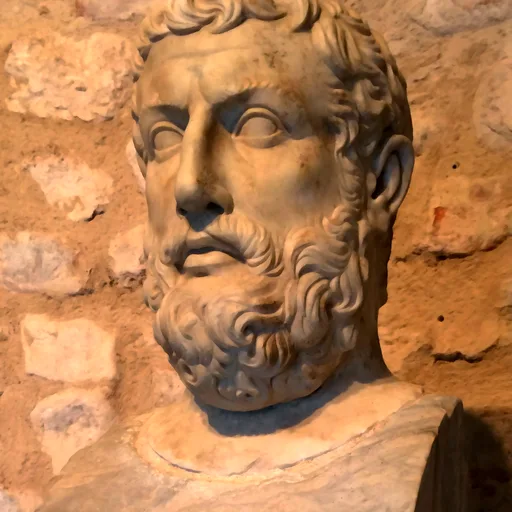
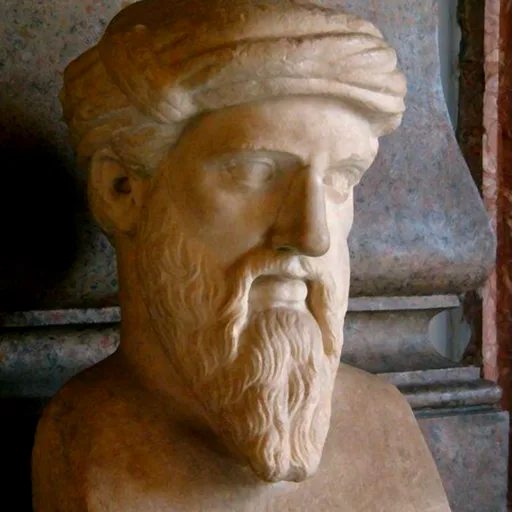
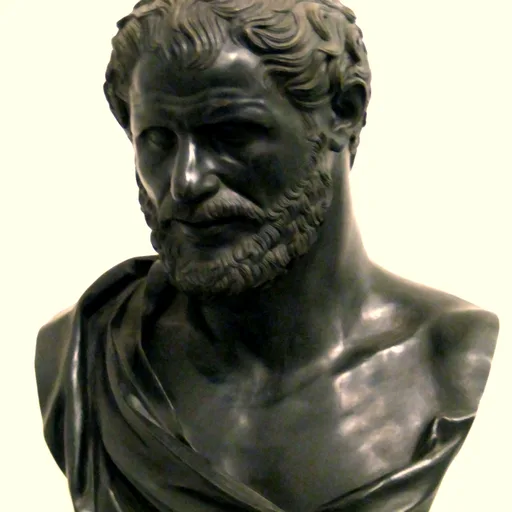
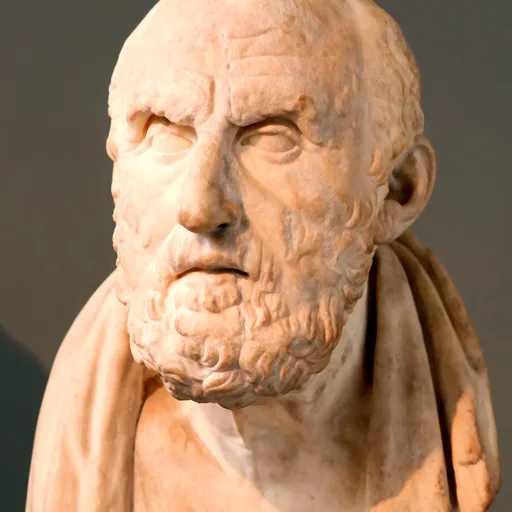
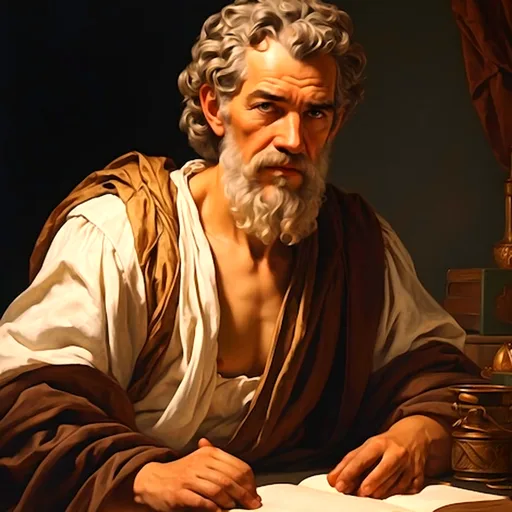
Parmenides
Italy -0514-01-01 ~ -0469-01-01
6th-century BCE founder of ontology from Elea
Declared 'what is, is; what is not, is not' and established ontological monism
The origin of the discipline of stripping away noise to see what is essential
A pre-Socratic philosopher born in the late 6th century BCE in the Greek colony of Elea in southern Italy. In his didactic poem On Nature, Parmenides declared 'what is, is; what is not, is not,' dismissing change and plurality as sensory illusion. His ontological monism became the foundation of the Eleatic school, and through Zeno's paradoxes and Plato's Theory of Forms, it established the starting point of Western metaphysics. He is often called the founder of ontology.
What You Can Learn
Parmenides' insistence — 'do not trust the senses; use logic to grasp what is essential' — carries urgent relevance in an information-saturated age. The fragments of news and opinion that stream across social media are, in his terms, the Way of Opinion. Reacting to short-term stock-price swings is likewise a judgment driven by appearances rather than substance. Parmenides' method demands stripping away surface noise and reasoning toward the invariant core — an approach that converges with the foundational logic of value investing. His proposition that 'thinking and Being are the same' also resonates with a business axiom: define the problem correctly and you are halfway to solving it. Cultivating the habit of distinguishing the Way of Truth from the Way of Opinion — separating primary evidence from second-hand speculation — is a trainable discipline for modern decision-makers. A 2,500-year-old ontology turns out to supply the prototype for critical thinking.
Words That Resonate
You must learn all things: both the steadfast heart of well-rounded Truth and the opinions of mortals, in which there is no true trust.
χρεὼ δέ σε πάντα πυθέσθαι ἠμὲν Ἀληθείης εὐκυκλέος ἀτρεμὲς ἦτορ ἠδὲ βροτῶν δόξας, ταῖς οὐκ ἔνι πίστις ἀληθής
Behold what is absent as firmly present through the mind.
λεῦσσε δ' ὅμως ἀπεόντα νόῳ παρεόντα βεβαίως
You will not find thinking apart from Being, in which it is expressed.
οὐ γὰρ ἄνευ τοῦ ἐόντος, ἐν ᾧ πεφατισμένον ἐστίν, εὑρήσεις τὸ νοεῖν
For Being is, and non-Being is not.
ἔστι γὰρ εἶναι, μηδὲν δ' οὐκ ἔστιν
For thinking and Being are the same.
τὸ γὰρ αὐτὸ νοεῖν ἐστίν τε καὶ εἶναι
Life & Legacy
Parmenides was born around 515 BCE in Elea, a Greek colony in the region of Magna Graecia in southern Italy. He belonged to a prominent family and is said to have participated in drafting his city's laws, suggesting that he was a civic leader as well as a thinker. Ancient sources disagree on his teachers: one tradition names the natural philosopher Xenophanes, another credits the Pythagorean Ameinias. The intersection of these two intellectual lineages may have supplied the soil from which his distinctive philosophy grew.
His thought survives in a single work: a didactic poem in dactylic hexameter titled On Nature (Peri Physeos). The poem is structured in three parts: a proem, the Way of Truth, and the Way of Opinion. In the proem a young man rides a chariot to the dwelling of a goddess, who presents him with two paths of inquiry: the Way of Truth and the Way of Opinion, which rests on mere mortal assumption. The structure itself is a grand philosophical allegory, casting the acquisition of knowledge as a sacred journey.
In the Way of Truth, Parmenides advanced what may be the most radical thesis in the history of Western thought: 'what is, is; what is not, is not.' He argued that it is impossible even to think or speak of non-being, and logically eliminated it. From this followed a series of striking conclusions: Being neither comes into existence nor passes away; it is indivisible, unchanging, and complete — self-contained like a perfect sphere. These claims flatly denied the world of change and diversity reported by the senses, and they stunned his contemporaries.
In the Way of Opinion, the goddess offers an alternative account of the phenomenal world using two principles, Light and Night. But this cosmology is explicitly presented as grounded in mortal opinion rather than the reality disclosed by the Way of Truth. Why the goddess bothers to articulate a cosmology she has already labelled false has been debated from antiquity to the present day and remains one of the central puzzles in Parmenidean scholarship.
The philosophical impact of Parmenides was immense. His direct pupil Zeno of Elea devised a series of paradoxes — Achilles and the tortoise, the flying arrow — to defend his master's monism by showing that motion is logically impossible. These paradoxes posed deep questions about infinity that continue to engage mathematicians and logicians. Melissus extended the discussion by arguing for the infinity of Being.
Parmenides also set the agenda for every pluralist who followed. Empedocles' four elements, Anaxagoras' nous, and Democritus' atomism all accepted his logical constraint — nothing can come from nothing — and then tried to explain change and plurality within it. They did not refute Parmenides; they thought inside the boundaries he drew.
Plato staged a dialogue titled Parmenides in which a young Socrates converses with an aged Parmenides. Whether the meeting actually took place is uncertain, but Plato's critical inheritance of Parmenidean ontology in constructing his Theory of Forms is beyond doubt. The notion of an unchanging, perfect reality beyond the senses was transposed into the concept of eternal Ideas. Aristotle, too, took Parmenides' question about Being as one of the starting points for his own metaphysics.
Only fragments of the poem survive, yet their philosophical density is unrivaled. Parmenides' method — reaching truth beyond experience through logical deduction — is the prototype of rationalist philosophy. His thesis that thought and Being are identical has a trajectory that extends all the way to Descartes and the rationalism of modern philosophy.
Expert Perspective
On the coordinate grid of Western philosophy, Parmenides stands at the pole of static ontology, directly opposed to Heraclitus' doctrine of flux. This opposition constitutes the most fundamental bifurcation in philosophical history; virtually all metaphysics from Plato onward unfolds within the tension between these two positions. As the founder of ontology and a pioneer of philosophical argument by logical deduction, Parmenides casts a long shadow over both analytic and continental philosophy. Among pre-Socratic thinkers, he is the one whose method of reasoning most closely anticipates modernity.