Entrepreneurs / Tech
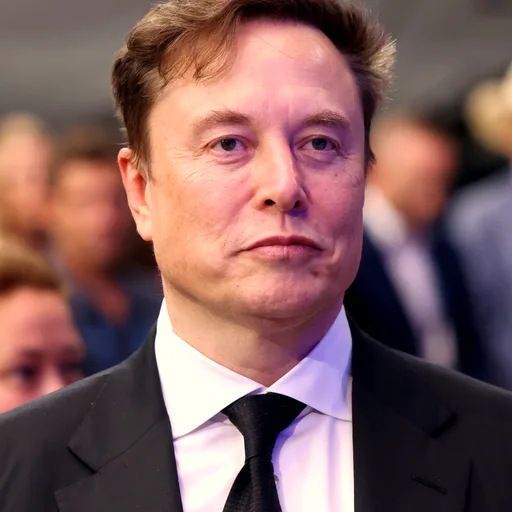
Elon Musk
CA 1971-06-28
21st-century serial entrepreneur and technology disruptor
Commercialized electric vehicles with Tesla and private space transport with SpaceX
First-principles thinking rebuilds industry assumptions from the raw-material level up
Born in South Africa in 1971, Elon Musk built the electronic-payments foundation with PayPal, then commercially established the electric-vehicle industry with Tesla and opened the era of private space transportation with SpaceX. Armed with 'first-principles thinking,' he simultaneously disrupts multiple giant industries — electric vehicles, rockets, solar energy, brain-computer interfaces — and is reshaping the 21st-century industrial map with his vision of Mars colonization.
What You Can Learn
Musk's methods yield several practical insights for today's entrepreneurs. First, the application of first-principles thinking: decomposing received practices to their fundamental elements and redesigning cost structures is a tool not limited to the space industry — it applies equally to process improvement in small businesses. Questioning the 'industry standard' price structure by breaking it down into raw-material costs, labor, and distribution costs is useful in any sector. Second, the perspective of technology transfer between ventures: just as rocket materials were repurposed for EVs and battery technology for energy storage, horizontally deploying one's own expertise into adjacent fields is a valuable reference for any executive considering diversification. Third, his approach to risk: while one need not emulate the extreme of betting one's entire fortune, the principle of 'burning the boats to maximize organizational focus' is relevant to resource allocation in any cash-constrained startup. Behind every success lie numerous near-death crises; what matters is learning from the difficulty of the process, not just the outcome.
Words That Resonate
I'd rather be optimistic and wrong than pessimistic and right.
I think it is possible for ordinary people to choose to be extraordinary.
You want to be extra rigorous about making the best possible thing you can. Find everything that's wrong with it and fix it.
Failure is an option here. If things are not failing, you are not innovating enough.
When something is important enough, you do it even if the odds are not in your favor.
Life & Legacy
The key to understanding Elon Musk is not managerial skill per se but an engineering-physics mindset that questions the very premises of an industry. Why are rockets expensive? Why don't electric cars sell? His method — decomposing received wisdom to the level of raw materials and redesigning cost structures from scratch — is 'first-principles thinking,' and it is the common thread running through all his ventures.
Born in 1971 in Pretoria, South Africa, Musk was absorbed by computers and science fiction from childhood; a widely told anecdote has him selling a self-made video game to a magazine at the age of twelve. At seventeen he emigrated to Canada and later earned degrees in economics and physics at the University of Pennsylvania. He enrolled in Stanford's graduate program but dropped out after just two days upon witnessing the explosive growth of the internet. That decision became the starting point for his serial entrepreneurship.
In 1995 he and his brother Kimbal founded Zip2, a web-software company, which was sold to Compaq in 1999 for approximately $22 million. That same year he founded X.com, an online financial-services company that later merged with Confinity to become PayPal; eBay acquired it in 2002 for $1.5 billion. Musk poured most of his share of the proceeds into two new ventures: SpaceX for space transportation and Tesla for electric vehicles.
SpaceX was founded in 2002 with the motivation of making humanity a multi-planetary species. At the outset, the idea that a private company could independently develop and launch rockets was met with deep skepticism. Indeed, the first three launches all failed, pushing the company to the brink of bankruptcy. In September 2008, however, the fourth launch of the Falcon 1 reached orbit — the first private liquid-fuel rocket to do so. The subsequent development of Falcon 9 reusability technology dramatically reduced launch costs and fundamentally altered the economics of the space industry.
At Tesla, Musk joined as a lead investor in 2004 and became CEO in 2008. The high-performance Roadster proved that an electric car could be desirable; the Model S and Model 3 then progressively brought the price down to mass-market levels. During Model 3 production, Tesla endured what Musk called 'production hell' — severe manufacturing problems that saw Musk reportedly sleeping on the factory floor. The episode is widely cited as an illustration of the entrepreneurial crucible.
A distinguishing feature of Musk's thinking is his cross-pollination of technologies across industries. Lightweight materials from rocketry transfer to automobiles; battery technology transfers to solar energy; AI expertise transfers to autonomous driving. This cross-industry approach is fundamentally different from the conventional model in which one company operates within one industry.
In 2022 Musk acquired Twitter and rebranded it X. In 2025 he became involved in the Department of Government Efficiency as a senior adviser to the second Trump administration, attracting significant attention — both supportive and critical — for his political activities. Assessment of these activities is ongoing, and historical judgment remains open.
What defines Musk as an entrepreneur is his distinctive approach to risk. He invested nearly all of his PayPal proceeds into his next ventures, and by 2008 both Tesla and SpaceX were on the verge of running out of cash. He took out personal loans secured against his remaining assets, literally betting everything to save both companies. This 'burn the boats' capital allocation stands at the opposite pole from diversification orthodoxy and is recorded as the defining expression of his business philosophy.
Expert Perspective
Among entrepreneurial archetypes, Musk occupies an extraordinarily unusual position as a 'simultaneous disruptive innovator across multiple industries.' Where Carnegie transformed steel, Ford transformed automobiles, and Jobs transformed computing — each in a single industry — Musk is simultaneously engaged in electronic payments, space transportation, electric vehicles, energy, AI, and social media, making him nearly without precedent. His approach is a technology-driven vertical-integration model with a strong preference for controlling everything from component procurement to manufacturing to sales. In this respect, parallels with Ford's vertical-integration strategy are often drawn, but in cross-industry scope Musk has reached territory entirely his own.