Entrepreneurs / Industrial Pioneer

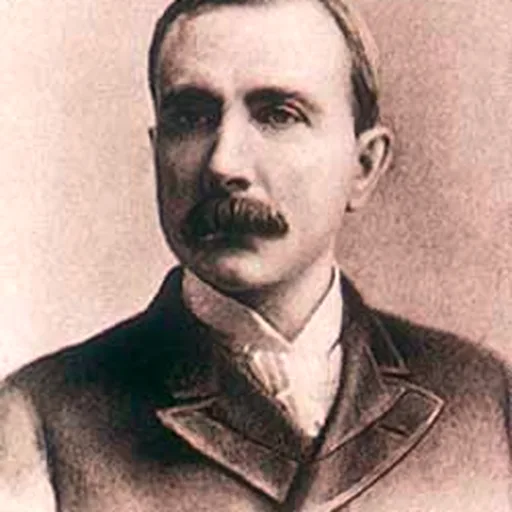
Andrew Carnegie
United States 1835-11-25 ~ 1919-08-11
19th-century Scottish-born steel magnate and philanthropist
Dominated the U.S. steel industry and practiced systematic philanthropy through 'The Gospel of Wealth'
Per-ton cost visibility is the prototype of unit economics management
Born in 1835 to a Scottish weaver, Andrew Carnegie emigrated at twelve, dominated U.S. steel through cost control and vertical integration, sold for $480M in 1901, then gave $350M to libraries and education.
What You Can Learn
Carnegie's methods yield actionable takeaways. First, radical cost visibility: tracking steel costs per ton parallels modern SaaS unit-economics rigor. Second, counter-cyclical investment: expanding capacity during recessions to capture post-recovery share. Third, vertical integration as supply-chain risk management, anticipating pandemic-era disruption lessons. Most importantly, his deliberate exit and social-reinvestment plan is the direct precursor to impact investing and the Giving Pledge.
Words That Resonate
No man becomes rich unless he enriches others.
People who are unable to motivate themselves must be content with mediocrity, no matter how impressive their other talents.
Surplus wealth is a sacred trust which its possessor is bound to administer in his lifetime for the good of the community.
Do your duty and a little more, and the future will take care of itself.
The man who dies rich dies disgraced.
The first man gets the oyster, the second man gets the shell.
Life & Legacy
Andrew Carnegie is the symbol of late-nineteenth-century industrial capitalism and the man who turned the wealthy person's obligation into a working principle. His arc from steel fortune to systematic philanthropy remains one of the few completed cycles of building, exiting, and giving back.
Born in 1835 in Dunfermline, Scotland, Carnegie emigrated to Pittsburgh in 1848 after the Industrial Revolution destroyed his father's weaving trade. He started as a cotton-mill bobbin boy at $1.20 per week, advanced to telegraph operator, and caught the eye of Tom Scott at the Pennsylvania Railroad. Under Scott he learned railroad management while investing in sleeping cars and bridges.
The true turning point came in the 1870s with full-scale entry into steelmaking. Carnegie built the Edgar Thomson Works and tracked costs per ton, buying competitors during downturns to expand capacity. He further pursued vertical integration, bringing mines, coke ovens, shipping, and railroads under one umbrella.
By the 1890s Carnegie Steel controlled a major share of U.S. output. The 1892 Homestead Strike, however, left violent labor conflict and lasting criticism of his practices.
His 1889 essay "The Gospel of Wealth" argued that hoarding wealth until death is a societal betrayal; the rich must distribute it during their lifetimes. He endorsed progressive taxation and insisted charity should foster self-reliance. This was pragmatism as much as morality: social stability underpins capitalism itself.
In 1901 he sold to J.P. Morgan, forming U.S. Steel. Over his final eighteen years he donated roughly $350 million, funding 2,500-plus libraries, Carnegie Hall, Carnegie Mellon University, and the Endowment for International Peace. Libraries embodied his credo: knowledge access is the key to social mobility.
Expert Perspective
Carnegie was an industrial organizer, not an inventor. He won cost dominance via scale and vertical integration, mirroring Rockefeller in oil. What sets him apart: designing both the building and dissolution of his empire, codifying post-exit giving as philosophy.