Philosophers / Eastern
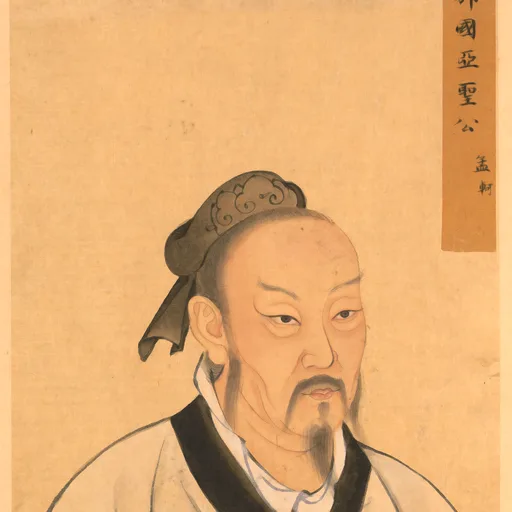
Mencius
China -0371-01-01 ~ -0288-01-01
Confucian sage and 'Second Sage', 4th century BC Warring States
Systematized the theory of innate goodness and advocated benevolent governance
The belief in innate seeds of goodness is the Eastern origin of Theory Y management
Born c. 372 BC in China's Warring States era, Mencius held that human nature is inherently good. He championed benevolent rule rooted in the people's welfare. His writings became one of Confucianism's Four Books.
What You Can Learn
Mencius asks a core leadership question: do you see employees as needing surveillance or as potential that flourishes in the right environment? This parallels McGregor's Theory X vs. Y, yet Mencius stated the Y position millennia earlier. The four-sprouts framework means cultivating potential is management's priority. His maxim that unity outweighs timing or resources speaks to team-building. His warning that we thrive in hardship and perish in comfort is an ancient call for crisis awareness.
Words That Resonate
Those who fully develop their mind know their nature. Knowing their nature, they know Heaven.
盡其心者、知其性也。知其性、則知天矣
Favorable timing is less important than geographical advantage, and that is less important than unity among people.
天時不如地利、地利不如人和
The people are most important; the altars of state come next; the ruler is least important.
民為貴、社稷次之、君為輕
The feeling of compassion is the sprout of benevolence; shame, of righteousness; deference, of propriety; right and wrong, of wisdom.
惻隱之心、仁之端也。羞惡之心、義之端也。辭讓之心、禮之端也。是非之心、智之端也。
The trouble with people is that they love playing teacher to others.
人之患在好為人師
We survive through adversity and perish through comfort.
生於憂患而死於安樂
Life & Legacy
Mencius deepened Confucianism from a set of ethical precepts into a philosophical system grounded in a theory of human nature. Honored as the Second Sage, he gave the tradition its optimism about human potential.
Born around 372 BC in the state of Zou in present-day Shandong, he lost his father early and was raised by his mother. The famous tale of her moving three times, from cemetery to market to school, illustrates the power of environment in shaping character. He studied under a disciple of Zisi, Confucius's grandson.
Mencius traveled among rulers such as King Hui of Liang and King Xuan of Qi, urging benevolent governance over military force. In an era of constant warfare, his message was rejected. Like Confucius he went unheeded, but Mencius was more confrontational, speaking bluntly to rulers.
The core of his thought is innate goodness. Everyone is born with four sprouts: compassion, the germ of benevolence; shame, of righteousness; deference, of propriety; moral judgment, of wisdom. These sprouts are natural but must be cultivated through education; unnurtured, they wither.
In politics he declared the people most important, altars of state next, the ruler least. He argued tyrants may legitimately be overthrown. Ming founder Zhu Yuanzhang reportedly censored passages he found threatening. After centuries of moderate influence, Zhu Xi canonized the Mencius as one of the Four Books. In Edo Japan, Ito Jinsai held it in especially high regard.
The contrast with Xunzi, who argued human nature is bad, has framed Confucian debate for millennia. Yet both thinkers shared the goal of moral cultivation through education. Mencius simply insisted the seeds are already planted; the work lies in tending them.
Expert Perspective
Mencius gave Confucius's benevolence a psychological foundation. Where Daoism seeks harmony through non-action, Mencius located morality inside human nature. His internalist ethics flowed through Lu Jiuyuan to Wang Yangming's School of Mind, forming a major current in East Asian thought.


.webp)