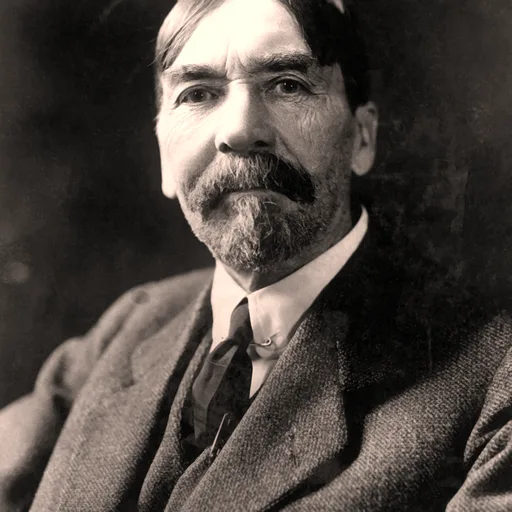
Economists / classical

Adam Smith
United Kingdom 1723-06-01 ~ 1790-07-17
Born in Scotland in 1723, Adam Smith was a moral philosopher who founded modern economics. The Wealth of Nations (1776) showed how self-interest and division of labor generate prosperity through market mechanisms.
What You Can Learn
Smith's thinking offers three lessons. The invisible hand confirms decentralized markets outperform central planning, yet his collusion warnings echo in Big Tech dominance; investors must judge whether a moat serves consumers or invites regulation. His division-of-labor theory underpins global supply chains, but recent disruptions show hyper-specialization's fragility. Moral Sentiments' sympathy ethic prefigures ESG: profit and responsibility converge because trust sustains long-term activity.
Words That Resonate
Science is the great antidote to the poison of enthusiasm and superstition.
Every individual... neither intends to promote the public interest, nor knows how much he is promoting it... he is in this, as in many other cases, led by an invisible hand to promote an end which was no part of his intention.
No society can surely be flourishing and happy, of which the far greater part of the members are poor and miserable.
The real tragedy of the poor is the poverty of their aspirations.
It is not from the benevolence of the butcher, the brewer, or the baker that we expect our dinner, but from their regard to their own interest.
Science is the great antidote to the poison of enthusiasm and superstition.
Life & Legacy
Adam Smith is called the father of economics, yet his core pursuit was moral philosophy. What drove him was a deceptively simple question: how do self-interested people produce collective prosperity?
Born in 1723 in Kirkcaldy, Scotland, Smith lost his father in infancy and grew up under his mother Margaret's care. At fourteen he entered Glasgow, where Francis Hutcheson taught him natural law and moral sense theory. He then spent six largely self-directed years at Oxford, finding it intellectually barren.
Back in Scotland he lectured in Edinburgh, then became Glasgow's moral philosophy professor in 1752. His friendship with David Hume sharpened his empiricist outlook. The Theory of Moral Sentiments (1759) argued that sympathy, our ability to imagine another's feelings, is the basis of moral judgment, and it won him European fame.
In 1764 Smith toured France as a tutor, meeting Physiocrats Quesnay and Turgot. Their idea of the economy as a natural system inspired a decade of writing that produced The Wealth of Nations (1776).
The book's two core insights were: division of labor multiplies productivity (the pin-factory example) and self-interested action, guided by prices as if by an invisible hand, efficiently allocates resources. Yet Smith was no laissez-faire purist. He warned specialization could degrade workers, urged public education, and condemned merchant collusion.
His originality lies in uniting ethics and economics. The Adam Smith Problem, the seeming clash between sympathy and self-interest, dissolves once we see markets functioning only atop the trust that moral sympathy builds.
Appointed Customs Commissioner in 1778, he died in Edinburgh in 1790, having ordered most manuscripts burned, a perfectionist to the last.
Expert Perspective
Smith pivots economics from mercantilism to the classical school. Building on Quesnay yet surpassing Physiocratic agricultural bias, he created the first comprehensive wealth theory. Ricardo and Marx both departed from his system. He prefigures Hayek yet contains Keynesian seeds.