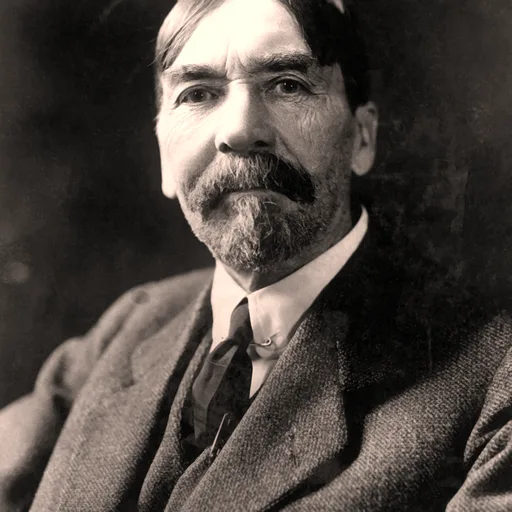
Economists / classical

David Ricardo
United Kingdom 1772-04-18 ~ 1823-09-11
Born in London in 1772 to a Jewish immigrant family, David Ricardo rose from stockbroker to the foremost theorist of classical economics. His comparative advantage doctrine gave free trade its most rigorous defense.
What You Can Learn
Comparative advantage remains the bedrock of global trade theory. Even when one firm excels at everything, focusing on relative strengths maximizes returns, a logic investors can apply to portfolio construction and corporate strategy. His rent theory illuminates real estate: location scarcity drives values, a principle tested as remote work reshapes cities. Ricardian equivalence, the idea that government borrowing merely defers taxes, frames fiscal-policy debates worldwide.
Words That Resonate
The interest of the landlord is always opposed to the interest of every other class in the community.
Under a system of perfectly free commerce, each country naturally devotes its capital and labour to such employments as are most beneficial to each.
Our differences may have never made the slightest difference to our friendship; I should not like you more than I do if you agreed in opinion with me.
Rent is that portion of the produce of the earth which is paid to the landlord for the use of the original and indestructible powers of the soil.
Rent is that portion of the produce of the earth which is paid to the landlord for the use of the original and indestructible powers of the soil.
Life & Legacy
David Ricardo refined Adam Smith's classical economics into a rigorous theoretical system. A stockbroker who amassed a fortune before turning to theory, he uniquely combined market experience with deductive reasoning.
Born in 1772 as the third of seventeen children in a Sephardic Jewish family recently arrived from the Netherlands, Ricardo joined his father at the London Stock Exchange at fourteen. At twenty-one he eloped with Quaker Priscilla Wilkinson, was disowned, and built an independent brokering career. Shrewd bond trading during the Napoleonic Wars made him wealthy; he retired at forty-two.
His turn to economics began in 1799 when he read Smith's Wealth of Nations. His 1810 pamphlet The High Price of Bullion argued the Bank of England's paper-money expansion caused inflation, launching him into public debate.
Principles of Political Economy and Taxation (1817) delivered two landmarks. Comparative advantage showed that even when one nation produces everything more efficiently, both sides gain by specializing in relative strengths. Differential rent theory demonstrated that rising grain demand forces inferior land into cultivation, generating windfall rents for fertile-land owners, and that the Corn Laws therefore enriched landlords at society's cost.
James Mill urged Ricardo into politics and writing; Thomas Malthus was his fiercest rival yet dearest friend. Ten days before dying Ricardo wrote Malthus that their disagreements never once injured their friendship. Elected to Parliament in 1819, he championed free trade. He died in 1823 at fifty-one.
Expert Perspective
Ricardo systematized classical economics, converting Smith's intuitions into deductive reasoning. Comparative advantage underpins trade theory; his labor-value theory supplied Marx's framework; scarcity-based rent fed Walrasian equilibrium. Few economists seeded three such divergent schools.