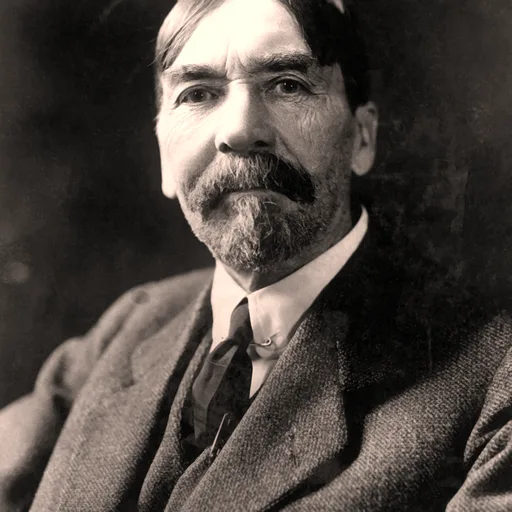
Economists / Institutional

John Kenneth Galbraith
United States 1908-10-15 ~ 2006-04-29
Born 1908, Canada. Harvard professor fifty years. Bestselling author of The Affluent Society and The New Industrial State. Criticized corporate power and consumer manipulation. Leading institutional economist.
What You Can Learn
Galbraith's private affluence versus public squalor gains urgency as infrastructure decay and underfunded services become shared developed-world challenges. His corporate manipulation analysis anticipated platform monopolies and attention economy decades early. Recognizing advertising as demand creation informs consumer sector analysis. His institutional perspective forms part of ESG governance assessment's intellectual backdrop.
Words That Resonate
Life & Legacy
John Kenneth Galbraith brought economics from the ivory tower to public debate. Rather than building formal theory, he excelled at describing and critiquing institutional realities of modern capitalism. His bestsellers influenced social thought far beyond economics.
Born 1908 at Iona Station, Ontario, to a Scottish farming family. He studied agricultural economics at Ontario Agricultural College, then earned his doctorate at UC Berkeley. From 1934 he taught at Harvard, which remained his base for five decades.
During WWII he served as deputy administrator of the Office of Price Administration, managing wartime price controls. Later he served as Ambassador to India under Kennedy. Standing over two metres tall with a sharp wit, he became the most publicly recognized economist of postwar America.
The Affluent Society (1958) identified the paradox of private abundance amid public squalor: consumer goods overflowed while schools, parks, and transit starved. The New Industrial State (1967) argued that large corporations do not respond to market prices but plan markets, manipulating consumer wants through advertising. Corporate technostructures hold real power while shareholder and consumer sovereignty are fictions.
The Age of Uncertainty (1977) became a BBC television series bringing economic history to mass audiences. He published over thirty books, many bestsellers, and was elected to the American Academy of Arts and Letters.
His fundamental claim was exposing the fiction of consumer sovereignty. His concept of the dependence effect, where firms create demand through advertising rather than responding to pre-existing wants, anticipated behavioral economics. He died in 2006, aged ninety-seven.
Expert Perspective
Galbraith rejected neoclassical equilibrium, analyzing institutions, power, and corporate behavior. Inherited Veblen's institutionalism describing postwar capitalism. His dependence effect anticipated behavioral economics. Prioritized social influence over academic rigor.