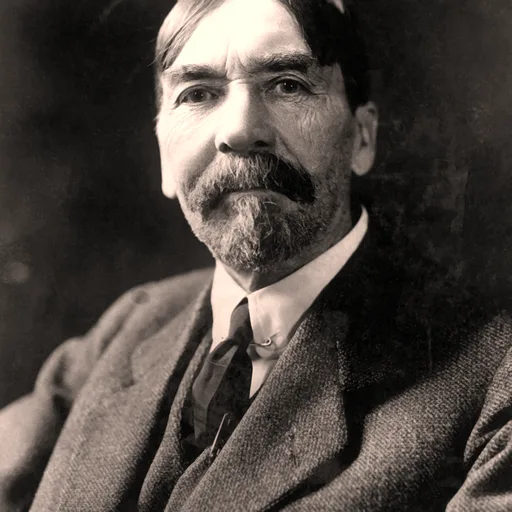
Economists / Japanese Art

Takahashi Korekiyo
Japan 1854-07-27 ~ 1936-02-26
Born 1854, sold into virtual slavery in California. Rose to become BOJ governor, prime minister, and Japan's greatest finance minister. Pulled Japan from the Depression before Keynes. Assassinated 1936.
What You Can Learn
Takahashi Finance was the world's first large-scale anti-deflation program, predating Keynes's General Theory. Its three pillars, leaving the gold standard, cutting rates, and deficit spending, mirror post-2008 and post-COVID responses. Investors learn both how quickly reflation works and how catastrophically exit failure plays out. His assassination and the subsequent loss of fiscal control show why central bank independence matters institutionally.
Words That Resonate
Japan has never once defaulted on interest payments for foreign or domestic bonds.
日本国は過去に外債・内国債で一度も利払いを遅延したことがない。
This war was begun unavoidably in self-defense, and Japan, united under the unbroken imperial line, is resolved to fight to the last man.
この戦争は自衛のためやむを得ず始めたものであり、日本は万世一系の皇室の下で一致団結し、最後の一人まで闘い抜く所存である。
Life & Legacy
Takahashi Korekiyo rose from slavery-like conditions in California to become modern Japan's foremost fiscal statesman. As finance minister, he pulled Japan out of the Great Depression years before other nations, earning the title Japan's Keynes. His assassination for cutting military spending showed the fatal cost of losing fiscal discipline.
Born in 1854 in Edo as the illegitimate son of a shogunal court painter, he was adopted by a low-ranking Sendai samurai. He studied English at Hepburn's school in Yokohama, then sailed for California in 1867. His travel funds were embezzled and he was effectively sold into indentured servitude, working as a cowherd and vineyard laborer in Oakland without realizing his status. He returned to Japan in 1868 with fluent English.
He became an English teacher, serving as first principal of Kyoryu Gakko (now Kaisei Academy), where his students included poet Masaoka Shiki and Admiral Akiyama Saneyuki. In 1884 he became the first chief of Japan's Patent Bureau, establishing the patent system. A failed silver mining venture in Peru left him homeless until Bank of Japan governor Kawada recruited him.
During the Russo-Japanese War (1904), as BOJ deputy governor, he traveled to London to raise war bonds. He overcame investor skepticism by arguing Japan had never defaulted, refusing foreign supervision of customs revenue. He secured backing from HSBC's Cameron and New York's Jacob Schiff.
Appointed BOJ governor (1911), he served as finance minister multiple times and briefly as prime minister (1921-22). His greatest contribution was Takahashi Finance (1931-36): leaving the gold standard, cutting interest rates, and financing deficits through BOJ bond purchases. Japan recovered from the Depression ahead of every major economy.
When he cut military budgets in 1935, radical officers assassinated him on February 26, 1936. His successors could not resist military spending demands; inflation soared and militarism spiraled out of control.
Expert Perspective
Takahashi preceded Keynes in practicing reflation, proving macro principles through action. His gold-standard exit and fiscal expansion anticipated Keynesian prescriptions, but loss of military budget control became a tragic precedent for exit-strategy failure.