Economists / post_keynesian

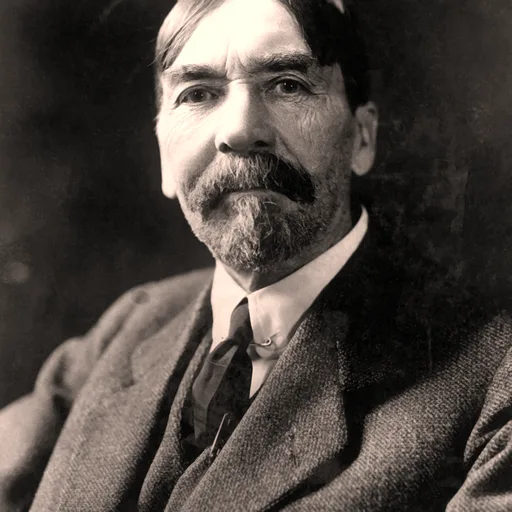
Joan Robinson
United Kingdom
Born in 1903 in England, Joan Robinson was one of the twentieth century's most influential economists and the leading figure of Cambridge's post-Keynesian school. Her 'Economics of Imperfect Competition' (1933) revolutionized market theory, her role in the Cambridge Capital Controversy challenged neoclassical foundations, and her contributions to Keynes's 'General Theory' shaped macroeconomics. Widely considered the greatest economist never to receive the Nobel Prize, she remains a symbol of both intellectual brilliance and the gender barriers that persist in academic economics.
What You Can Learn
Robinson's work offers two crucial insights for modern business and investment. First, her famous dictum about studying economics 'to avoid being deceived by economists' is directly applicable to how market participants consume economic forecasts and models. Consensus predictions, GDP growth estimates, and 'equilibrium' prices are theoretical constructs dependent on assumptions that may not hold. Critical evaluation of the models behind any forecast is essential. Second, her capital controversy insight about circularity applies directly to modern corporate valuation: DCF models require a discount rate that itself depends on the firm's value, creating the same logical circle Robinson identified in aggregate capital measurement. Third, her imperfect competition theory is more relevant than ever in analyzing platform monopolies, where firms with market power can set prices and extract rents in ways perfectly competitive models cannot capture.
Words That Resonate
Life & Legacy
Joan Robinson was the most intellectually feared economist of the twentieth century. Her razor-sharp logic and refusal to accept received wisdom led her to challenge the fundamental assumptions of neoclassical economics, producing insights that mainstream theory has still not fully absorbed.
Born Joan Maurice in 1903 in Surrey, she studied economics at Cambridge's Girton College and joined the faculty in 1931. She became a member of Keynes's 'Circus,' the inner group that debated and refined the ideas that became 'The General Theory of Employment, Interest and Money' (1936). Her contribution to this intellectual ferment established her as one of Keynes's most capable interpreters and extenders.
Her 1933 work 'The Economics of Imperfect Competition' relaxed the assumption of perfect competition to analyze markets where firms possess pricing power, a far more realistic representation of actual economies. Published almost simultaneously with Edward Chamberlin's 'Theory of Monopolistic Competition,' it laid the foundations of industrial organization as a field and introduced analytical tools (marginal revenue curves, price discrimination analysis) still used today.
Robinson's greatest intellectual legacy is her role in the Cambridge Capital Controversy of the 1950s-60s. She demonstrated that the neoclassical production function's treatment of 'capital' as a measurable aggregate involved circular reasoning: measuring the quantity of capital requires knowing the rate of interest, but determining the rate of interest requires knowing the quantity of capital. This critique, directed primarily at MIT economists Samuelson and Solow, is generally acknowledged to have been logically victorious. Yet mainstream economics continued using the models Robinson had shown to be theoretically incoherent, illustrating how institutional inertia can override intellectual argument.
Robinson's later career was marked by controversial political sympathies, including praise for Mao's Cultural Revolution and Castro's Cuba, which damaged her reputation. She died in Cambridge in 1983 at age 79. The fact that she never received the Nobel Prize in Economics, despite being perhaps the strongest candidate of her generation, is widely discussed as evidence of gender bias in the discipline's highest honor.
Expert Perspective
Among economists, Robinson occupies the position of 'heterodox insider': a member of Cambridge's most prestigious circle who became the sharpest critic of the prevailing orthodoxy. Her experience in the Capital Controversy, where she won the logical argument but changed nothing in practice, epitomizes the gap between being right and being influential in academic economics. She demonstrates that intellectual victory does not guarantee institutional change, a lesson applicable far beyond economics.