Economists / Institutional
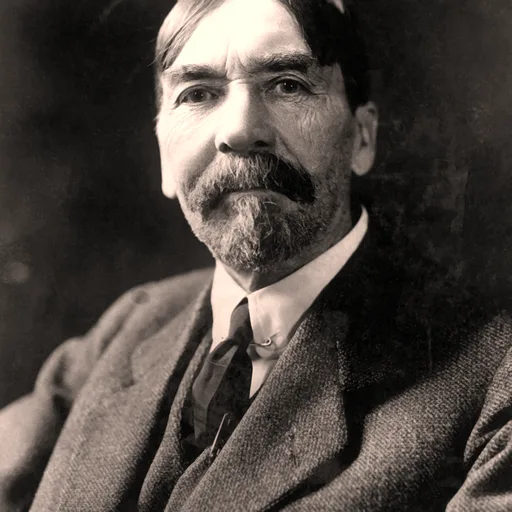
Thorstein Veblen
United States 1857-07-30 ~ 1929-08-03
Born 1857, Wisconsin, Norwegian immigrants' son. Yale philosophy doctorate. Coined conspicuous consumption. Founded institutional economics. Theory of the Leisure Class remains a classic.
What You Can Learn
Veblen's conspicuous consumption explains the Instagram age with uncanny precision. Luxury posting, influencer lifestyles, and limited-edition frenzies are twenty-first century status display. For investors, his framework is essential for valuing luxury brands and status-consumption stocks. His business-versus-industry dichotomy anticipated the financialization-versus-manufacturing tension. Behavioral economics increasingly validates his insight that consumption is socially driven, not utility-maximizing.
Words That Resonate
Life & Legacy
Thorstein Veblen demolished the rational economic actor by showing that consumption is driven by status competition and social emulation rather than utility maximization. His concepts of conspicuous consumption, conspicuous leisure, and the leisure class brought anthropological and evolutionary perspectives into economics.
Born 1857 in Wisconsin to Norwegian immigrant farmers, he grew up in a Scandinavian-speaking community where English was a second language. This cultural distance from mainstream America shaped his outsider's analytical eye. He studied under John Bates Clark at Carleton College, then earned a philosophy doctorate at Yale in 1884 with a dissertation on Kant.
Unable to find academic work for seven years, he lived in semi-seclusion on his family farm. This prolonged exclusion from the mainstream paradoxically fostered his independent critical perspective. He returned to academia at Cornell in 1891 and joined Chicago's new economics department in 1892, editing the Journal of Political Economy under J. Laurence Laughlin.
His 1899 masterwork The Theory of the Leisure Class argued that the upper class maintains status through ostentatious non-work and luxury spending rather than productive activity. This conspicuous consumption cascades downward through social strata by emulation, making consumption a product of social competition rather than individual utility.
He also theorized a fundamental conflict between business and industry: finance pursues profit through manipulation while industry creates goods. This parasitic relationship generates systemic inefficiency, anticipating modern critiques of financialization.
Personal scandals forced him from Chicago, Stanford, and Missouri in succession. He died in August 1929, months before the crash validated his analysis of speculative excess.
Expert Perspective
Veblen founded institutional economics by replacing the rational actor with status-driven consumers. His evolutionary approach to capitalism's irrationalities differed from Marshallian equilibrium, placing him in economics' heterodox tradition while influencing behavioral economics and marketing.


