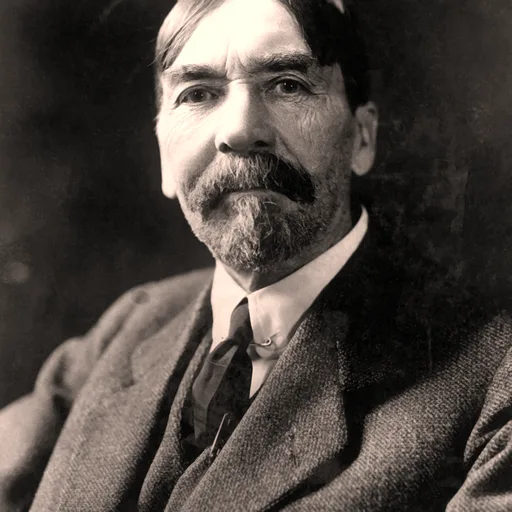
Economists / neoclassical

Léon Walras
France 1834-12-16 ~ 1910-01-05
Born 1834, France. Formulated general equilibrium as simultaneous equations. Ignored in lifetime, called greatest pure theorist by Schumpeter. Founded the Lausanne school.
What You Can Learn
Walras's general equilibrium underpins modern macro models, econometric analysis, and central bank policy simulations. DSGE models directly descend from his framework. For investors, general equilibrium thinking is essential for understanding cross-market price transmission and systemic risk during financial crises. One market's collapse cascading to all others is a fundamentally Walrasian phenomenon. Global policy spillovers across asset classes also require his interdependence framework.
Words That Resonate
Pure economics is, in essence, the theory of price determination under a hypothetical regime of absolute free competition.
L'economie politique pure est, en essence, la theorie de la determination des prix sous un regime hypothetique de libre concurrence absolue.
Life & Legacy
Leon Walras attempted to transform economics into a science as rigorous as Newtonian mechanics. His mathematical formulation of general equilibrium, expressing all markets' simultaneous balance as a system of equations, became the theoretical foundation of modern economics.
Born 1834 in Normandy, son of Auguste Walras, an economist who developed proto-marginal utility ideas. French academia rejected mathematical economics, so Leon studied engineering at the Ecole des Mines but lacked passion for it. He drifted through journalism, novel writing, railway administration, and cooperative movements.
In 1870, aged thirty-six, he was appointed professor of economics at the University of Lausanne in Switzerland, where his mathematical approach finally found academic acceptance. He taught there for twenty years.
His masterwork Elements of Pure Economics (1874-77) expressed the insight that all markets are interdependent: demand and supply in each depend on prices in all others. He formulated this as simultaneous equations, arguing that the number of equations equals the number of unknowns. His tatonnement process described how a hypothetical auctioneer adjusts prices until all markets clear.
French and British economists almost entirely ignored his work, favoring Marshall's partial equilibrium. Not until the 1930s and the 1954 Arrow-Debreu proof of equilibrium existence did his vision reach the center of economics. Schumpeter called him the greatest pure theorist in the history of economics.
Walras also advocated land nationalization and income tax abolition, combining pure theory with social idealism. He died in 1910 at Clarens on Lake Geneva, aged seventy-five, largely unrecognized. His framework was developed by Pareto, Hicks, Arrow, and Debreu into the core of modern microeconomic theory.
Expert Perspective
Walras formulated all-market simultaneous equilibrium as equations. Unlike Marshall's partial equilibrium, his vision of total interdependence was completed by Arrow-Debreu and now forms modern economics' core. His ambition to match physics remains unmatched.