Economists / innovation

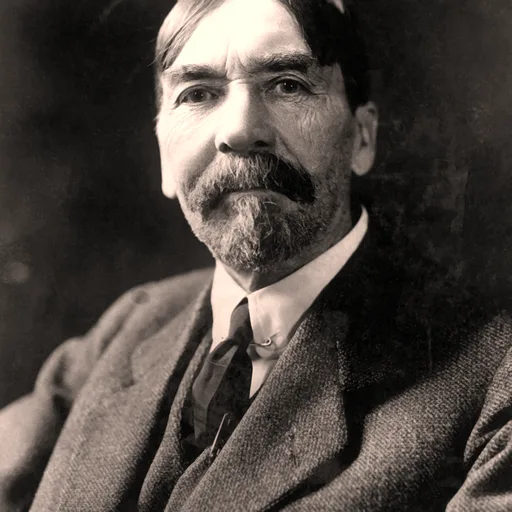
Joseph Schumpeter
Austria 1883-02-08 ~ 1950-01-08
Born in Moravia 1883, Schumpeter argued entrepreneurial innovation drives capitalism through creative destruction. After serving as Austria's finance minister, he joined Harvard.
What You Can Learn
Creative destruction is the essential lens for understanding tech industry dynamics from Silicon Valley startups to GAFAM dominance. Incumbents that miss innovation waves decline as disruptors seize their markets. His five innovation types guide business strategy and M&A analysis. Investors use his framework to spot disruptors early. His prediction that capitalism would undermine itself through success resonates with current debates over tech monopoly regulation.
Words That Resonate
The process of Creative Destruction is the essential fact about capitalism.
The entrepreneur is the pivot on which everything turns.
Innovation is the outstanding fact in the economic history of capitalist society.
Capitalism, then, is by nature a form or method of economic change and not only never is but never can be stationary.
Life & Legacy
Joseph Schumpeter reframed capitalism not as a system tending toward equilibrium but as an engine of perpetual creative destruction driven by entrepreneurial innovation. His ideas shaped modern thinking about technology, startups, and industrial disruption.
Born in 1883 in Triesch, Habsburg Moravia, to a German-speaking Catholic family, he lost his factory-owner father at four. After moving to Vienna in 1893, he attended the elite Theresianum school, then studied law at the University of Vienna under Bohm-Bawerk. Walras's general equilibrium theory left a lasting mark. He earned his doctorate in 1906.
Rising fast, he became professor at Czernowitz (1909) then Graz (1911). The Theory of Economic Development (1912) presented five types of new combination: new goods, new methods, new markets, new supply sources, and new organizations. The entrepreneur who executes these combinations became the central actor in his economics. A visiting stint at Columbia in 1913 connected him with Fisher and Mitchell.
In 1919 he served briefly as Austria's finance minister, proposing a capital levy for war debts, but resigned amid political chaos. As president of the Biedermann Bank (1921-24), he suffered personal financial ruin when it collapsed.
He returned to academia at Bonn (1925), visited Japan in 1931, and moved permanently to Harvard in 1932. Business Cycles (1939) integrated Kondratieff, Juglar, and Kitchin waves.
Capitalism, Socialism and Democracy (1942) predicted capitalism would collapse from within, undermined by bureaucracy and intellectual hostility born of its own success. He died in Connecticut in 1950 aged sixty-six. History of Economic Analysis appeared posthumously in 1954.
Expert Perspective
Schumpeter started from Walrasian equilibrium but recast it as stagnation, arguing dynamic change through innovation is capitalism's essence. He shared Hayek's market faith but predicted capitalism's self-destruction. He respected Marx's cycle analysis while replacing revolution with innovation.