Economists / neoclassical

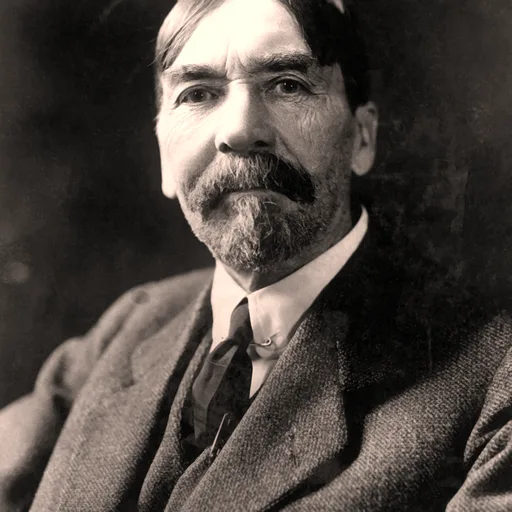
Paul Samuelson
United States 1915-05-15 ~ 2009-12-13
Born 1915 in Indiana. Transformed economics into a mathematically rigorous science. His textbook Economics sold millions worldwide. First American Nobel laureate in economics (1970). Architect of neoclassical synthesis.
What You Can Learn
Samuelson's neoclassical synthesis frames how governments combine fiscal policy with market mechanisms. Post-2008 responses pairing monetary and fiscal stimulus operated within Samuelsonian logic. His trade theorem is essential for analyzing reshoring and protectionism's employment effects. His textbook shaped policymaker thinking beyond theory, defining the very vocabulary and logical structure of economic policy discourse.
Words That Resonate
Life & Legacy
Paul Samuelson transformed economics into a mathematically rigorous science and built the neoclassical synthesis that defined postwar economic thought.
Born 1915 in Gary, Indiana, to a Polish-Jewish family. He entered Chicago at sixteen, studying under Knight and Viner, but rejected laissez-faire orthodoxy. At Harvard from 1935, he studied under Schumpeter, Leontief, and Hansen, absorbing Keynesian economics.
His 1941 dissertation Foundations of Economic Analysis systematized comparative statics and introduced revealed preference theory, establishing mathematical rigor as the standard. Though Harvard considered him for tenure, he moved to MIT partly due to the anti-Semitic atmosphere then prevailing. This proved transformative for both institution and discipline: Samuelson single-handedly built MIT's economics department into the world's most productive research center.
At MIT he mentored future Nobel laureates including Solow, Klein, Stiglitz, and Krugman. His 1948 textbook Economics integrated Keynesian macro with neoclassical micro. Through nineteen editions in over forty languages, it defined how economics was taught worldwide.
The Stolper-Samuelson theorem showed trade's effect on income distribution. The Samuelson condition formalized public goods provision. His multiplier-accelerator model explained business cycles. In 1970 he became the first American Nobel laureate in economics. He advised the Kennedy administration and debated Friedman for decades, their rivalry driving macroeconomic thought forward. He died in 2009 at ninety-four, the last economist to master every branch of the discipline.
Expert Perspective
Samuelson unified Keynesian macro and neoclassical micro into the synthesis dominating postwar economics. A Schumpeter student who systematized Keynesian prescriptions, he bridged Austrian and Keynesian traditions. His textbook defined economics education institutionally.