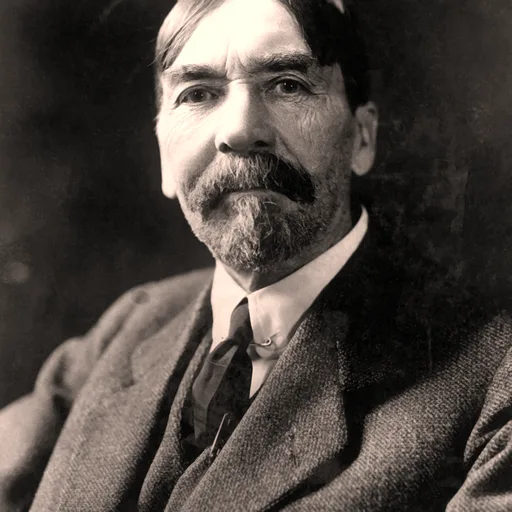
Economists / keynesian

John Maynard Keynes
United Kingdom 1883-06-05 ~ 1946-04-21
Born in Cambridge in 1883, Keynes was the most influential economist of the twentieth century. The General Theory (1936) showed deficient demand causes unemployment, justifying fiscal policy and founding macroeconomics.
What You Can Learn
Effective demand remains the go-to framework for recession response; post-2008 fiscal packages were explicitly Keynesian. Investors who anticipate when governments deploy stimulus can read cycle turning points. His beauty-contest metaphor, where traders bet on what others will bet on, vividly captures herd psychology behind bubbles. His bancor vision speaks to today's debates over dollar hegemony and digital currencies.
Words That Resonate
The difficulty lies not so much in developing new ideas as in escaping from old ones.
When the facts change, I change my mind. What do you do, sir?
In the long run we are all dead.
Practical men, who believe themselves to be quite exempt from any intellectual influences, are usually the slaves of some defunct economist.
The market can stay irrational longer than you can stay solvent.
Life & Legacy
John Maynard Keynes divided economics into before and after. Facing the Great Depression, he overturned classical faith that markets self-correct to full employment and showed government spending can restore demand.
Born in 1883 to a Cambridge economics lecturer, Keynes studied math at King's College before Marshall guided him to economics. He joined the Apostles and mixed with Bloomsbury, gaining unusually broad intellectual horizons.
After two years at the India Office he returned to Cambridge, editing the Economic Journal for thirty-three years. At the 1919 Paris Peace Conference he warned crushing reparations would wreck Europe; ignored, he resigned and wrote The Economic Consequences of the Peace, a prescient bestseller.
In the 1920s he was also a practical investor, running his own portfolio and King's endowment. He attacked Churchill's 1925 gold-standard return as overvaluing sterling.
The General Theory (1936) demolished Say's Law and introduced effective demand: total spending determines output, and markets alone cannot guarantee full employment. The multiplier showed government investment amplifies income, justifying counter-cyclical fiscal policy. This paradigm shift became the Keynesian Revolution.
During WWII he returned to the Treasury. At Bretton Woods (1944) he proposed an international currency called bancor but lost to White's dollar plan; the resulting IMF and World Bank still echo his vision.
He died of heart failure in April 1946 at sixty-two. Keynesian economics faced monetarist challenge in the 1970s, but the 2008 crisis triggered global fiscal stimulus and a New Keynesian revival.
Expert Perspective
Keynes overturned classical orthodoxy and created macroeconomics, the most decisive turn since Smith. Effective demand, liquidity preference, and the multiplier were formalized by Samuelson, Hicks, and Tobin. Despite 1970s monetarist challenge, New Keynesian theory anchors modern policy.