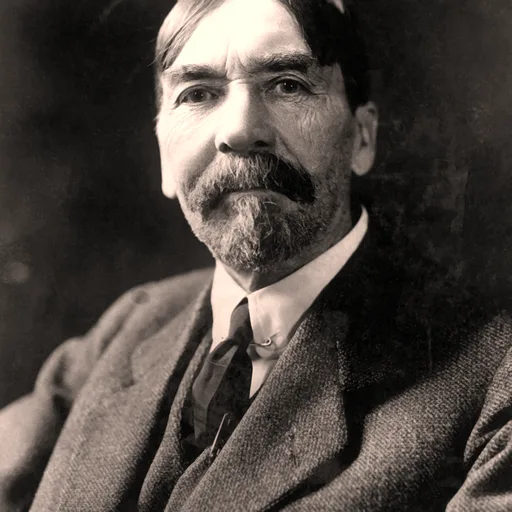
Economists / monetarist

Milton Friedman
United States 1912-07-31 ~ 2006-11-16
Born in 1912 in New York to Hungarian Jewish immigrants, Friedman rose from poverty to champion free markets. As monetarism's architect, he challenged Keynesian orthodoxy and reshaped monetary policy. Nobel 1976.
What You Can Learn
His inflation-is-monetary dictum gained fresh force after post-COVID QE fueled global price surges, a near-textbook Friedman case. Investors tracking money-supply growth can anticipate inflation. No-free-lunch thinking warns that every stimulus has hidden costs. Vouchers and the negative income tax live on in basic-income and school-choice debates, showing market-oriented social policy remains fertile ground.
Words That Resonate
There is no such thing as a free lunch.
Inflation is always and everywhere a monetary phenomenon.
A society that puts equality before freedom will get neither. A society that puts freedom before equality will get a high degree of both.
The great virtue of a free market system is that it does not care what color people are; it does not care what their religion is; it only cares whether they can produce something you want to buy.
Nothing is so permanent as a temporary government program.
Life & Legacy
Milton Friedman mounted the most effective challenge to Keynesian economics, establishing monetarism as a rival paradigm that reshaped how governments manage their economies.
Born in Brooklyn to Jewish immigrants from present-day Ukraine, he grew up poor. His father died when Milton was fifteen. A state scholarship took him to Rutgers, where Mill's On Liberty sparked libertarian convictions. He earned a Chicago master's in one year, learning the quantity theory from Mints, then studied statistics under Hotelling at Columbia.
Government work designing income surveys and assisting Kuznets at the NBER built his empirical instincts. In 1938 he married Rose Director, his future co-author. Joining Chicago in 1946, he spent thirty years dismantling Keynesian assumptions.
A Monetary History of the United States (1963), with Anna Schwartz, proved the Depression resulted from the Fed's money-supply collapse, not demand failure. His core proposition: inflation is always a monetary phenomenon. Discretionary demand management is long-run neutral, accelerating only inflation. His k-percent rule called for steady money growth, rejecting discretionary rate-setting.
The 1970s stagflation confirmed his predictions. Volcker's tight-money policy tamed inflation, validating the framework. He won the 1976 Nobel.
Capitalism and Freedom (1962) and the TV series Free to Choose (1980) carried market ideas to millions. Floating rates, vouchers, and the negative income tax all stem from his proposals. He died in 2006 aged ninety-four.
Expert Perspective
Friedman led the counter-Keynesian revolution, restoring monetary policy to center stage. He shared Hayek's pro-market stance but accepted rule-based money, standing between Hayekian purism and Keynesian activism. Where Samuelson fused Keynes and Marshall, Friedman revived the quantity theory.