Economists / austrian

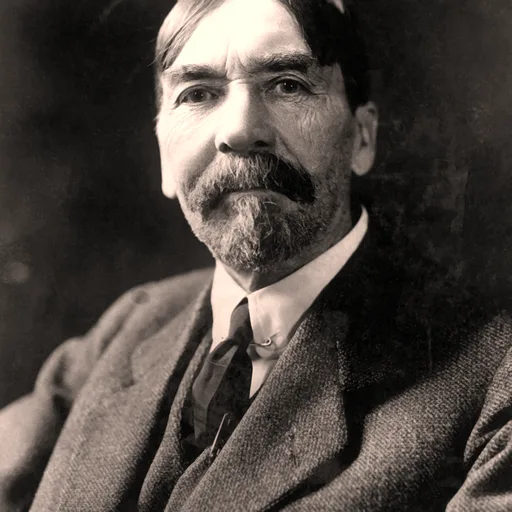
Ludwig von Mises
Austria 1881-09-29 ~ 1973-10-10
Born in Lemberg 1881, Mises systematized Austrian economics through praxeology. His socialist calculation argument proved central planning cannot allocate rationally. Via Hayek and Rothbard, he shaped libertarianism.
What You Can Learn
Mises's calculation critique was vindicated by Soviet collapse but extends further. Government policy producing unintended consequences fits his interventionism framework. Central bank QE inflating bubbles mirrors his cycle theory. For investors, his lens predicts side effects of intervention. Bitcoin echoes his vision of stateless money. Blockchain decentralization resonates with his skepticism of central planning.
Words That Resonate
Economics deals with society's fundamental problems; it concerns everyone and belongs to all. It is the main and proper study of every citizen.
The worst evils which mankind has ever had to endure were inflicted by bad governments.
Government is the only institution that can take a valuable commodity like paper, and make it worthless by applying ink.
Human action is purposeful behavior.
Life & Legacy
Ludwig von Mises systematized Austrian School economics into a rigorous deductive science built on praxeology, the study of purposeful human action. His Human Action (1949) derives economic laws from the axiom that humans act purposefully, rejecting empiricism and mathematical modeling.
Born in 1881 in Lemberg, Austria-Hungary, to a wealthy Jewish family ennobled through railway and finance success. By twelve he spoke Yiddish, German, Polish, and French, and read Latin. His brother Richard became a noted physicist. The family moved to Vienna, where Mises entered the university in 1900.
Menger's Principles opened his eyes to economics. From 1904 he attended Bohm-Bawerk's seminar alongside Marxists Bauer and Hilferding, forging his lifelong opposition to socialism. He also befriended Max Weber. After his 1906 doctorate, he worked at the Vienna Chamber of Commerce while teaching as Privatdozent from 1913, becoming a key economic adviser to Chancellor Dollfuss.
The Theory of Money and Credit (1912) extended subjective value theory to money via the regression theorem. His 1920 calculation paper argued that without private ownership of production, market prices cannot form, making rational resource allocation impossible under socialism. The ensuing debate with Lange became one of the century's great economic controversies. The Soviet collapse vindicated his argument.
His Vienna private seminar produced Hayek, Machlup, and Haberler. Hayek, initially a Fabian socialist, converted to liberalism under Mises's influence and later won the 1974 Nobel partly for developing Mises's cycle theory.
Fleeing Nazis, Mises moved to Geneva (1934) then New York (1940). At NYU from 1945 to 1969, he received no university salary, supported by donors. He taught until eighty-seven, training Rothbard and Kirzner. He co-founded the Mont Pelerin Society in 1947 and died in New York in 1973 aged ninety-two.
Expert Perspective
Mises systematized Menger's individualism into praxeology, establishing deductive a priori economics. He clashed sharply with Keynesian interventionism and, as Hayek's mentor, set Austrian liberalism's direction. His divide with Friedman over empiricism marks a key methodological watershed.