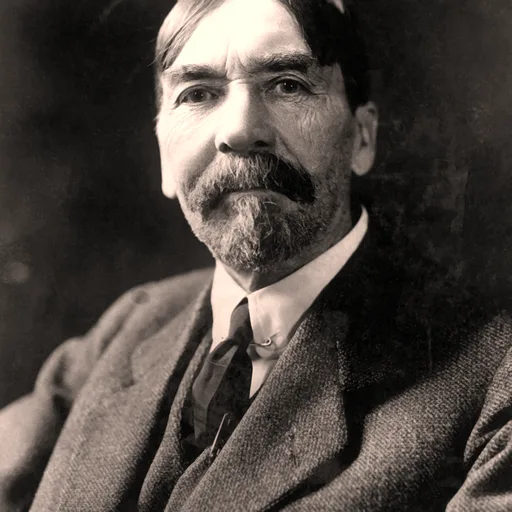
Economists / physiocrat

François Quesnay
France 1694-06-04 ~ 1774-12-16
Born 1694, Meaux. Court physician to Louis XV who founded physiocracy, the first systematic school of economics. His Tableau Economique modeled the circular flow of wealth, influencing Smith and Marx.
What You Can Learn
Quesnay's circular-flow model is the ancestor of modern GDP accounting and input-output analysis. His insistence that agriculture creates net surplus prefigures debates on which sectors generate real value. The physiocratic principle that government intervention distorts natural economic flows became the seedbed of laissez-faire liberalism and the philosophical core of supply-side economics. For investors, his framework highlights identifying genuine value creation in any economy.
Words That Resonate
Let it be, let it pass.
Laissez faire, laissez passer.
Life & Legacy
Francois Quesnay conceived economics as an organic circulatory system and first visualized it diagrammatically. Starting as a surgeon, he began economic research past sixty, yet founded Physiocracy and created the Tableau Economique, prototype of macroeconomic analysis.
Born 1694 near Paris to a prosperous farming family. Largely self-taught, he became an eminent surgeon whose medical writings established his reputation. In 1749 he was appointed physician to Louis XV and took residence at Versailles. This position provided intellectual freedom; in his sixties he turned to economics.
His thought rested on natural order: economic activity follows laws analogous to blood circulation. The anatomical knowledge of a surgeon clearly informed this analogy.
The Tableau Economique (1758) is among economics' most original achievements. It diagrammed national wealth flows between three classes: productive (farmers), proprietors (landlords), and sterile (manufacturers/merchants). Despite limitations, the conception of the whole economy as an interdependent circulatory system was revolutionary. Marx's reproduction schemes, Walras's general equilibrium, and Leontief's input-output analysis all descend from it.
Physiocracy's core holds that only agriculture produces net product; manufacturing merely transforms. Though later superseded, this reflected French economic reality. The Physiocrats first articulated laissez-faire, arguing government intervention obstructed natural economic circulation. This directly influenced Smith, who during his French visit associated with Quesnay's disciples and reportedly intended to dedicate the Wealth of Nations to him.
Quesnay died at Versailles in 1774, aged eighty. His legacy lies less in agricultural supremacy than in giving humanity the vision of economy as circulatory system.
Expert Perspective
Quesnay created the first macroeconomic model and founded the first self-conscious school of economic thought. His circular-flow analysis directly inspired classical economics. The physiocratic emphasis on productive versus sterile sectors anticipates modern debates on financialization.