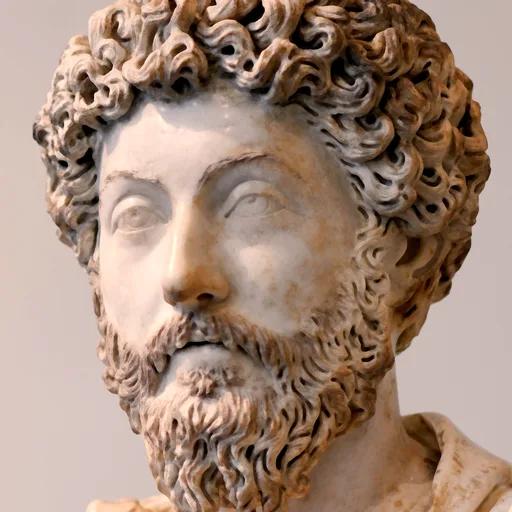
Philosophers / Medieval

Anselm of Canterbury
Italy 1033-01-01 ~ 1109-04-28
Born 1033 in Aosta, Anselm rose from Benedictine monk to Archbishop of Canterbury (1093-1109). Called the father of scholasticism for trying to prove God's existence by reason alone, his ontological argument is still.
What You Can Learn
Anselm's principle — believe in order to understand — extends well beyond religion. People who refuse to commit until they fully understand often never start. Committing first to a value, hypothesis, or vision and then doing deep work inside that commitment is exactly the logic of modern entrepreneurship, design thinking, and lean startup. Anselm's stance — commit under uncertainty and learn from the inside — anticipates what behavioural economics and prototyping theory now formalise. His refusal to retreat from.
Words That Resonate
I do not seek to understand in order to believe, but I believe in order to understand.
Non quaero intelligere ut credam, sed credo ut intelligam.
I believe so that I may understand.
Credo ut intelligam.
That than which nothing greater can be thought.
Aliquid quo nihil maius cogitari possit.
Faith seeking understanding.
Fides quaerens intellectum.
Life & Legacy
Anselm of Canterbury was the first medieval thinker to argue that faith could be reasoned about, not only confessed. His question was simple — faith says God exists, but can the why be put into words? His answer survives as the ontological argument of Proslogion chapter 2, which logicians still both attack and defend a thousand years later.
Born in 1033 in Aosta in northern Italy, then in the Burgundian kingdom of the Holy Roman Empire, Anselm grew up between a Lombard noble father and a devout Burgundian mother. From her he absorbed gentle piety and the conviction that became his motto: to love God so much that one must understand. At fifteen he wanted to enter a monastery; his father refused. After his mother's death he left home at twenty-three, wandered through France, heard of Lanfranc at the Norman abbey of Bec, and at twenty-seven took the habit there.
His fifteen years at Bec were his intellectual peak. Prior in 1063, abbot in 1078, he wrote the Monologion (1076) and the Proslogion (1077-78). The first attempted to prove God's existence by reason alone. The second offered the famous argument: from the definition "that than which nothing greater can be thought," God must exist not only in the mind but in reality. Gaunilo objected that one could equally prove a perfect island, but the argument keeps returning — Descartes, Leibniz, and Goedel each reformulated it for their own age.
In 1093, against his own wishes, he was made Archbishop of Canterbury. The Investiture Controversy was at its peak. A mild scholar found himself in the centre of a political storm. He clashed with William II and then Henry I over the king's right to appoint bishops, and was twice forced into exile. Through it all he held the same line: the church's independence was a matter of faith, not politics.
His late masterpiece, Cur Deus Homo, argued the necessity of Christ's Incarnation by reason — and shaped medieval theology for centuries. He died in 1109, was canonised in 1494, and.
Expert Perspective
Anselm bridges patristic Augustinianism and high scholasticism. His ontological argument was attacked by Aquinas, revived by Descartes and Leibniz, and reformulated in modal logic by Goedel — debated continuously for nearly a thousand years. In medieval theology he was the first to systematise the.