Philosophers / Contemporary Western

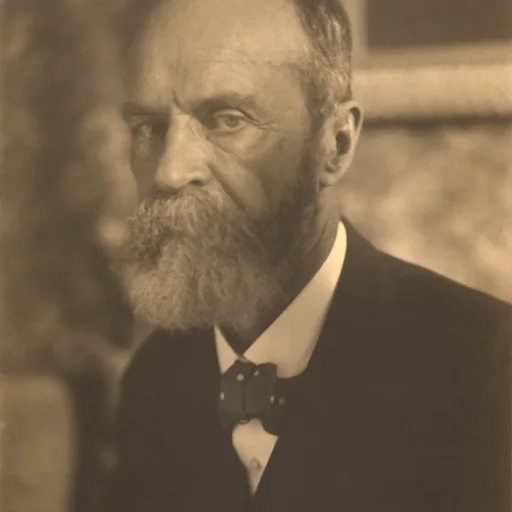
Alfred North Whitehead
United Kingdom 1861-02-15 ~ 1947-12-30
British mathematician turned philosopher (1861-1947). With Russell he co-authored Principia Mathematica (1910-13). At Harvard from sixty-three he built a metaphysics whose basic units are events — process philosophy.
What You Can Learn
Whitehead speaks to modern leadership. First, organisations are better seen as chains of events than fixed substances. Rigid org charts miss the becoming of real businesses; agile, OKRs and continuous delivery already operate on a process worldview. Second, his line that civilisation advances by increasing operations we perform without thinking is a manifesto for the AI era: protect attention for what truly needs it. Third, his Aims of Education critique of inert ideas prototypes modern learning science.
Words That Resonate
It is the business of the future to be dangerous.
Ideas won't keep. Something must be done about them.
The safest general characterization of the European philosophical tradition is that it consists of a series of footnotes to Plato.
Civilization advances by extending the number of important operations we can perform without thinking about them.
Life & Legacy
Alfred North Whitehead is one of the most original and least readable thinkers of twentieth-century English-language philosophy. His career divides cleanly into two acts: first as a mathematician, then as a metaphysician.
Born in 1861 in Ramsgate, Kent, the son of an Anglican clergyman, he entered Trinity College, Cambridge in 1880 to read mathematics. He stayed on as a fellow, and by 1903 was working closely with the young Bertrand Russell. Their three-volume Principia Mathematica (1910-13) attempted to derive mathematics from logic. It set the standard coordinates of foundations of mathematics until Goedel's incompleteness theorems of 1931.
In 1910 family circumstances took him to University College London, then to Imperial College, where as professor of applied mathematics he turned to the philosophy of physics. His three books — Principles of Natural Knowledge (1919), The Concept of Nature (1920), The Principle of Relativity (1922) — rebuilt the categories of space, time and nature for a post-relativistic age. The death of his son Eric in aerial combat in the First World War left a mark on his thought.
In 1924, at sixty-three, he was unexpectedly invited to Harvard as professor of philosophy — a rare second career in philosophy. The lectures became Process and Reality (1929). His central thesis: the basic units of the world are not enduring substances but momentary actual occasions. Each occasion prehends every other from its own perspective and synthesises a new event. Reality is a network of becoming, not a stage of being.
His dense vocabulary kept him from a wide audience, but his thought germinated in unexpected places: Hartshorne's process theology, Bohm's quantum philosophy, Deleuze's metaphysics of becoming, and Isabelle Stengers' STS work. The education essays of The Aims of Education (1929) remain a classic. He died in 1947 at eighty-five in Cambridge, Massachusetts.
Expert Perspective
In twentieth-century philosophy, Whitehead is the founder of process philosophy — the most systematic English-language development of Bergsonian thought. He left the analytic mainstream and has been read into process theology, Deleuzian becoming and the new materialism.