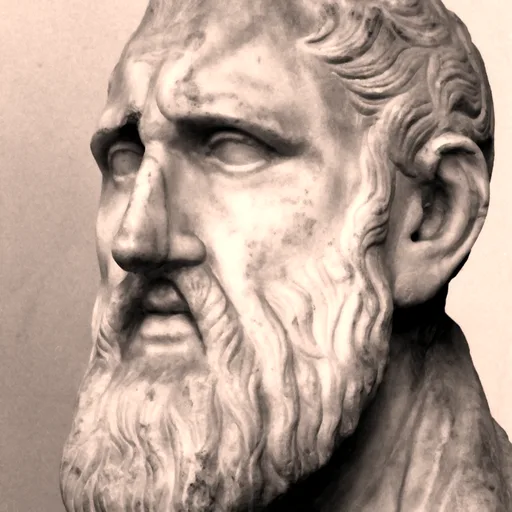
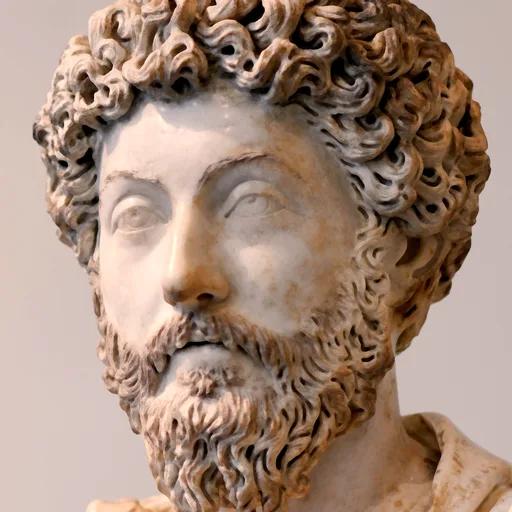
Philosophers / Modern Western

Blaise Pascal
France 1623-06-19 ~ 1662-08-19
French mathematician, physicist, philosopher (1623-1662). Inventor of the mechanical calculator, founder of probability theory, author of the Pensees. Dead at thirty-nine, he set the template for existential thought.
What You Can Learn
No classical analysis hits the modern condition more squarely than Pascal's divertissement: all unhappiness comes from not being able to stay quietly in a room. Smartphones, social feeds, infinite scroll — users flee boredom into distractions that amplify unease. Mindfulness and digital fasting start from him. The Wager remains a classical tool for decision under uncertainty. The thinking reed offers existential consolation: small in scale, sovereign in thought.
Words That Resonate
Man is but a reed, the weakest in nature, but he is a thinking reed.
L'homme n'est qu'un roseau, le plus faible de la nature ; mais c'est un roseau pensant.
The heart has its reasons of which reason knows nothing.
Le coeur a ses raisons que la raison ne connait point.
The eternal silence of these infinite spaces terrifies me.
Le silence eternel de ces espaces infinis m'effraie.
All the unhappiness of men comes from one thing — they do not know how to stay quietly in a room.
Tout le malheur des hommes vient d'une seule chose, qui est de ne savoir pas demeurer en repos dans une chambre.
Life & Legacy
Blaise Pascal was born on 19 June 1623 in Clermont, the son of a learned royal tax official, Etienne. His mother died when Blaise was three; he was raised with his sisters Gilberte and Jacqueline. Jacqueline would later enter Port-Royal and decisively shape his religious life.
His father kept mathematics from him, fearing he would be consumed. At twelve Pascal independently proved that the angles of a triangle sum to two right angles. The father relented and took him to the Mersenne Academy. At sixteen Pascal wrote the Essay on Conics with the projective theorem bearing his name. At seventeen he began designing a mechanical calculator; the Pascaline (1645) is one of the earliest in history.
In physics he extended Torricelli's vacuum experiments. In 1648 he had his brother-in-law Perier carry a barometer up the Puy-de-Dome to show atmospheric pressure decreases with altitude. Pascal's principle in fluid mechanics dates from this period. The SI unit of pressure preserves his name.
In 1654 he founded probability theory. Asked by Chevalier de Mere about gambling, he and Fermat exchanged letters defining expected value and Pascal's triangle, laying the foundation for insurance and statistics.
That year, on 23 November, Pascal had a mystical experience after a coach accident. He recorded it — the Memorial — and sewed it into the lining of his coat; it was found after his death. From 1656 he wrote anonymously the Provincial Letters defending Jansenist theology; the work helped found modern French prose.
In his last years he began an apologia for Christianity but never finished it. He died on 19 August 1662 at thirty-nine. The notes were edited posthumously as the Pensees — the thinking reed, the eternal silence of infinite spaces, and the Wager have made him the founding figure of European existential writing.
Nietzsche called him Christianity's greatest representative. Against Cartesian clarity, Pascal stands for the philosopher who accepts uncertainty.
Expert Perspective
Pascal is the philosopher of uncertainty, the foil to Cartesian rationalism. The Wager, Diversion, and the Thinking Reed privilege existential decision over logical proof, and form the deepest layer of the existentialist line through Nietzsche, Heidegger, Sartre, and Camus.