Economists / sociology

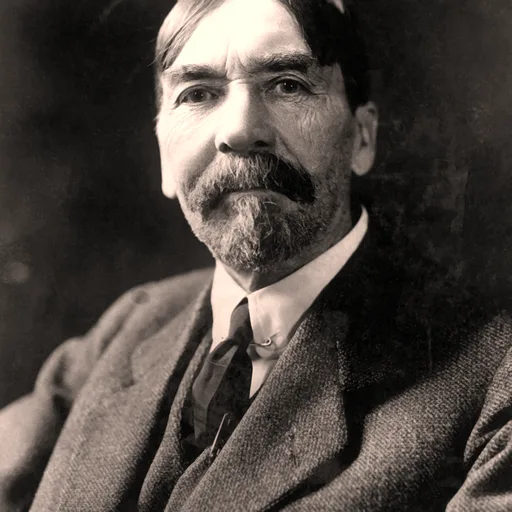
Max Weber
Germany 1864-04-21 ~ 1920-06-14
Born 1864, Erfurt. Giant of social science. Protestant Ethic argued Calvinist asceticism birthed capitalism. Established interpretive sociology, ideal types, iron cage. Died 1920 of Spanish flu.
What You Can Learn
Weber's Protestant Ethic thesis showed economic development is driven by cultural values, not material conditions alone. Silicon Valley entrepreneurship and Asian growth models pose essentially Weberian questions about culture and economics. His iron cage concept is essential for analyzing corporate bureaucratic bloat and platform companies' digital surveillance. For investors, Weber provides a framework for evaluating growth potential through cultural and institutional context.
Words That Resonate
Politics is a strong and slow boring of hard boards, with passion and judgment together.
Politik ist ein starkes langsames Bohren von harten Brettern mit Leidenschaft und Augenmaß zugleich.
The Protestant Ethic and the Spirit of Capitalism.
Die protestantische Ethik und der Geist des Kapitalismus.
Life & Legacy
Max Weber was among the twentieth century's most important scholars, building the methodological foundations of modern social science across economics, sociology, law, history, and religious studies. The Protestant Ethic and the Spirit of Capitalism showed that cultural and spiritual forces shape economic development, revolutionizing economic thought.
Born 1864 in Erfurt to a wealthy Protestant family. His father was a politician; his mother a devout Calvinist intellectual. He studied law, history, economics, and philosophy at Heidelberg, Berlin, and Gottingen. His 1889 doctorate examined medieval Italian trading companies. He became professor of economics at Freiburg in 1894, then Heidelberg in 1896.
In 1897, his father died shortly after a bitter argument, triggering a severe mental breakdown. For six years Weber could neither teach nor write. His post-recovery work made him a towering figure.
The Protestant Ethic (1904-05) argued that Calvinist predestination drove believers into ascetic worldly labor, unintentionally creating capitalism's spiritual foundation. This challenged Marxist materialism by establishing culture's role in economic development.
His methodological contributions were equally profound. Interpretive sociology sought to understand social phenomena through actors' subjective meanings. The ideal type became social science's standard analytical construct. Value-freedom demanded scholars separate factual analysis from value judgments.
His bureaucracy analysis identified rationalization's inevitable product and its efficiency, while warning it becomes an iron cage suffocating individual freedom. His three types of authority remain foundational in political sociology. After World War I he helped draft the Weimar Constitution. He died of Spanish flu in Munich in 1920, aged fifty-six.
Expert Perspective
Weber freed economics from purely material analysis, showing how culture and institutions shape economic behavior and founding economic sociology. His cultural explanation of capitalism differed from Marxist materialism. His methodology influenced institutional economics.