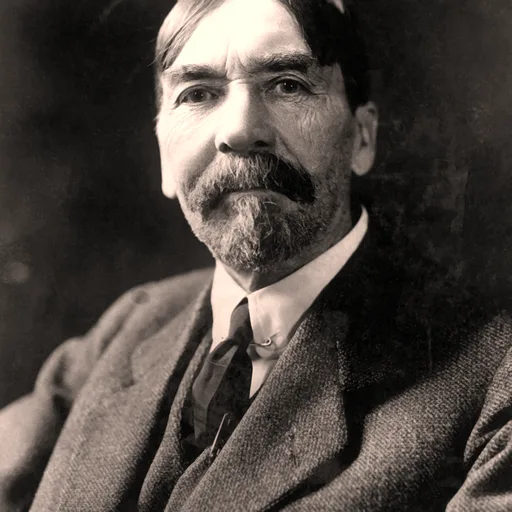
Economists / political_economy

Rosa Luxemburg
Poland 1871-03-05 ~ 1919-01-15
Born 1871 in Russian Poland. Zurich doctorate, sharpest theorist in German Social Democracy. Proved imperialism a structural necessity of capital accumulation. Murdered 1919 in the German Revolution.
What You Can Learn
Luxemburg's question whether capitalism can grow without external markets carries new urgency as globalization hits limits. Market saturation, environmental constraints, and demand erosion from inequality mirror contradictions she identified a century ago. Her framework helps investors assess growth dependency and saturation risk, and grounds both ESG investing principles and degrowth theory in rigorous economic logic.
Words That Resonate
Freedom is always the freedom of the one who thinks differently.
Freiheit ist immer die Freiheit des Andersdenkenden.
Socialism or barbarism!
Sozialismus oder Barbarei!
Life & Legacy
Rosa Luxemburg demonstrated through rigorous economic analysis that imperialism was not a policy choice but a structural necessity of capital accumulation. Her critique of Marx's reproduction schemas opened a new theoretical front, while her lifelong insistence on democratic socialism set her apart from authoritarian currents.
Born 1871 in Zamosc, Russian Poland, youngest child of a Jewish timber merchant. A childhood hip disease left her with a permanent limp. She graduated first in her class from Warsaw's gymnasium, fled to Switzerland in 1889 to escape the secret police, and earned her doctorate at Zurich in 1897 with a statistical study of Poland's economic dependence on Russian markets.
Acquiring German citizenship in 1898, she joined the Social Democratic Party and immediately challenged Bernstein's revisionism in Reform or Revolution. Despite German being her fourth language, she became the party's most formidable debater.
Her masterwork The Accumulation of Capital (1913) argued that capitalism requires non-capitalist external markets to sustain accumulation, making imperialism structurally inevitable. This differed from Lenin's emphasis on finance capital monopoly.
She opposed war credits in 1914 and was imprisoned from 1915. In prison she welcomed the Russian Revolution but criticized Bolshevik one-party rule: freedom is always the freedom of the one who thinks differently.
Released in November 1918, she co-founded the German Communist Party. On January 15, 1919, paramilitary forces murdered her during the Spartacist suppression. Her body was thrown into Berlin's Landwehr Canal. She was forty-seven.
Expert Perspective
Luxemburg extended Marxian economics by exposing flaws in expanded reproduction schemas, proving imperialism an economic inevitability. Where Lenin stressed finance capital monopoly, she focused on accumulation's structural limits and non-capitalist market exhaustion.