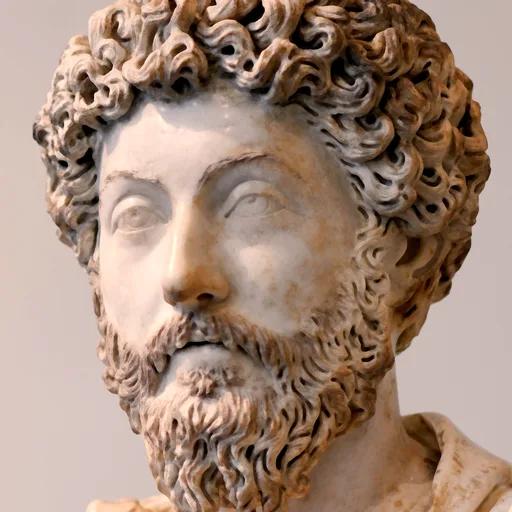
Philosophers / Modern Western

Erasmus
Netherlands 1466-11-06 ~ 1536-07-22
Born 1466 (or 1469) in Rotterdam, Erasmus was the leading humanist of the Northern Renaissance and a Catholic priest. His Praise of Folly and Greek New Testament shaped both biblical scholarship and the Reformation, but.
What You Can Learn
Erasmus's relevance for modern professionals lies in the value of the middle ground in a polarised time. When social media reduces every issue to a binary, his discipline — listen to both sides, hold the complexity, refuse easy tribal allegiance — becomes more valuable, not less. His claim that humans are made, not born, captures the modern logic of reskilling, lifelong learning, and corporate development. And the Praise of Folly model — sharp criticism wrapped in wit — is a classical playbook for modern social.
Words That Resonate
War is sweet to those who have not tried it.
Bellum dulce inexpertis.
I yield to none.
Concedo nulli.
In the land of the blind, the one-eyed man is king.
In regione caecorum rex est luscus.
Man is not born, but made.
Homo non nascitur, sed fingitur.
Life & Legacy
Desiderius Erasmus of Rotterdam stood at the moral and intellectual centre of European humanism through the eve and the storm of the Reformation. Classical learning and Catholic faith, sharp criticism and middle-ground restraint, humour and seriousness lived together in him. The history of sixteenth-century religion and humanism cannot be written without him.
Born in 1466 or 1469 to a priest father and the daughter of a doctor, illegitimate, in Rotterdam. He lost both parents to plague at thirteen and was sent to a school of the Brethren of the Common Life, where he absorbed the devotional movement known as Devotio Moderna. In 1487 his guardians placed him in the Augustinian monastery at Steyn, where he devoured Latin classics. He entered the University of Paris in 1495 to study theology but found the scholastic method unsuitable, and supported himself as a private tutor of Latin while opening his own humanist path.
A trip to England in 1499 changed his life. He befriended John Colet at Oxford, the statesman Thomas More, and the young Prince Henry — friendships that lasted his lifetime. Colet's biblical method — read the original sources rather than scholastic commentaries — set his direction, and from then on he immersed himself in Greek. In 1504 he discovered a manuscript of Lorenzo Valla's Annotations on the New Testament, which became the seed of his future scholarly New Testament.
On the way back from his long-desired Italian journey in 1506, the idea of Praise of Folly came to him crossing the Alps; the book appeared in 1511. The goddess Folly praises herself and skewers in turn priests, theologians, monks, princes, and philosophers — a witty satire that ran through edition after edition across Europe. In 1516 he published in Basel the first scholarly edited Greek New Testament. Although the Greek text itself rested on late Byzantine manuscripts, it became the basis for Luther's German Bible of 1521.
He greeted Luther's Ninety-Five Theses sympathetically.
Expert Perspective
Erasmus is the peak of Northern Renaissance humanism — the supreme example of Christian humanism, applying classical philological method to biblical criticism and church reform. His New Testament edition is the starting point of modern biblical scholarship, and his pedagogy left marks on Jesuit and.