Psychologists / psychoanalysis

Sigmund Freud
Austria 1856-05-06 ~ 1939-09-23
Austrian founder of psychoanalysis (1856-1939). Devised free association and dream interpretation, theorised the unconscious and the Oedipus complex, and proposed the id-ego-superego model that reshaped modern thought.
What You Can Learn
Freud's lasting gift is refusing to explain your feelings only by reasons you consciously give. The mistake you keep repeating, the anger at one boss, the task you avoid — if you accept that "the ego is not master in its own house," you suspect older memories and repressed emotions, then journal, talk and reframe. Modern coaching, mentoring and CBT all carry this Freudian DNA. The cautionary lesson is equally useful: his monism warns against believing too completely in your own interpretive frame.
Words That Resonate
The ego is not master in its own house.
Das Ich ist nicht Herr in seinem eigenen Haus.
Love and work — work and love, that's all there is.
Liebe und Arbeit. Arbeit und Liebe, das ist alles.
The interpretation of dreams is the royal road to the knowledge of the unconscious activities of the mind.
Die Traumdeutung ist die Via regia zur Kenntnis des Unbewußten im Seelenleben.
Where id was, there ego shall be.
Wo Es war, soll Ich werden.
The voice of the intellect is a soft one, but it does not rest until it has gained a hearing.
Die Stimme des Intellekts ist leise, aber sie ruht nicht, ehe sie sich Gehör verschafft hat.
Life & Legacy
Sigmund Freud was born on 6 May 1856 in Freiberg, Moravia, to a Jewish wool merchant. The family moved to Vienna when he was three, and the city held him for nearly eight decades. He entered Vienna's medical school in 1873 and trained in Ernst Brücke's lab, beginning as a laboratory naturalist rather than a healer of the soul.
The pivot came in 1885 with a Paris fellowship under Jean-Martin Charcot, whose work on hysteria persuaded Freud that neuroses were functional, not organic. His collaboration with Josef Breuer produced Studies on Hysteria (1895), the founding document of the talking cure. He soon abandoned hypnosis for free association, and The Interpretation of Dreams (1900) declared dream work "the royal road to the unconscious".
His model of the mind evolved across decades. The early scheme of conscious, preconscious and unconscious gave way in 1923 to The Ego and the Id, in which id, ego and superego stand in tension. After the First World War and his daughter Sophie's death, Beyond the Pleasure Principle (1920) introduced the death drive. Transference, repression and defence mechanisms became the working vocabulary of psychotherapy.
The movement he led was riven by defections — Adler in 1911, Jung in 1914 — and by external critique. Karl Popper judged psychoanalysis a pseudo-science for lack of falsifiability; later historians showed his outcomes for Dora and the Wolf Man diverged from the records. His 1884-86 enthusiasm for cocaine helped addict his friend Ernst von Fleischl, and his framing of female sexuality and homosexuality falls below today's standards.
The last sixteen years brought jaw cancer and exile. From 1923 he endured thirty-three operations while writing Civilization and Its Discontents (1930). After Austria's annexation in 1938 he fled to London, dying there on 23 September 1939. Whatever the fate of his theories, Freud gave the mind a depth dimension — and a method for exploring it — that the twentieth century could not unthink.
Expert Perspective
Freud sits with Adler and Jung as a founding figure of depth psychology. Evidence-based therapy has moved past much of his apparatus, yet the vocabulary of unconscious, repression, transference and defence is still his. Case-history flaws and sexual monism coexist with deep influence on 20th-century humanities.
Related Books
Sigmund Freud - Search related books on AmazonConnections
Influenced by

1885-86年冬の留学。神経学から無意識・転換ヒステリーへの転回の起点

無意識的意志を強調する思想がリビドー論および死の欲動の哲学的先駆となった
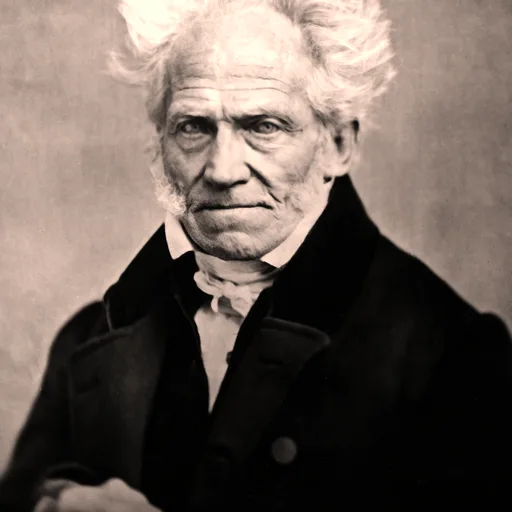
Philosophy of unconscious will prefigured the libido and death-drive frameworks

スキナー的行動主義批判の論拠として認知地図の先駆性を継承

無意識的心的事象とユーモア論で直接の影響源。『機知論』(1905)でリップス『Komik und Humor』を出発点として明示
Influenced

「フロイトへ帰れ」を旗印にした再読解の対象。エスがあったところに自我が、を構造主義的に書き換えた

1902年水曜会の最初期メンバー、1911年に決別し個人心理学を創始

1907-1913年の蜜月の後にリビドー解釈をめぐり決別、分析心理学を創始
1906-1913年の蜜月期に夢分析と無意識の方法論を継承、後にリビドー解釈を巡り決別
1902年水曜会から1911年まで同志、決別後も精神分析の臨床方法論を批判的に継承

十代から文通。精神分析の方法論を学ぶも「意味」中心の立場から離反

精神分析の基本枠組み・死の欲動概念を継承

父にして分析者(1918-21, 1924-29)、理論の出発点であり守るべき遺産

精神分析の基本枠組みを継承しつつ本能論・ペニス羨望を批判

古典的精神分析の基礎理論を継承

精神分析の基礎理論を継承しつつ、リビドー一元論と父権制偏向を批判的に改修

生成文法と言語生得性論の継承。ただし言語の自然選択進化説で師から離れる

抑圧記憶概念の起源として、ロフタスが生涯にわたって批判対象とした理論的相手


